Cate Blanchett Makes Jump to TV With FX’s Mrs. America

Cate Blanchett Makes Jump to TV With FX’s Mrs. America

Originally published October 30, 2018 at CBR.com.

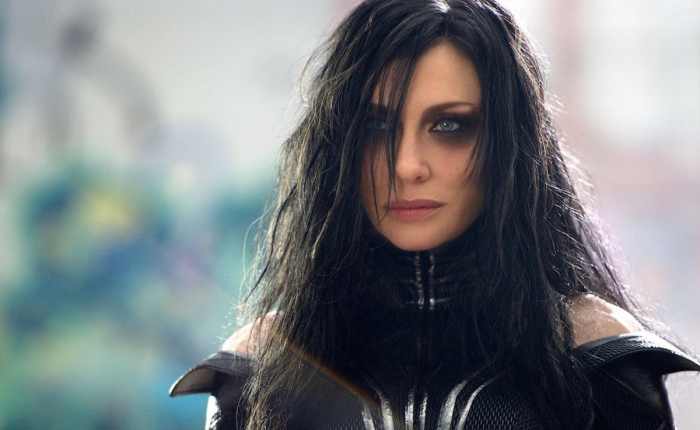
Between the adaptation of Brian K. Vaughan’s Y: The Last Manan expansion of the What We Do in the Shadows-verse and dozens of other projects in production, it’s a busy time for new shows at FX. Today the network announced another blockbuster miniseries on their plate: Mrs. America, the story of women who fought to pass the Equal Rights Amendment in the ’70s, starring Cate Blanchett.

Set to premiere next year, the series’ crew of executive producers is notably stacked with veteran female producers. Blanchett will produce alongside Stacey Sher, Coco Francini and writer and showrunner Dahvi Waller. The four have extensive experience in film and TV shows, including Django UnchainedThe Hateful Eight and Mad Men.

Waller served as co-producer on Mad Men (where she won an Emmy) and Halt and Catch Fire, as well as writing episodes of Desperate Housewives and Mad Men.

RELATED: Marvel’s Runaways and Cloak & Dagger Could Still Get a Crossover

Blanchett will play Phyllis Schlafly, a conservative woman who resisted the second wave of feminism. The show will also portray major figures in the second-wave feminist movement, including Gloria Steinem, Betty Friedan, Shirley Chisholm, Bella Abzug and Jill Ruckelshaus, and the ways the movement left a lasting impact on American politics. In a statement to Deadline, Blanchett discussed how much the project means to her and what she hopes the show can accomplish.

“I feel privileged to have this opportunity to collaborate with Dahvi, Stacey and Coco under the robust and fearless FX umbrella,” said Blanchett. “I am extremely excited about delving into the material as there couldn’t be a more appropriate time to peel back the layers of this recent period of history, which couldn’t be more relevant today.”

RELATED: Fox Announces Gotham Season 5 Premiere Date

Blanchett was most recently seen in The House with a Clock in its Walls and has a busy year set for 2019, lending her voice to the third How to Train Your Dragon film and the upcoming live-action CGI hybrid Mowgli, as well as appearing in films from Richard Linklater and Aaron Sorkin. This will be her first time headlining a TV series since 1995 miniseries Bordertown, which marked one of the first leading roles in her career. It’s an ambitious gambit from FX, but audiences will have to wait and see if it pays off.

Along with Blanchett, Mrs. America will be executive produced by Stacey Sher, Coco Francini, and Dahvi Waller. It will premiere on FX next year.

Austin 3-1-1 Boil Water Notice Update Video

Originally published October 24, 2018 on Austin 3-1-1 Social Media.

When Austin, Texas’ water was unclean to drink without boiling in fall 2018, the city started to give away free bottles of water. As the 3-1-1 Social Media Program Coordinator, I was on the site in minutes, and worked together with the Creative Services Coordinator to co-shoot and edit the video, which garnered over 7k views in a week.

The New Halloween is The Last Jedi of the Series – And That’s a Good Thing

The New Halloween is The Last Jedi of the Series – And That’s a Good Thing

Originally published October 21, 2018 at CBR.com.

From its opening scene, Halloween (2018) plays with the viewer’s expectations. Director David Gordon Green clearly knows what franchise die-hards expect, and has absolutely no intention of delivering on it, instead opting to take the movie in a new, exciting direction. His ability to breathe subversive life into a 40 year old franchise is one-of-a-kind in our nostalgia-focused culture of remakes, reboots and Legacy Sequels, save for one exception: Rian Johnson’s breathtaking Star Wars: The Last Jedi.

The new Halloween begins in a chess-like checkered courtyard, as two podcasters (it is 2018 after all) confront the imprisoned Michael Myers in a mental health institute. Though the continuity of the film ignores all entries in the series save the first, it expects you to know what happens next: The Shape will rise, murder the ones harassing him and escape.

Instead, Green and co-writers Danny McBride and Jeff Fradley turn the script on its head and Michael does nothing. Try as hard as they can, even bringing out the infamous mask, the podcasters only end up disturbing the other prisoners, and the film’s intro is unceremoniously over.

This opening sequence, while full of Halloween’s trademark dread, proves massively unconventional for the series. By introducing a familiar situation but bucking the trend in its resolution, the scene creates far more questions than answers, and makes a clear statement: this is still Halloween, but not like you know.

In last December’s Star Wars: The Last Jedi, Johnson broke ground by weaponizing expectations in the same way, but for the George Lucas’ acclaimed sci-fi franchise. In The Last Jedi, Johnson sets up common Star Wars scenarios, like a rebel assault on an enemy base or a secret plan that will surely save the day, and perfectly subverts the way these typically pan out.

RELATED: Listen to the Halloween Reboot Soundtrack in its Entirety

Johnson, knowing that the rebels always get away and that poorly hatched schemes always work out, grounds his film with legitimate consequences. When Luke Skywalker barely considers snuffing out a padawan, he creates one of the greatest villains in the series. When Poe Dameron ignores orders, he destroys half the fleet of The Resistance.

Though the Star Wars franchise has had great moments in the last couple of decades, The Last Jedi brought back the propulsive energy of uncertainty the series lacked since Return of the Jedi.

The two films, released only 10 months apart, mark a huge step forward, not just in the history of the franchises, but in blockbuster filmmaking. Today, there is significant uproar about the idea of “nostalgia” as it affects the film industry. Studio executives vie for any property they can, because they know audiences will pay for the fuzzy feelings nostalgia can provide.

RELATED: Halloween Works Best When It’s About Female Empowerment

Ready Player One and Wreck It Ralph, for example, throw audiences back to their favorite “retro” experiences, but wrapped up in new stories; the idea of the ‘80s makes an appeal in Stranger Things and It (which doubles as a remake); and dozens of dormant franchises found revival both on TV and in theaters. For some reason, someone remade The Mummy. But the tendency to retread has grown old and worn, leading to art that feels stagnant and a wave of movies that are just “fine.”

But the brilliance of The Last Jedi, and now Halloween, lies in the practical path forward that they present. When a franchise shifts too far, audiences will reject it, like they did Halloween III: Season of the Witch, an entry which ditched Michael Myers altogether and failed miserably at the box office.

Though it still has a devoted group of fans, the left turn was too radical for the series, almost ending John Carpenter’s franchise in the process. But Johnson and Green introduce a new idea to reinvigorate their franchises: invest in recreating the atmosphere and basic story beats of the series, but use the crowd’s comfort to catch them off guard.

The last act of each film illustrates this perfectly, mirroring a specific series moment before unleashing all hell on the audience. Just as Kylo Ren betrays his master to join Rey, calling back to Darth Vader’s throne room turn in Return of the Jedi, Johnson reveals that it was out of selfish ambition rather than a selfless desire to save anyone else. Then, everything shifts and the story focuses on Luke’s helpless regret, and the small light of hope for the future.

On the flip side of that, with 30 minutes remaining in the new Halloween, it seems like Green is setting up a shameless re-do of the original’s last act. But as Allyson Strode follows in her grandmother’s footsteps, fleeing from Michael Myers to a neighbor’s doorbell, the neighbor actually answers the door and saves her life. Rather than take audiences back into a climactic cat-and-mouse showdown, the movie goes absolutely nuts.

RELATED: Rian Johnson Confirms His Star Wars Trilogy is Still Coming

The therapist, dubbed by Laurie as the “new Loomis,” adorns Michael’s mask and murders a police officer. Another officer’s head is used as a jack-o-lantern. In the end, the Strodes’ battle with Michael almost feels like a horrific version of Home Alone. The two movies go absolutely wild at their very ends, but not without first luring viewers into a false sense of security.

However, one thing that can’t go ignored is the fan response to these films. Time will tell how viewers respond to Halloween, but The Last Jedi had a very peculiar reception. The narrative a few months after release was that the film proved highly divisive among hardcore Star Wars fans, but recent studies have cast suspicion on that conclusion.

Apparently, many political figures (somehow including those from Russia) latched on to the progressive themes of the movie, leading an organized campaign to derail the film. Johnson’s film still made over a billion dollars worldwide, but it does have a very vocal minority of fans who cannot stand it. All you have to do is read the comments of any one of CBR’s own posts about Johnson or The Last Jedi to see they’re there.

Whether this is thanks to an aversion to the movie’s politics or a rejection of the way it changes what the series can be is a bit of a mystery, but it could potentially prevent this sort of radical push forward for franchises from coming again.

Hopefully the film industry will see the critical and box office success of these two movies and take note. As the creative sluggishness of nostalgia-mongering has held back so much of cinema in the past decade, these two huge breaths of fresh air have proven massively relieving. If we’re lucky, we might just be on the precipice of an amazing, fresh wave of blockbuster filmmaking.

REVIEW: Netflix’s Apostle Is Ambitious Horror That Falls Short in the End

REVIEW: Netflix’s Apostle Is Ambitious Horror That Falls Short in the End

Originally published at cbr.com.

Netflix’s Apostle has everything it should need to be one of the year’s best horror films. The cast, headlined by Dan Stevens and Michael Sheen, is stacked with underrated actors. The premise, about a man who goes undercover in a cult to save his sister, has intrigue but is open enough to go anywhere. The director, Gareth Evans, has two of the greatest action films of all time under his belt in The Raid and its sequel, and is returning to cult horror after an acclaimed segment in V/H/S 2. But it’s a shame the movie never quite comes together, giving each of its elements a chance to shine yet never quite working as a whole.

In The Raid and its sequel, Evans took a huge swing for the fences. The first is a claustrophobic masterclass in action cinema, and the second is a flawed but ambitious crime saga, punctuated by the director’s trademark eye for fight scenes. Apostle is every bit as ambitious as those first two efforts, but lacks the narrative cohesion to reach those highs. The action beats remain better than pretty much anything else attempted these days, but they’re strung together by a lackluster script. It feels as if the movie can’t decide whether it’s psychological horror, a gore showcase or an all-out action film, and is never able to mesh the three into something coherent.

RELATED: Gareth Evans’ Bloody Apostle Trailer Pits Dan Stevens Against a Cult

Stevens stars as Thomas Richardson, who in 1905 goes undercover on an island inhabited by a fanatical cult to rescue his sister, whom they’ve kidnapped. From there, the plot takes more twists and turns than one can count, and it’s best to go in as blind as possible; if you can avoid the trailers, do so at all costs. The opening hour or so, before it takes that darker turn, is a slow burn that feels closer to Karyn Kusama’s The Invitation than the wild action of The Raid. It’s this quiet, more deliberate segment where Apostle shines brightest, utilizing Evans’ proclivity for visual storytelling but never indulging in it. The film uses the freedom of having extra time to build an uneasy tone and establish the characters, while also planting seeds that there is something deeply wrong on the island.

The broad cast of characters is actually quite deep, from young lovers played by Bill Milner and Kristine Froseth to a disgruntled villager portrayed by the scene-stealing Ross O’Hennessy. The strongest of these supporting players are Sheen as the town prophet and Lucy Boynton as his daughter Andrea. Sheen is brilliant as the prophet, confident as he leads the village, but a crumbling, weak man when confronted with difficulty. He has the appearance of strong leadership in front of the cult members, but Sheen shows that he’s riddled with self-doubt, a shadow of the man who gives the sermons. Boynton is even better as his daughter, one of the village’s most compassionate members, sometimes disobeying leadership to show kindness. Her performance demonstrates just how earnest Andrea is, imbuing her every word with meaning, a refreshing change of pace from the rest of the manipulators in the cast.

Unfortunately, a great roster of underrated actors is not enough to carry a film, and in the end an inconsistent script lets them down. The superior first act sells a growing dread quite well, slowly building the tension and teasing the darkness to come. As Stevens creeps around the creepy village, he finds clues and begins to piece together the evil that lies beneath the charming veneer of the town.

In movies that slowly build to a tone shift, there is usually a moment where the director makes a clear statement to the audience: This is no longer the same film. In Jeremy Saulnier’s Green Room, it switches from a tense thriller to a massive bloodbath within seconds, punctuated by a character’s arm taking a brutal chop from a machete. It’s this sort of moment that’s missing from Apostle, which leads to a really muddled transition. Based on the appeal of the trailers and marketing, Apostle was clearly leading to a gut-wrenching shower of gore from the start. Once it finally does reach this long-awaited payoff, it lands with a thud, killing off a primary character in a mean-spirited, offhanded way that doesn’t come off meaning anything.

RELATED: Overlord Is (Almost) Everything You Want From a Zombie Nazi Movie

From a technical perspective, every moment of Apostle is brilliantly crafted. Even the long stretch of brutality at the end, while unearned, is unmatched in modern filmmaking. Evans puts his action sensibilities to use and delivers one pulse-pounding barbarity after another. His kinetic, free-flowing camera keeps the stomach-churning bloodshed in clear view and forces you to watch, which is sure to have viewers at home screaming from their sofas. It’s just really disappointing that these scenes, while well-directed, don’t gel with the rest of the film, killing off the characters with glee as if they meant nothing to the story.

In Netflix’s Apostle, life is a never-ending hell. You can choose to believe in a God who demands living sacrifices or nothing at all, but you’ll probably meet an agonizing end anyway. The first hour or so builds to a nightmare of a conclusion, but it takes a far too convoluted path to get there. Fans of horror cinema with a heavy dose of nastiness, or those who are particularly attached to Evans’ unique brand of brutality, will surely find something to love. But after making two of the greatest genre films of the century, it’s disappointing to see the director brush with greatness yet fail to reach it.


Directed by Gareth Evans, Apostle stars Dan Stevens, Michael Sheen and Lucy Boynton. The film screened at Fantastic Fest in Austin, Texas ahead of its Oct. 12 release on Netflix.

Cast Shines, Not Much Else in Matthew McConaughey’s WHITE BOY RICK

Cast Shines, Not Much Else in Matthew McConaughey’s WHITE BOY RICK

Originally published at Cinapse.

Just ten years ago, Matthew McConaughey was unreliable at best. Generally, if he was in a movie, it was a safe bet he’d be the worst part of a mostly mediocre film. The early years of his career saw some success with films like Dazed and Confused and Contact, but that mid/late-2000s streak was *rough*. Failure to Launch? Fool’s Gold? Some movie called Surfer, Dude which is somehow a real flick about a surfer’s existential crisis? It looked down for the University of Texas graduate — and then The McConaissance struck. The exact start date is still up for debate, but around 2011 a switch struck, and within three years he had an Oscar and became one of Hollywood’s finest actors. With director Yann Demange’s biopic White Boy Rick, he’s completed his transformation, shining as the brightest part of a mostly mediocre film.

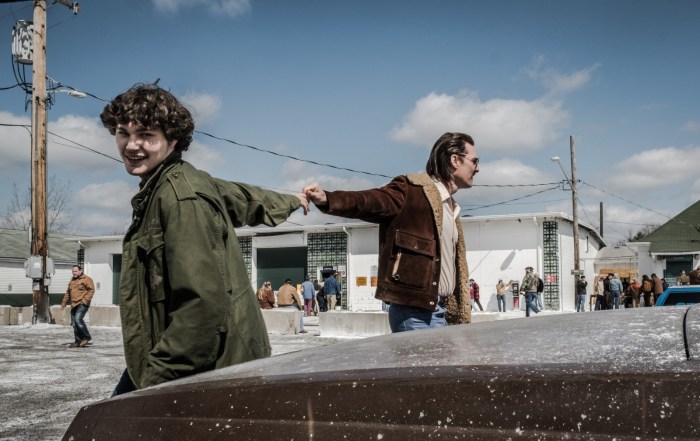
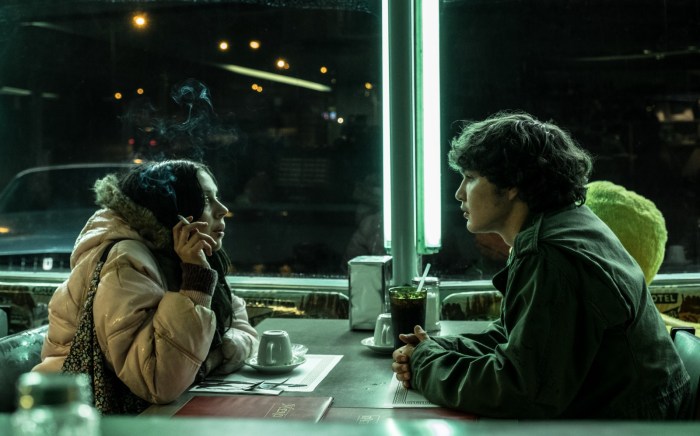
McConaughey plays Richard Wershe Sr., a supporting player to the film’s primary focus: Rick Wershe Jr. (newcomer Richie Merritt), his son and a prodigy drug dealer. Set in the mid ’80s, Wershe Jr. starts the movie selling guns for his ambitious father, but is slowly pulled into the world of drugs out of need for money and hereditary ambition. He is quickly recruited by the FBI and Detroit PD to be an informant, creating an interesting dichotomy for the character. This stretch of White Boy Rick is actually quite good, functioning as a knock-off brand Goodfellas with a dash of Scott Cooper’s Black Mass (remember that movie?!).

(Spoilers for a thirty-year-old true story, I guess) Obviously, things turn sour for the teenage kingpin, and so does the film. It’s a perfectly fine watch for 45 minutes or so, but unfortunately gets bogged down when it makes a turn for the serious. Now the film is never a comedy, but it’s an enjoyable watch as we see the character’s initial success. As he starts selling drugs for himself and the cops, Wershe Jr. earns the name White Boy Rick from his almost entirely black consumer base/new friend group. Merritt embodies this name change with his performance, slowly shifting the way he talks and even carries himself through the movie, a really impressive debut for a 17-year-old. But as it grows more grim, it almost feels like Demange loses touch with the film, delivering a lifeless, pretty boring final act.

For a film set in Detroit that opens at an NRA gun show, White Boy Rick doesn’t have a whole lot to say. Sure, it offhandedly addresses that white people caught with drugs will face a far shorter prison sentence, but it stops there. With so much else to discuss, it mostly just wants to talk about how badly the FBI screwed over this one kid. It is just sort of disappointing to sit through, watching Wershe Jr. absorb the speaking style and interests (and job, for that matter) of Detroit’s black community, but ending with passive-aggressive epilogue titles that are only angry at the FBI’s treatment of him. Reagan’s “Just Say No” campaign simmers in the background of the film, but the ending comes off as tone-deaf, ignoring the executive office’s campaign that disproportionately affected the lives of countless people of color, just to focus on a white man.

Without question, the brightest part of White Boy Rick is the performances from the absolutely stacked cast. Obviously, McConaughey steals every scene, acting as an imposing force upon the film. He plays it with a vaguely southern style, which doesn’t really match with a man who has spent his whole life in Michigan, but it works in the role. He’s switches, sometimes simultaneously, from a larger-than entrepreneur to a weak, self-conscious father who just wants his children to love and respect him. Even when McConaughey isn’t on screen, his presence is felt, as Merritt brilliantly mimics bits of his fictional father’s mannerisms and speaking style.

The supporting players of White Boy Rick are also great, with one of the year’s deepest rosters of great small roles. RJ Cyler (Me and Earl and the Dying Girl) and Jonathan Majors are also great, acting as Rick’s intro into Black society in Detroit. Cyler is particularly great, bringing a sense of life and fun to his scenes as Boo, Rick’s best friend. Jennifer Jason Leigh, Rory Cochrane, and Atlanta’s Brian Tyree Henry excel as the law enforcement officers that work with Rick. Henry is particularly enjoyable, humorously playing his DPD officer as one who is constantly annoyed with everyone. On the other hand, JJL does her best Kyra Sedgwick impression, acting as a cold foil to Henry’s antics. And finally, in their few scenes, Bruce Dern and Piper Laurie knock it out of the park as Wershe Sr.’s parents. Though they kind of feel like they walked out of a different movie, the two are absolutely hilarious, bickering and griping with everyone in sight, providing plenty of welcome laughs.

Despite the overwhelming amount of great performances, spotty direction and a highly flawed script sink White Boy Rick. It’s certainly worth seeing for the wealth of amazing actors, but there’s a reason it was released a month before the heart of Oscars season.

White Boy Rick opened in theaters September 14, 2018.

REVIEW: Halloween Is a Breathtaking Throwback That Moves the Series Forward

REVIEW: Halloween Is a Breathtaking Throwback That Moves the Series Forward

Originally published at cbr.com.

David Gordon Green’s Halloween is something of a miracle. After all, the creative team, whose experience is exclusively in comedy, had to deliver legitimate scares while making sense of a franchise with 11 films’ worth of convoluted history, and simultaneously doing something new. The odds seemed stacked against it, but Green presents an astonishing work that dives into the consequences of the 1978 original while still moving into uncharted territory.

In this age of reboots, remakes and rehashes, Halloween utilizes arguably the most intriguing approach to resurrecting a dormant property: the legacy sequel, which typically take place in the same same universe as the original, and frequently feature returning cast members, but make use of the time gap to present the franchise to a new generation. J.J. Abrams’ Star Trek and Disney’s Tron: Legacy have found mild success in that arena, but the revived Star Wars saga holds the real blueprint for injecting life into these old stories. And while Halloween doesn’t reach the heights of Rian Johnson’s Star Wars: The Last Jedi, it certainly represents a high-water mark, respectful of the past but never restrained by it.

RELATED: Listen to John Carpenter’s Revamped Halloween Theme

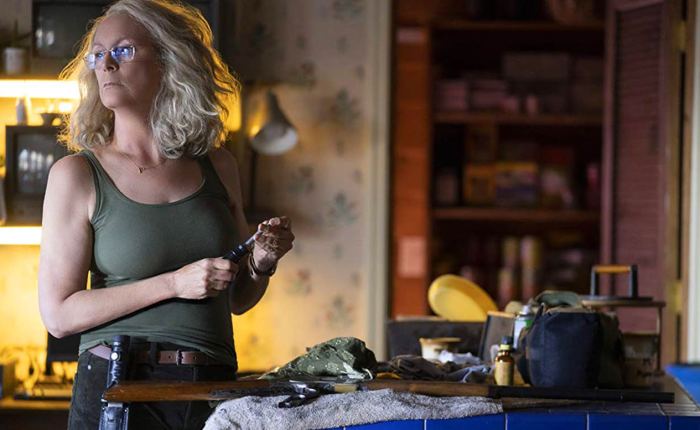
Jamie Lee Curtis returns to the series for the first time in 20 years as the original final girl, Laurie Strode. Writers Green, Danny McBride (yep, that Danny McBride) and Jeff Fradley decided to ignore every entry in the series that came after the John Carpenter original, which permitted them to effectively start from scratch. It’s 40 years to the day after Michael Myers terrorized Laurie and killed her friends, and the trauma of that experience has taken over her life. She’s spent four decades preparing for Michael’s return, basically barricading herself in a fortress, surrounded by weapons. Excavating real-world consequences from a 40-year-old slasher film is an interesting turn for the series, reminiscent of how Creed found a way to explore a darker fallout from the goofy Rocky IV. Curtis plays the role perfectly, transforming into a seemingly hardened warrior, who nevertheless frequently cracks under the paranoia that comes from having faced evil himself.

Halloween 2018

The portrayal of Michael also works surprisingly well, fleshing out the horror icon while retaining a necessary sense of mystery. The audience is introduced to Old Man Michael in the opening minutes as he’s interrogated by true-crime podcasters. Intriguingly, he doesn’t wear his classic mask until about a third of the way through the film, and it’s exactly that kind of restraint that makes this new vision of Halloween so great. Green withholds the mask from the viewers, waiting to unleash it at just the right time. The decision pays off, as Michael Myers’ first real moment back in costume is one of the best horror scenes in years, a tracking shot that follows The Shape in a violent return to form

Michael’s impact on the story can be felt in every scene, even when he’s absent. Laurie’s fear of the killer has poisoned her relationship with her family. Daughter Karen (Judy Greer), who was raised to prepare for Michael’s return, resents her mother’s all-consuming fear, but as the story begins, granddaughter Allyson (Andi Matichak) is desperate for her grandmother to play a role in her life.

RELATED: Halloween Early Reviews Call the Film the Best Since the Original

Among the most interesting parts of Halloween is how it uses the generational dynamic to investigate the lasting impacts of trauma. It’s odd to see such deep themes in a sequel to a 90-minute slasher, but it works surprisingly well. Laurie’s experience with Michael in 1978 could stand in for any harrowing experience, and Green’s point would remain: Allowing your life to become overwhelmed by fear is permitting evil to win. As the family starts to come together once again, it’s touching to see that dawn finally on Laurie.

When Halloween approaches its conclusion, it appears as if Green will take the easy way out, setting up a third act that goes for a recreation of the original’s. But just as you think you know how the rest of the film will play out, it takes an unexpected turn, and ends with a climax as surprising as it is thrilling. The final 45 minutes or so are wall-to-wall payoff — edge-of-your-seat filmmaking that’s both terrifying and electrifying.

With a creative team out of left field and the seemingly head-scratching decision to ignore 40 years of continuity, there weren’t many reasons to be optimistic about Halloween. But expectations be damned, the film is a blast from start to finish. The return of Laurie Strode, to say nothing of the mystery and brutality of Michael Myers, is welcome, but it’s the new additions that help to make Halloween a deeper, richer film than any the series has seen before. Respectful of the past but bold enough to push the series into the future, it’s among the best legacy sequels audiences could hope to see.


Directed by David Gordon Green, Halloween stars Jamie Lee Curtis, Judy Greer, Andi Matichak, Will Patton, Virginia Gardner and Nick Castle. The film screened at Fantastic Fest in Austin, Texas, ahead of its Oct. 19 theatrical release.