Diving Into the NFT Deep End: Auctions, Crypto Risk and ESG Concerns

Diving Into the NFT Deep End: Auctions, Crypto Risk and ESG Concerns

Originally published in NeuGroup Insights.

One AT helped marketing capitalize on the nonfungible token craze while minimizing financial and reputational risk.

Amid all the buzz and flurry of headlines around nonfungible tokens (NFTs), the actual process of creating, selling and maintaining them is somewhat cloudy. When one NeuGroup member was thrown into the deep end by his company’s marketing team, he had only six weeks to swim his way to the surface and prepare treasury for a public NFT auction.

  • NFTs are unique digital assets that can be bought and sold. Similar to most cryptocurrencies, they rely on a digital ledger known as a blockchain. The member is an assistant treasurer for a company with an internationally recognized brand that wanted to capitalize on IP recognition in the form of these digital collectibles.
  • The company planned to auction off a brand-related collectible and needed to figure out how to handle the cryptocurrency that would be used to pay for it. (The collectible ended up selling for crypto worth hundreds of thousands of dollars.)
  • Though there were a number of complications, the member said he sees “a huge upside” to NFT business.

What to do with the crypto. With only six weeks to prepare, the AT had to adapt quickly. “We were thankful we were brought in so we could at least ask our questions,” he said.

  • “Our marketing and licensing group had already done a lot of research,” but the planned deadline approached rapidly.
  • “It had gotten to the point where now they needed to talk about what they’d do with any cryptocurrency they’d be receiving.”
  • The company’s licensing team planned to sign on with a cryptocurrency exchange to assist with the auction and convert the crypto received into dollars.

Passing the risk to an ad agency. But the AT quickly found out that using a crypto exchange comes with a number of risks associated with holding crypto, most notably its extreme volatility.

  • After connecting with NeuGroup member peers who had experience selling NFTs, he learned that some artists and marketing agencies that corporates work with can eliminate the need to use an exchange.
  • “We found out that most of the ad agencies in the NFT space are willing to take on the crypto risk for you,” the AT said. He made an agreement for the cryptocurrency to go to the agency he was working with, which would then convert it into dollars and—in this case—donate it to a charitable partner.

Don’t forget about royalties. At the recommendation of other NeuGroup members, banking partners and more research, the member’s company decided to use OpenSea, a digital marketplace, to auction the NFT. The platform is built on the Ethereum blockchain, and only accepts payments in its native token, ether.

  • Coded into the token is a royalty contract, so each time it’s sold, the artist and the company get a percentage of the ether associated with that sale.
  • “So that opened it up to: Are we ready to accept cryptocurrency?” he said. “For now, the answer is no. I didn’t want the cryptocurrency risk.”
  • “We worked with our legal department to write in the code that it is also the agency’s job to receive the crypto on the royalties and make the conversion to dollars,” he said.

ESG and the backup plan. Though the member vetted the ad agency he was working with to handle the ether, he wanted treasury to have a backup plan—in the form of a crypto exchange, as it turned out.

  • The company needed to prepare for a scenario, however unlikely, “in case something goes wrong and I get the phone call that says ‘Hey, something happened with the agency and whoever was supposed to receive it; something went wrong—where can we put this [crypto]?’”
  • As NFTs have gained traction in recent months, the technology behind it has seen significant backlash from the public due to the energy consumption required. To offset this, the company’s marketing team initially had looked at working with an exchange that had a high ESG rating.
    • But the banks the AT consulted with strongly advised against working with that exchange, saying, “you want to stay away,” he said.
  • The member worked with a different exchange recommended by the banks and treasury “opened up an account just to see what the controls look like. We didn’t even have to have a deposit.
  • “We were up-and-running in like a day, it was very easy. We didn’t trade anything; our finance and tax folks were pleading with us not to” due to the extreme volatility and accounting complexities of the currencies.

Hazy future. Public concern around the environmental impact of NFTs and cryptocurrencies makes it tricky for corporates to hold crypto, even if they’re willing to weather the risk of volatility.

  • For now, the member plans to continue with the current process of never holding the crypto and donating all proceeds, wary that turning profits from digital collectibles could contradict the company’s other ESG-related efforts.
  • “We’ve got to figure out where the world lands with the ESG lens on this type of activity. Right now, it’s still frowned upon,” he said. “Until there’s a clear path ahead and someone makes it so that this sort of business is not destroying the environment or having a huge footprint, we’re going to be constantly looking to offset to any reputational impact.
  • “If we could ever get comfortable, and it evolves in a way that’s not impactful, this could be a new revenue stream for us as the next evolution of collectibles.”


Connected By NeuGroup: Turbocharged

Connected By NeuGroup: Turbocharged

Originally published at NeuGroup.com.

In an impromptu meeting of NeuGroup for Life Sciences Treasurers, members hashed out treasury organization structures. 

“Connected by NeuGroup” is a phrase we use to describe one of the key benefits of being a NeuGroup member: the opportunity to reach out to peers on a topic of concern, whether directly or through our expert matchmaking peer group leaders. 

  • Just recently, when one NeuGroup for Life Sciences Treasurers member reached out to a peer group leader with a question about treasury organizational structures, it led to a turbocharged, peer group-wide Connected by NeuGroup experience. 

A super session. The session originated with a request by one member who asked NeuGroup to connect him with a few members to some benchmarking on a one-on-one basis. Mindful of the high level of requests we periodically receive on this topic, the peer group leader reached out to the group to gauge interest on the topic—which received a strong reception and quickly escalated into a high-demand session. 

  • The unplanned Zoom call, which had over 10 other treasurers in attendance, began with the member providing background on a recent development within his organization that led him to be responsible for almost four times as many full-time employees across far more locations overnight. 
  • With this as a short background, the member asked the group for their input on what the treasury structure should look like for a company with a globally significant footprint. 
  • Members spent the better part of an hour sharing not only their organizational structure, but their rationale for the human resources dedicated to each vertical.  

Quick takeaways. Just a few of the insights gleaned by members in attendance: 

  • US-based companies like the member’s look to provide organizational support in three main geographic areas: Europe, Asia, and Latin America. 
  • “Allow treasury to focus on treasury,” meaning that single, fully integrated global technology solutions create a simpler environment than if each region had its own choice of platforms. 
  • Additionally, organizational structures with clear lanes and responsibilities were reported back as useful to prevent teams from getting bogged down in the process or multiple duplicative workloads with little value add. 
  • As treasury processes change, members were keen to highlight finding the pain points before changing a process, with heavy warnings on codifying inefficient or broken processes.  

In all, it was a great session for the Life Sciences group, and plenty of member connections were made during and after the call. Learn more now about how you can be Connected by NeuGroup. 

Hot Topic: How and When Corporates Respond to Climate Change Risks

Hot Topic: How and When Corporates Respond to Climate Change Risks

Originally published in NeuGroup Insights.

At a recent NeuGroup virtual interactive session, Willis Towers Watson’s Climate and Resilience Hub experts, led by Irem Yerdelen, detailed the long-term risks of ignoring the causes of climate change and other environmental threats, and members discussed what steps, if any, treasurers can take to incorporate this risk into their ESG and risk management strategies.

  • “There is an extraordinary depth and breadth to this issue,” Ms. Yerdelen said. “It’s one of the few issues that permeates every element of every business—it hits every stakeholder in every element of every organization in every industry.”

Understand the types of risk. Willis Towers Watson divides climate-related risks into three categories:

  • Physical risks, the acute risks arising from extreme weather-related events and chronic, slow onset climatic changes. While these risks may not impact all corporates in the near future, Ms. Yerdelen said, “without an established climate resilience, we expect the global economy to shrink by 2050.”
    • “The trends here are interesting,” one member responded. “But currently a lot of what our ESG function is identifying as a risk isn’t yet a material enterprise-level risk for the company.”
  • Transition risks arise from changes in policy, technology, societal pressure and consumer preference. Some sectors face significant shifts in asset values or higher costs.
  • Liability risks, or the risk of actions initiated by claimants who have suffered loss and damage arising from climate change.

Time to act? “Every risk is different,” one member said. “Identifying what is voluntary and what is mandatory is something that is taking a lot of our time and resource allocation. It is definitely a priority on our agenda, as well as all of the reporting with which we have to comply.”

  • She added that her company is still looking into how to evaluate the impact of climate change on cost of capital. “If the money we’re making demands an action that’s responding to climate change, what is going to happen with that impact?”
  • “Sustainability has never been a topic that is promoted and discussed in this way before,” she continued. “It is a top priority for us, and we want to figure out how to leverage the knowledge within our corporation, how we can organize to deal with this holistically.”
  • Willis Towers Watson recommends starting slow and assigning an end goal, like reducing your total carbon emissions to a set target by 2030 or later but understanding that the journey may fluctuate along the way.
    • “If you do nothing, governments and regulators and other corporates will do some of it for you,” one presenter said. “At the very least, ensure you’ve got the right leadership that think about these risks and appropriately weigh climate risks when they make decisions.”

Burden of proof. One member said that while climate change at the current pace could have a long-term impact, he could not get sign-off on any action to mitigate risks without supporting data. “It needs to be properly quantified, otherwise it’s just a headline,” he said.

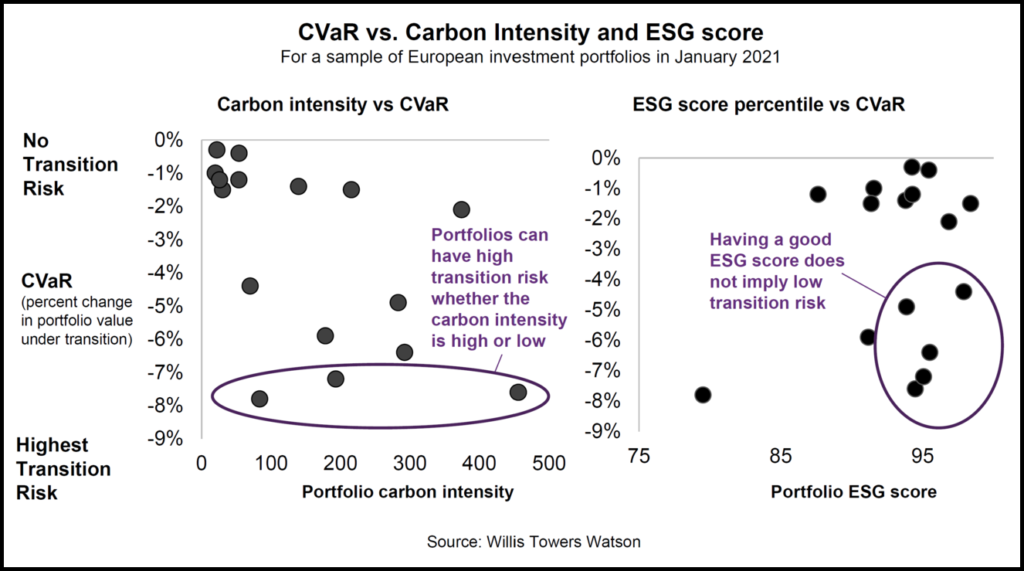
  • Though there are a number of third parties that rate a company’s ESG performance, Willis Towers Watson has an in-house valuation tool it calls CVaR (climate value at risk), which evaluates long-term transition risk, as well as a physical climate risk modelling tool that reviews climate change impacts for selected scenarios and strategic time horizons.
  • As the charts below show, transition risk does not necessarily correlate with ESG scores or carbon intensity metrics.
  • “Evaluating climate risk is about looking at different assets, and that requires a whole set of analytics based upon commodities like the oil crisis and carbon prices changing in the future,” one presenter said.
  • “There is a bit of a debate about if ESG is an emerging risk or an existing risk,” he continued. “It’s not emerging, it is very prevalent now, but we still need to reconcile materiality when it comes to ERM. Ultimately, things need to be quantified in order to be impactful.”

NeuGroup Virtual Meetings: A High Standard

NeuGroup Virtual Meetings: A High Standard

Originally published at NeuGroup.com.

Well over a year into virtual meetings, our peer group leaders share the knowledge they’ve gained along the way.

In the last 18 months, NeuGroup has evolved from a company that only facilitates semiannual, in-person meetings to a network for corporate treasury and finance professionals to regularly connect, share and learn, online as well as (hopefully soon) in-person.

  • Earlier this year, we looked back at how NeuGroup’s events planning staff expertly pivoted to virtual meetings. Now, Peer Group Leaders Anne Friberg, Scott Flieger, Julie Zawacki-Lucci, Ted Howard and Andy Podolsky share their side on the challenges of the transition, and tips for others to facilitate positive, engaging virtual meetings.
  • NeuGroup is so grateful for our incredible team and its ability to think on its feet over the last year and a half, as well as the members that continue making these meetings possible.

What was one of the more difficult obstacles to overcome about the virtual transition?

Julie Zawacki-Lucci: “Virtual meeting participants being reluctant to put themselves on video! Granted, there was a period of the quarantine when we all desperately needed salons/barbers to reopen, but that aside, the best meetings have included active video participation.

  • “As a moderator, in-person and online, I rely constantly on ‘reading the room,’ and engage members/sponsors appropriately.
  • “I typically observe facial expressions for pending questions, comments as well as an indication of how well a session is going and if I need to amplify the energy somehow. Without full video participation, this can be more challenging.”

Scott Flieger: “Not having the ability to have short, spontaneous and informal conversations with colleagues.”

Andy Podolsky: “Getting people to turn on and engage as opposed to being passive listeners. One of the things NeuGroup members seem to value the most is building trusting relationships with each other, which leads to more open discussions that don’t happen elsewhere.

  • “In-person interaction is something we have all done our entire lives – you can’t help but make friends from time to time and make a connection. It’s been much harder virtually.”

Anne Friberg: “The meetings being shorter due to the circumstances. The initial feeling was it’s going to be an awful long time to be on camera, and because if we’re meeting at 9 a.m., the west coast would start at 6 a.m.. So the length of some meetings had to be shortened.”

  • “The other thing is, as a peer group, you can’t always see what everybody’s doing, it can be hard to read the room.”

What’s one thing you wish you could have told yourself to help you be better prepared?

Julie Zawacki-Lucci: “Virtual me: Don’t wait to buy a Peloton. Virtual work: don’t try to fit square pegs into round holes, the virtual transition requires new ways of looking at and doing things!”

Scott Flieger: “Better understand how to use (and not overuse) technology with members.”

Ted Howard: “Don’t worry, members will be receptive (it turns out very receptive) to meet via Zoom.”

Anne Friberg: “Don’t just save the fun stuff for the end of the day. When you’re in an ‘in real life’ session, you get feel of working mode first, then fun mode later. But it doesn’t work that way online.”

  • “Break it up with breakouts and get people into sidebars. We’re better and more mindful with that now.
  • “Now, people are used to virtual meetings, so you can trust the members at the meetings—they’re there for a reason. You have to give some leeway and not just be nervous that there’s going to be dead air.”

What advice do you have for a meeting facilitator dealing with dead air?

Julie Zawacki-Lucci: “Know your participants so you can tap someone who you know has experience (good or bad) with the topic on hand.”

Ted Howard: “Follow the Boy Scout motto: be prepared… and also have questions for the group or particular members (usually one who you can depend on for an answer, etc.).”

Andy Podolsky: “It’s often helpful to have key ‘plants’ in the crowd that know they are going to be asked. Few decline.

  • “It’s also helpful to be structured in your agendas but also leave room for improvisation. I try to have in-session polls ready with key questions, and also prepare enough that I have a full list of open-ended questions on the topic that I know members will engage with.
  • “At the end of the day, it’s on us as facilitators to know our audience and make sure we are hitting on the topics they want talk about. You can’t just lock on a topic and bulldoze through if it’s not resonating.”

Anne Friberg: “To prevent dead air in the first place, plan out the agenda so it feels less like a consecutive series of the same things. Have something that makes each session feel a little different.

  • “Have different speakers, or have different formats of the sessions, so some are some broader overviews, and some are condensed conversation, and when they’re longer sessions they include breakouts.”

NeuGroup Connects FP&A Heads in First-of-Its-Kind Meeting

NeuGroup Connects FP&A Heads in First-of-Its-Kind Meeting

Originally published at NeuGroup.com.

In pilot meeting for our newest group, leaders of financial planning and analysis teams shared and learned in the NeuGroup Process. 

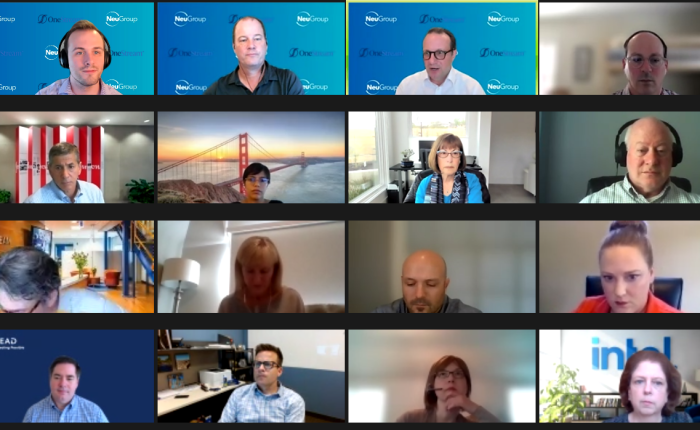
Last week’s pilot meeting of NeuGroup for FP&A Heads was a first in two ways: in addition to being first meeting of the group, it was one of our first ever meetings with two sponsors, OneStream on the first day and Jedox for the second.  

  • Though many NeuGroups focus on separate aspects of corporate treasury, NeuGroup for FP&A Heads joins those like our ERM and internal audit groups, expanding the reach of those who can benefit from the NeuGroup Process. 
  • NeuGroup’s Brian Kalish, one of the peer group leaders who led the meeting, described it as “the greatest FP&A group in the history of the world.” Over 25 FP&A heads from companies across industries had the opportunity to meet, share their strategies and learn from others. 

Full stream ahead. The first day of meetings, sponsored by OneStream, saw members discuss the use of AI and automation, and how the pandemic has changed cash flow forecasting in a number of ways. 

  • But for most of the morning, members got to know each other in an extended introduction session, with attendees sharing their roles, their background and answering a key question: What would YOU do if you had unlimited resources? 
  • One of the more memorable answers: retire. 
  • John O’Rourke, VP of product marketing and communications at OneStream, had the opportunity to walked through how its unified platform can streamline the process of turning pure data into useful information. 
  • The meeting was also unique in its use of Zoom’s chat function, which saw nearly 50 messages sent—just in the first day. 

The Jedox is on the runway. On the second day, Jedox got a chance to share how FP&A’s mindset can spread across a company’s business function with its unique data analytic tools. 

  • In the session, entitled “Digital Transformation- The Key to a Journey from FP&A to xP&A,” Dr. Liran Edelist, the president of Jedox Americas, discussed the new term xP&A. Dr. Edelist sparked a conversation among members about the link between xP&A and digital transformation. 
  • Speed Networking, now a trademark NeuGroup session building on the member-favorite project and priorities, followed the session. For 30 minutes, members got to take part in rapid-fire, free-format one-on-one conversations. 
  • Even the lunchbreak was content-packed, with member-requested breakout topics on rolling forecasts, critical skills and automation. 

Contact us to learn more about joining NeuGroup’s new group for FP&A heads—or any other.

  • Keep up with any upcoming NeuGroup meeting or VIS by visiting our events page, and stay tuned to NeuGroup Insights to read about their key takeaways.

In Defense of the Modern Late Winter Horror Film

In Defense of the Modern Late Winter Horror Film

Originally published at Crooked Marquee on 03/20/2020.

It’s October. The first trailer for a movie drops, and a journalist whom the studio provided free travel, dinner, and set visits proclaims it ‘The scariest movie since last year.’ All other press is embargoed until release day, when the film breaks some sort of new record for poor reviews. Three weeks later, no one even remembers this movie.

The phenomenon of the Late Winter Horror Film is not a new one, but it’s certainly seen an uptick in recent years. From the social media-friendly antics of The Boy in 2016 to the one-two punch of ‘F’ Cinemascores in The Grudgeand The Turning earlier this year, the first quarter is now an annual window packed full of low-budget thrillers with a heavy dosage of schlock. This excludes  big-budget horror like John Krasinski’s A Quiet Place (2018) or Gore Verbinski’s A Cure for Wellness (2016) of course, as well as prestige horror that happens to launch in this season, like Robert Eggers’ tremendous The Witch in February 2016 or Jordan Peele’s duo of Get Out and Us in 2017 and 2019. I’m talking about the fun, dumb ride of something like the unfairly maligned The Turning or even Leigh Whannell’s new-to-VOD The Invisible Man, which uses the joys of Late Winter Horror to reflect cracks in modern society.

Sure, films of this ilk routinely turn a profit, but their reputations couldn’t be worse; audiences and critics frequently dismiss them as formulaic tripe, overly reliant on jump-scares. It puts these movies in an odd place: seemingly panned by everyone, but attracting an endless supply of moviegoers. Yet the very formula that puts so many off is what brings others in the door in the first place.

In The Spierig Brothers’ Winchester (2018), there’s a moment just a few minutes in when the film lays the premise bare—Jason Clarke, as a doctor who doesn’t believe in ghosts, is assigned to perform a psychological evaluation on one of the most famously haunted people in American history, in one of its most famously haunted locations. If you gave each audience member a moment to predict, beat-for-beat, how the rest of the story would unfold, most would probably land every major moment. But is that… a bad thing?

When audiences sit down for a mid-summer action blockbuster starring the most beautiful, muscular people on the planet, they know exactly what they’re getting, and are typically effusive with their praise when it delivers on that promise. Twitter may have thrashed Martin Scorsese when he compared superhero films’ formulaic construction to theme park rides, but most horror fans would probably admit that the most favorable comparison for movies like Winchester is that of a roller coaster. Each scene features the same up-and-down structure, beginning with a scary noise accompanied by tense music which leads to a journey down a creepy hall, SNEAK ATTACK, and then a calm moment of safety before it all starts again.

It should be no different when trashy, low-budget thrillers can satisfyingly provide audiences the cinematic comfort food they paid for than when the standard, lifeless costumed superhero saves the day to widespread praise. You know what you’re getting with movies like these. That’s part of their appeal.

Beyond predictability, Winchester may well be the perfect example of this archetype, packed to the brim with two-dimensional characters and jump scares that land about half the time. But enough effort is put into the creepy set design, quaint “let’s play dress-up” period costuming, and delightfully dark atmosphere that it all works anyway. The defining elements are all there, from the handful of D-list performers supporting one or two beloved actors to the laughable, left-field twist ending. It’s made with just enough craft (particularly an effective, intense long-take sequence at the midpoint) that it doesn’t need to be enjoyed with irony or alcohol— though the latter can certainly add to the experience.

Within the broader label of Late Winter Horror, there are a few specific divisions that stand out. The first is the ghost story, made up of haunted houses like Winchester, haunted children like The Turning, and haunted dolls like the two Boy movies. These films aren’t all necessarily actually about ghosts, but hinge on a central mystery of whether a ghost is actually present.

All four haunts have twist endings without any semblance of set-up, and their degrees of success vary wildly. The Boy (2016) ends with an admirably insane climax kicked off by pulling the rug out from under the audience as a grown man emerges from the walls, delightfully resolving the film’s mystery and taking the last act into slasher territory. On the other hand, its follow-up Brahms: The Boy 2 (2020), tries to one-up the first twist and unwittingly undermines everything that made the first film work. The Turning barely has an ending, instead opting for an attempted mind-F second only to 2012’s The Devil Inside in failing to wrap up its narrative.

Secondly, you have late entries into dead or slowly dying horror franchises like The Grudge (2020), Insidious: The Last Key (2018) and The Strangers: Prey at Night (2018). Typically, when major horror franchises shift from the typical October power month to late Winter, it’s not a good sign for the series. These films have their moments, and boast the trappings of the genre, but all feel slightly trapped by the series in which they’re set. None of them can truly embrace the grotesque quirks of the best Late Winter Horror films, and sort of feel like diet entries in both their franchise and the genre. Even The Grudge, which boasts an uncharacteristically impressive cast led by John Cho, fails to deliver anything memorable aside from a confidently bleak conclusion.

One of the more interesting of these specific archetypes is the single-location “real world” thriller, devoid of anything supernatural. In Escape Room (2019), The Belko Experiment (2016), and this month’s The Hunt, a small cast of characters are trapped in a dreadful situation as their numbers slowly dwindle. Borrowing narrative structure from video games, the heroes survive waves of obstacles until only one or two remain. These movies certainly bring the roller coaster element of Late Winter Horror Films, and the central mystery of “what is happening” keeps the stories engaging.

Of the realistic, single-location thrillers, only The Hunt tries to use the premise to actually say something, but it’s largely bungled by a confused tone. It functions decently as a fun, empty showcase of star Betty Gilpin’s talents and a handful of effective action sequences, but has no idea how to use the language of satire. Writers Damon Lindelof and Craig Zobel attempt to make a grand statement about the hypocrisy of well-off liberals, but can’t land on how to say it, instead coming off as gleefully cruel. Probably the bottom of the barrel in this genre, The Hunt is at the very least an ambitious effort with flashes of brilliance, which is more than one can say about the mindless glut of the most expensive blockbusters.

And finally, in 2020 a new type of Late Winter Horror Film has arrived, and it could very well be the one that actually changes the (undeserved) reputation of the genre. The Lodge and Leigh Whannell’s Invisible Man operate in the same realm as Jennifer Kent’s The Babadook (2014), utilizing a rich subtext to give their films a larger meeting. And much like Hereditary (2018), The Lodge uses long, static takes that immerse the viewer in a deeply unsettling house, creating an ever-present sense of dread even before the story ramps up into outright terror. On top of this appeal to arthouse audiences, they stay true to their roots, imbuing “prestige horror” with the unsettling absurdity of the traditional, schlocky late winter horror film.

Late in The Invisible Man, when the film’s statement about the way society treats women who speak out is clear, it still pauses for an action sequence reminiscent of Scooby Doo. The scene is visually arresting, and Whannell shows off the same action chops he flexed throughout Upgrade (2018), but it’s tonally jarring to jump from addressing a grave matter to a full-on fight with a character that the camera doesn’t show. Characters are flung around a hallway, pulled by the hair and shot, and it’s just a little goofier than one might expect. But where this would feel out of place in a drama that plays everything straight, this adds to its potency, playing on expectations of the genre itself. As it nears the conclusion, The Invisible Man lands precisely because of the way it interacts with the genre’s trappings—inverting the twist ending by affirming the protagonist’s fears.

Outside of the horror genre, the first quarter of the year, once seen exclusively as a dumping ground for all bottom-of-the-barrel projects, has actually become quite a destination. Superhero blockbusters like Captain Marvel in 2019, family friendly fare like Paddington 2 in 2018, and arthouse horror like Get Out and The Witch have helped to kill the myth of the post-Oscars drought. And now, we may just well be witnessing the start of a critical reassessment of the so-called trashy entries that are so intertwined with the release window itself.

Onward is Pixar’s True Successor to The Incredibles

Onward is Pixar’s True Successor to The Incredibles

Originally published at CBR on 03/15/2020.

Mountains and rolling fields. Fantastical creatures. Magical spells. Staffs and quests.

At this point the conventions of high fantasy, largely established by J. R. R. Tolkien, have been so well-trodden, replicated, parodied and criticized that there’s almost no way to make them feel fresh anymore. But much as it did with the equally overdone tropes of the superhero genre with The Incredibles, Pixar has done the impossible and breathed new life into fantasy with its latest film Onward.

In The Incredibles, director Brad Bird makes his intentions clear from the very start — sure, this is a send up and deconstruction of the superhero genre, but it’s also a celebration of what makes the genre work in the first place. Likewise, Onward makes its intentions very clear early on, asking the viewer to make connections to Dungeons and Dragons and Lord of the Rings. But in the end, both films know why they exist in the first place, and function, above all else, as effective, humanistic stories with everything else grafted on top of that.

Through specific, intentional echoes of famous superhero and spy stories, The Incredibleshas a lot of fun with its premise. To start with, the main family of heroes each correspond almost directly to a member of the Fantastic Four, from their personalities all the way down to their superpowers. On top of that, many of the tools and gadgets are ripped straight from the Mission: Impossible films, and composer Michael Giacchino’s theme is clearly riffing on music from the James Bond franchise. In specific moments, characters reference a villain who “monologues,” or the dangers of capes. Even the general premise, a world where superheroes once had a heyday but are now illegal, calls Watchmen to mind.

However, what really makes The Incredibles tick as a send-up of classic superhero tales is its villain, Syndrome. A stand-in for the entitlement of fan culture, Syndrome forces Mr. Incredible to face the mistakes of his past and the arrogance of his present. Bird attacks the hypocrisy of superheroes and fandom head-on, but in the end allows his heroes to grow, improve, and save the day. Ultimately, though it takes a postmodern, deconstructionist approach, The Incredibles is a celebration of the joys, the awe and the wonder of our modern superhuman myths.

In that same vein, Onward pokes small, fun jabs at fantasy properties, but it’s all in the service of a larger point. The most obvious comparison is not in any tales of Middle Earth, but in Faerûn. Of course, the “historical” role playing game that Barley (Chris Pratt) plays is an almost exact recreation of Dungeons and Dragons, but it bleeds into the structure of the story as well. Much like a group of friends gathered around a table in the middle of the night with nothing but character sheets and a handful of dice, each obstacle Barley and his little brother, Ian (Tom Holland), face is solved in increasingly absurd ways. Rather than handle their troubles the way Frodo, Aragorn and Gandalf would, the pair always rely on their luck and ingenuity rather than any sort of skill in battle.

Onward

Though not quite as sophisticated as The Incredibles’ approach of using genre to confront its fans, Onward uses this fun, familiar adventure to draw in the audience, disguising an achingly human story of growth under the surface. Ian and Barley have spent most of their lives without their father, who died when they were young. Of course, they love each other and their mother (Julia Louis-Dreyfus), but the two have often yearned for the father they barely even knew. In a fantastical world that has lost its magic, they go on an epic adventure for the chance to speak to him one last time. Along the way, the two grow closer and make the world a little brighter. The characters’ growth mirrors the way a D&D hero’s stats level-up, but they’re instead developing as people, or in this case elves.

Ian’s growth as a wizard becomes clear around the film’s midway point in an action-packed moment when he is forced to use magic to save someone’s life, and reflexively casts a successful spell at the last moment. The moment lands perfectly, earned through time spent struggling with magic, much in the way a D&D character grinds before leveling up. But as he gains magical prowess, Ian is also learning more about himself, who he is and how much his brother Barley really means to him. This all comes to a head in the emotional climax, one of the most powerful moments in the history of a studio known for emotional resonance.

Onward

This focus on telling a powerful, human story in the context of a genre send-up is what makes Onward click together so perfectly as The Incredibles’ spiritual successor, and it’s also the arena in which The Incredibles 2 falters. The sequel, also directed by Bird, puts too great a focus on living up to the fun and style of the original, but fails to capture the thematic richness. The reveals of the villains, full of twists and turns, is seemingly for the sake of the spectacle, but does very little to build out what the story is actually trying to say or how it impacts and develops the Parr family. Though certainly action-packed and imbued with the same spirit of superheroic fun, The Incredibles 2 is too concerned with living up to its predecessor to earn its place as a genuine successor.

On the whole, Onward, director Dan Scanlon’s follow-up to Monsters University, is a sharp step forward for the storyteller, and could be a portent of a brighter future for Pixar itself. In recent years, only Inside Out and Coco were able to leave a strong impression, with a heap of sequels like Cars 3 and Toy Story 4 and misguided, generic experiments like The Good Dinosaur unable land the way the studio’s films once did. Instead of a direct sequel, Onwardsuccessfully recaptured the magic of The Incredibles by doing what that film did back in 2004 — telling a unique story. With Soul, another original film, just months away, perhaps this is a sign of what’s to come.

Written and directed by Dan Scanlon, Pixar’s Onward stars Chris Pratt, Tom Holland, Julia Louis-Dreyfus, and Octavia Spencer. The film is now in theaters.