Disney’s Aladdin Shows the Promise (and Peril) of Disney’s Live-Action Remakes

Disney’s Aladdin Shows the Promise (and Peril) of Disney’s Live-Action Remakes

Originally published at CBR.com on May 30, 2019.

Questionable marketing and rough CGI led audiences to fear Guy Ritchie’s 2019 Aladdin remake. After all, why even remake the movie if it’s just going to be a lesser rehash of the 1992 classic? Fortunately, the end product is better than many anticipated, but it’s hard to shake the feeling that Disney squandered the chance to make something truly special.

In an unintentional, metatextual metaphor for the studio itself, 2019’s Aladdin starts with daring, clever choices and devolves into a safe, easy cash grab. It shows viewers how these remakes, in theory, could work, and then proves that Disney lacks the bold vision to recapture the magic it once had.

There were signs. After Aladdin‘s first trailer dropped, the internet exploded with angry questions: Why does everything look fake? Why does the genie look like that? Why release a clip of “Prince Ali” when it’s just Will Smith doing a bad Robin Williams impression? Again, why does the genie look like that?

Will Smith as Genie in Aladdin

In just the first few minutes, though, Ritchie is able to show that the movie isn’t just a hollow remake, shifting and tweaking the characters and the way the story unfolds, providing more depth and his own trademark style. But as the film approaches the original’s recognizable set piece sequences at the midpoint, these updates start to fade, and the movie transitions into the sort of bland reskin that was Beauty and the Beast.

When work first began on the original Aladdin 1988, Disney Animation Studios was in desperate need of a hit. After a string of box office flops, the studio made the gutsy call to move forward with projects that had been kicking around for a while, and by the time Aladdin made it to release in ’92, the Disney Renaissance was in full swing.

It was a time packed to the brim with some of the best animated features ever, including The Little Mermaid, Beauty and the Beast and The Lion King. The Renaissance saw the studio embrace risky moves out of necessity, and it paid off tremendously.

Just as The Little Mermaid showed the animation studio the proper way forward in terms of making animated fairy tales that feel simultaneously modern and magical, pieces of Guy Ritchie’s Aladdin remake illuminate the proper way to remake one of these cherished classics.

First and foremost, the script, from Guy Ritchie and John August, reworks much of the story, improving bits and pieces in many ways. From Jasmine’s newfound depth as a character to an overall willingness to embrace Agrabah as a setting in an actual world, many pieces click together beautifully.

On top of this, there are moments sprinkled throughout that allow Ritchie to embrace his own style. Though a filmmaker known for kinetic British crime stories and underrated big budget failures seemed an odd choice, he brings a sense of life when he’s given room to work.

This is especially on display in “One Jump Ahead,” the song in which Aladdin leads Jasmine across the city, running away from the palace guards after stealing food. While the song’s beat stays the same, the movement of the characters fluctuates between high speed and slow motion, bringing a palpable sense of energy and tension to the scene. Unfortunately, that pace quickly fades out, and the movie’s true colors start to show.

Though the movie on the whole isn’t quite as disappointing as Disney’s remakes of Alice in Wonderland and Beauty and the BeastAladdin falls prey to similar issues. Every time Aladdin gets going, it’s dragged back down to recreate diet versions of moments from the original movie.

Ritchie and Will Smith try their hardest when introducing Smith’s Genie character to the tune of “Friend Like Me,” but it just comes off as a lame recreation of Robin Williams’ terrific rendition. This happens over and over in these movies, sucking all the energy out and delivering lifeless, boring sequences simply because they couldn’t deviate too greatly from the source material, and it’s a major bummer.

With something like the brilliant 2016 remake of Pete’s Dragon, it was a different case because the original was little remembered and little loved, allowing director David Lowery more freedom. The big ones, like Aladdin, are packed with memorable, beloved sequences, and it’s clear Disney is too afraid to move too far away from them.

These days, Walt Disney Studios, as a company, sits atop the filmmaking world, miles removed from where they were just 30 years ago. Now they rely on sequels, remakes and reboots, increasingly abandoning strong choices for easy money, and it’s more than a little disheartening to see.

Theaters are inundated with these lackluster nostalgia trips, from Dumbo a couple of months ago to The Rise of Skywalker this December, with at least half a dozen remakes and sequels between them. If the brilliant additions and changes to Aladdin prove that live-action remakes of Disney’s most beloved movies can actually work, the very nature of the studio today proves they may never be worthwhile.

For the company to allow their directors enough freedom to make daring choices, they’d have to lay off the nostalgia-mongering, and anyone who’s seen the studio’s six-year slate knows that likely won’t happen anytime soon.

Just a few months from now, Disney will release Jon Favreau’s remake of The Lion King. If there’s anyone in the world that Disney CEO Bob Iger would trust to make a courageous reimagining of their most beloved movie, it’s Favreau.

By directing Iron Man and The Jungle Book, he helped give birth to two of Disney’s most reliable sources of income — the Marvel Cinematic Universe and these remakes. Maybe Favreau will deliver a significant departure from the source material and we’ll actually get something worthwhile, maybe that will be the studio’s proverbial “diamond in the rough.” But from there, we may have a dark, dull road ahead.

Directed by Guy Ritchie, Aladdin stars Mena Massoud as Aladdin, Will Smith as Genie, Naomi Scott as Princess Jasmine, Marwan Kenzari as Jafar, Navid Negahban as the Sultan of Agrabah, Billy Magnussen as new character Prince Anders, and Frank Welker and Alan Tudyk as the voices of Abu and Iago, respectively. The film is now in theaters.
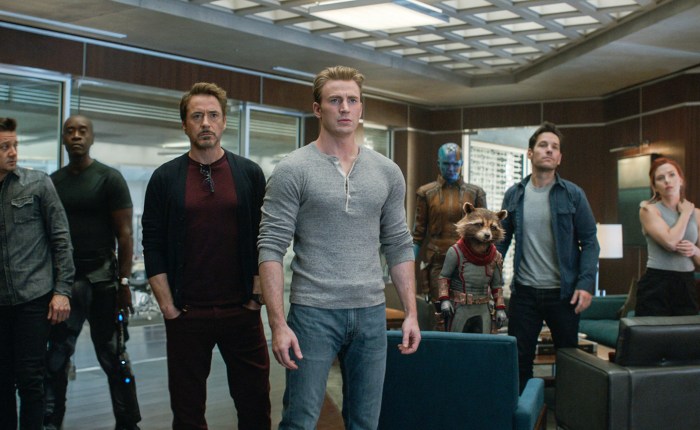
AVENGERS: ENDGAME Packs Marvel’s Strongest Emotional Punch to Date

AVENGERS: ENDGAME Packs Marvel’s Strongest Emotional Punch to Date

Originally published at Cinapse.co on April 26, 2019.

The Marvel Cinematic Universe is a wild achievement. The most ambitious project in cinema history and seemingly the only successful interconnected universe, it has attracted a massive amount of conversation over the last 11 years. The debates have ranged in topic from the usefulness of corporate art to the existence of Superhero Fatigue to Marvel’s lackluster color palette to the importance of representation to the Death of Cinema. Obviously, hyperbole has followed viewers at every turn, but it’s undeniable that producer Kevin Feige has engineered the franchise to dominate the cultural conversation, and it has for over a decade. And now we’re here at the “End,” whatever that means to a story defined by its inability to cease. With Avengers: Endgame, Marvel’s task was as large as the universe itself — directly follow-up Avengers: Infinity War, deliver a satisfying conclusion to this saga, and, most importantly, justify the existence of the last 21 films. Directors Joe and Anthony Russo, along with their writing partners Christopher Markus and Stephen McFeely, return as the first directors to make a fourth entry in the universe, and somehow, they pull off a massive success on every level. Miraculously, the team has created an overwhelming triumph on every front with the universe’s strongest, most impactful, and best entry to date.

The task of approaching a pre-release review for a film of this magnitude is tough, as I obviously want to stay entirely spoiler-free, but also need to figure out how to convey the truly momentous accomplishment of Endgame. Typically, this is the part of the review that features a brief breakdown of the plot and the characters, but how necessary could that possibly be for the 22nd entry in the biggest franchise ever, on a follow-up to a bonkers cliffhanger? So here’s all I can muster: Thanos won and killed half of the universe. The original six Avengers survived, plus a few of their less-important friends. Tony Stark is stuck in space. Captain Marvel is here now. They have to devise a plan and figure out just what it is superheroes do after suffering their greatest failure.

The closest thing to a main character in Avengers: Infinity War was Thanos, which finally added depth to a villain who’d been teased for six years, but sacrificed some of the time spent with the huge roster of heroes. As a result, the breakneck pace and disregard for character introductions put many off from the movie, making it feel more like a “fans only” experience than a standalone entry. In Endgame, the Russos fix some of these issues, but it’s not a 360-turnaround. Whereas Infinity War felt like the duo fully embracing their style of Marvel movie, convoluted plot and all, Endgamefeels more like a traditional Avengers movie. The added running time (and shortened character roster) provides breathing room, allowing the movie to be truly character-focused in the way that Joss Whedon’s two Avengers films were. And though this creates a more welcoming tone for viewers, the script is so saturated with reverence for the universe that even die hard series fans might miss moments, and newcomers could be entirely lost.

The secret of Marvel’s success doesn’t lie, like many other franchises, in grand stories that ape ancient myths or even the impeccable casting of heroes, but in the rewarding payoff of an intersecting universe. By placing all of their heroes in a single, frequently overlapping world, Kevin Feige helped create a series that is always seconds away from a little injection of fun from another time, place or tone. Need an Avenger to make your small-scale Ant-Man movie feel important? Boom, Falcon is here. Need to connect your space saga to the main story? Blam, Thanos pops in to act menacing. Not sure where to take the last Thor movie? Try popping in The Hulk just to see what happens. Sure, some of these were cheap ploys to achieve something the movie hadn’t earned, but it was almost always rewarding to see characters you love surprisingly stop in when you weren’t expecting them. Avengers films were meant to take that feeling and run with it for two hours, but nothing has ever quite succeeded in this regard like Avengers: Endgame. As the climax of the series, it delivers the longest and most powerful sustained payoff I’ve ever witnessed outside of the Japanese Zombie hit One Cut of the Dead (it rules). And once this thing approaches its third act, it ratchets up to a whole other level, packing in an entirely earned hour of pure bliss. Some are sure to deridingly call it fanservice, but when something is perfectly set up and well-earned, does that word even apply anymore? Nevertheless, the finale is so brilliant and so powerful, it justifies every moment that’s come before, even The Incredible Hulk and Thor: The Dark World.

In 2012’s The Avengers, Tony Stark knows that Loki has gone to Stark Tower because of his vanity: “He wants a monument built to the skies with his name plastered on it.” Avengers: Endgame is Marvel’s monument built to the skies. It’s massive, prideful, and unquestionably in love with itself. Viewers who’ve found themselves disenfranchised will find little to love, but True Believers will relish in every moment, callback, and interaction. And why wouldn’t they? This saga has been a comforting, reliable bit of positive escapism for the past 11 years, and now the fans and filmmakers are taking one last victory lap together. It’s with us till the end of the line.

Save Cash this Summer: Ways to Cool Off

Originally published June 3, 2019. This video received the Award of Excellence in the Video Category at the Excellence in Public Power Communications Awards.

As Austin 3-1-1’s Social Media Coordinator, I wrote and directed this fun, old-fashioned video about Austin, Texas’ many ways to cool off. It’s meant to evoke classic Disney shorts and ’70s PSAs.

Groundbreaking CAPTAIN MARVEL Flies in With the Best Origin Story Since IRON MAN

Groundbreaking CAPTAIN MARVEL Flies in With the Best Origin Story Since IRON MAN

Originally published March 7, 2019 at Cinapse.co.

Captain Marvel is something of a miracle. It somehow took the most massive franchise in cinema history almost a decade to star a female superhero, as well as let a woman co-direct, and after all of that fervor there was almost no way it could live up to what it needed to be. As a sequel to the previous films in the series, it needed to be funny, look like a Marvel Movie, have a franchise-relevant MacGuffin, and feature a beloved actor as a villain. To adequately tell a story for female fans of the series, it couldn’t just be unique because it starred a woman, it needed to address this, but also show her as a strong hero independent of her gender. As a response to all of the children on the internet who couldn’t handle a female superhero, it needed to — well it didn’t need to do anything, but it would be nice to poke fun at them. Thankfully, it succeeds on all of these levels, and though it bears the flaws of most Marvel movies, isn’t that kind of the point?

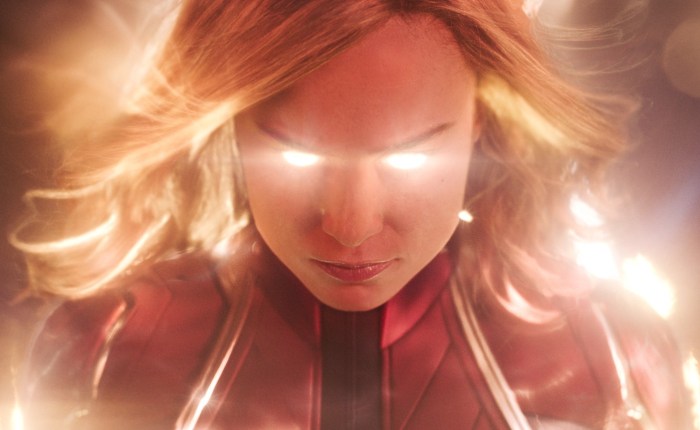
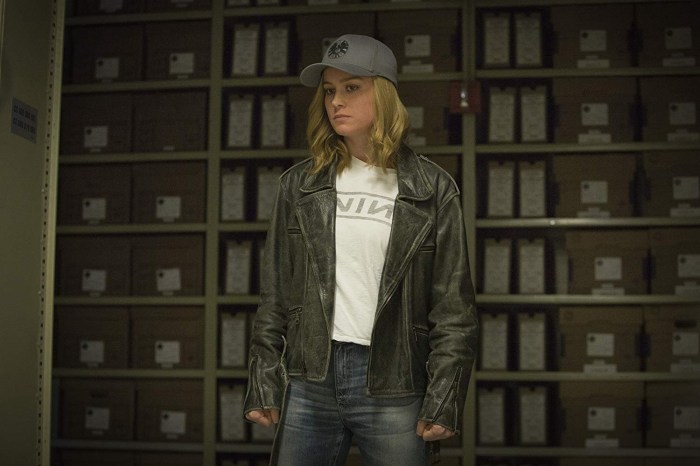
Brie Larson takes the title role as Carol Danvers (aka Vers), who begins the film as some sort of alien super-soldier on the alien planet of Hala, home of alien race The Kree. Though The Kree were the villains of 2014’s Guardians of the Galaxy, they’re just people in their own civilization here, ruled by a being known only as The Supreme Intelligence. Gifted with the power to shoot weird beams of power from her fists, he works together with a team that basically functions as a Kree answer to the Guardians of the Galaxy, led by their very own Normal White Guy, Jude Law’s Yon-Rogg. Yon-Rogg and the rest of the Kree, in their own Jedi Order-like way, insist that emotion is the enemy, and the only way to properly control her power is by suppressing it. The first act is full-on space-fantasy, focusing heavily on the Kree’s war with the Skrull, a villainous, shape-shifting race. It takes a surprisingly dark tone that is sure to turn some people off, as it’s a bit of a break against form for the franchise, but it works quite well — we’re introduced to the mostly brutal life of a soldier in space, and then the whole thing starts to unravel.

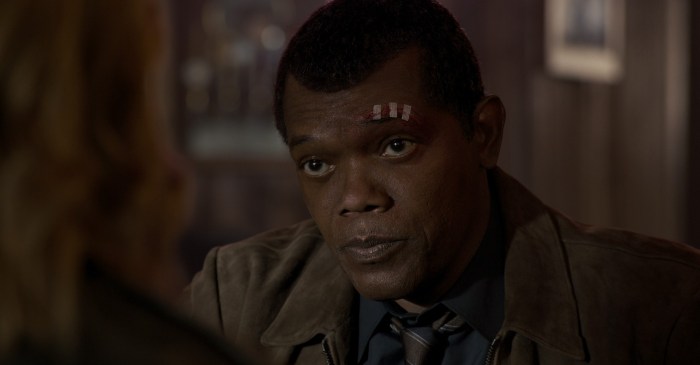
Inevitably, the war leads Carol to Earth, a place she’s seemingly never been, but it awakens dormant memories of life as a normal human. Everything takes a hard turn in the second act, as directors Anna Boden and Ryan Fleck shift everything on its head, pairing Carol with a young Nick Fury (Samuel C.G.I. Jackson). This wildly fun midsection swings fully into Jason Bourne-meets-Shane Black, as they try to decipher her past whilst slinging banter and fighting enemies. The visual effects that make Jackson look like the 90s version of himself are pretty astounding, miles ahead of Michael Douglas’ rubbery face in 2015’s Ant-Man. Jackson works brilliantly in the role again, convincingly naive but still the cynical character we know as an adult. As we see him start to understand his own place in the larger universe, Jackson is probably the best he’s been as Fury since first putting on the eyepatch 11 years ago. He plays brilliantly against Larson, who herself delivers a powerful performance that embodies the uncertainty and courage of a super-weapon learning to become a superhero. Her stoic demeanor at the beginning starts to fade away as she becomes a sort of fun-loving cornball, impressed with her own powers.

Basically every performance in Captain Marvel rules, but Boden and Fleck’s greatest success is the film’s always-interesting, frequently shifting tone. The very dark, war-heavy opening is a great way to introduce the person who Carol is at the film’s start, but it transforms just as she does. As she (and filmmakers Boden and Fleck) clearly starts to become more comfortable, the movie embraces a sense of fun. It’s not a joke factory, the way your Ant-Mans and Iron Mans are, but the jokes have a wickedly high success rate. The filmmakers are even able to milk some hilarious moments from the villainous Skrull Talos, played tremendously by Ben Mendelsohn. Mendelsohn adopts a variety of accents for his many forms, each more ridiculous than the last, but always keeps a humorously aloof face, even under pounds of prosthetic makeup. He’s also not the only one to mine facial humor, which seems to be a style choice by Boden and Fleck — basically everyone in this movie delivers odd, perfectly timed bits of physical humor, and it’s a great departure from the MCU’s typical quip-based humor.

Because of this perfectly executed tone and a cast packed full of lovable, smaller characters that I won’t spoil in this reviewthe 124-minute runtime flies by. This is a very good thing, but it makes it easy to overlook some of the issues that arise when looking back on the film. When you piece together the story and look at everything as a whole, there isn’t anything too uncommon about the story itself. Deftly handled subtext aside, it’s just another Marvel story with a forgettable villain and a simple, a-to-b-to-c plot. Additionally, there’s an unfortunate fact that most Marvel fans don’t care to admit, but has always been true: these films are usually ugly. Aside from outliers like Black Panther and Guardians of the Galaxy, they usually lack any sense of visual style. Grays dominate most of these movies, with wide shots and backlit environments making every moment clear and easily-accessible, but devoid of personality. Captain Marvel is sadly not an outlier, mostly retaining that same color palette and lighting technique. If anything, some moments are even worse, burying key story moments in a cloud of darkness. This is a problem Marvel needs to fix, but the question is how? Is the issue that Feige keeps too tight of a leash on his filmmakers. To paraphrase fellow film critic Sam Banigan of the Welcome Back podcast, will the next phase of Marvel films be a slog to sit through, or will Feige finally allow filmmakers like Edgar Wright (who was fired from Ant-Man) to make something weird in the universe?

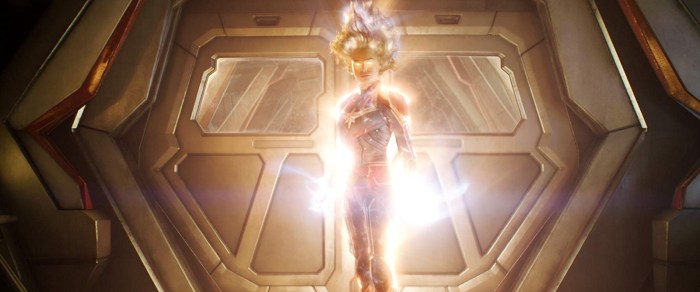
Though the look and general narrative feels stale, the six credited writers still do a brilliant job and one of the toughest tasks — addressing the character’s importance in her universe, but also our own. Over these last 11 years, Marvel Entertainment has produced a whopping 20 movies, the longest continuous story in film history. Though it undoubtedly took Feige far, far too long, he’s finally taking steps forward, in just the last 16 months delivering Thor: Ragnarok (the first directed by a person of color), Black Panther (one of the first predominantly black casts in a blockbuster film, and a groundbreaking step forward for black representation in cinema), Ant-Man and the Wasp (the first to feature a woman as the co-lead). Captain Marvel understands its groundbreaking place in this line of films, and expertly uses the platform to tell a story about being a female-presenting person in modern society. Whether Carol is dealing with Kree, humans, or the sci-fi embodiment of cultural norms, people continue to find reasons to tell her she can’t do something. When we finally see her overcome that and become Captain Marvel, it’s a breathtaking, powerful moment, one that stands up to anything else in the Marvel Universe.

Throughout the MCU’s first 20 entries, six have been origin stories. Boss Kevin Feige kept a high focus on hero-creation narratives in the early days of The Marvel Cinematic Universe, but has pared down in recent years, instead focusing on sequels and fully formed heroes in their own right — to mixed success. Where Ryan Coogler found success with this formula by beginning Black Panther in a world where T’Challa is already a hero, Spider-Man: Homecoming faltered. John Watts briefly flashed past Uncle Ben’s death and turned Peter Parker into a generic, quippy child, devoid of the motivation and buried tragedy that defines the character. With Captain Marvel, Boden and Fleck wisely go back to the origin story, allowing us to meet Carol Danvers before she inevitably groups up with The Avengers. Through a masterful grasp on tone, a bevy of strong performances and a hell of a moving climax, it bypasses every origin since we first saw Tony Stark break out of a cave with the first Iron Man suit. And now, 11 years later, we only have to wait two months before Captain Marvel becomes the one to save him, and connect fists with with the Universe — and her fists with Thanos’ face.