REVIEW: Halloween Is a Breathtaking Throwback That Moves the Series Forward

REVIEW: Halloween Is a Breathtaking Throwback That Moves the Series Forward

Originally published at cbr.com.

David Gordon Green’s Halloween is something of a miracle. After all, the creative team, whose experience is exclusively in comedy, had to deliver legitimate scares while making sense of a franchise with 11 films’ worth of convoluted history, and simultaneously doing something new. The odds seemed stacked against it, but Green presents an astonishing work that dives into the consequences of the 1978 original while still moving into uncharted territory.

In this age of reboots, remakes and rehashes, Halloween utilizes arguably the most intriguing approach to resurrecting a dormant property: the legacy sequel, which typically take place in the same same universe as the original, and frequently feature returning cast members, but make use of the time gap to present the franchise to a new generation. J.J. Abrams’ Star Trek and Disney’s Tron: Legacy have found mild success in that arena, but the revived Star Wars saga holds the real blueprint for injecting life into these old stories. And while Halloween doesn’t reach the heights of Rian Johnson’s Star Wars: The Last Jedi, it certainly represents a high-water mark, respectful of the past but never restrained by it.

RELATED: Listen to John Carpenter’s Revamped Halloween Theme

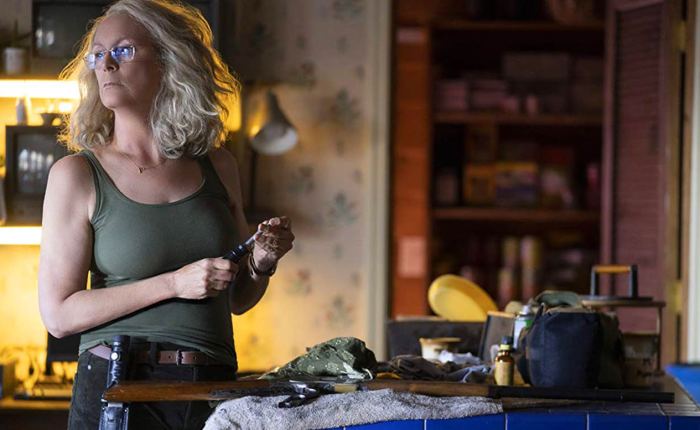
Jamie Lee Curtis returns to the series for the first time in 20 years as the original final girl, Laurie Strode. Writers Green, Danny McBride (yep, that Danny McBride) and Jeff Fradley decided to ignore every entry in the series that came after the John Carpenter original, which permitted them to effectively start from scratch. It’s 40 years to the day after Michael Myers terrorized Laurie and killed her friends, and the trauma of that experience has taken over her life. She’s spent four decades preparing for Michael’s return, basically barricading herself in a fortress, surrounded by weapons. Excavating real-world consequences from a 40-year-old slasher film is an interesting turn for the series, reminiscent of how Creed found a way to explore a darker fallout from the goofy Rocky IV. Curtis plays the role perfectly, transforming into a seemingly hardened warrior, who nevertheless frequently cracks under the paranoia that comes from having faced evil himself.

Halloween 2018

The portrayal of Michael also works surprisingly well, fleshing out the horror icon while retaining a necessary sense of mystery. The audience is introduced to Old Man Michael in the opening minutes as he’s interrogated by true-crime podcasters. Intriguingly, he doesn’t wear his classic mask until about a third of the way through the film, and it’s exactly that kind of restraint that makes this new vision of Halloween so great. Green withholds the mask from the viewers, waiting to unleash it at just the right time. The decision pays off, as Michael Myers’ first real moment back in costume is one of the best horror scenes in years, a tracking shot that follows The Shape in a violent return to form

Michael’s impact on the story can be felt in every scene, even when he’s absent. Laurie’s fear of the killer has poisoned her relationship with her family. Daughter Karen (Judy Greer), who was raised to prepare for Michael’s return, resents her mother’s all-consuming fear, but as the story begins, granddaughter Allyson (Andi Matichak) is desperate for her grandmother to play a role in her life.

RELATED: Halloween Early Reviews Call the Film the Best Since the Original

Among the most interesting parts of Halloween is how it uses the generational dynamic to investigate the lasting impacts of trauma. It’s odd to see such deep themes in a sequel to a 90-minute slasher, but it works surprisingly well. Laurie’s experience with Michael in 1978 could stand in for any harrowing experience, and Green’s point would remain: Allowing your life to become overwhelmed by fear is permitting evil to win. As the family starts to come together once again, it’s touching to see that dawn finally on Laurie.

When Halloween approaches its conclusion, it appears as if Green will take the easy way out, setting up a third act that goes for a recreation of the original’s. But just as you think you know how the rest of the film will play out, it takes an unexpected turn, and ends with a climax as surprising as it is thrilling. The final 45 minutes or so are wall-to-wall payoff — edge-of-your-seat filmmaking that’s both terrifying and electrifying.

With a creative team out of left field and the seemingly head-scratching decision to ignore 40 years of continuity, there weren’t many reasons to be optimistic about Halloween. But expectations be damned, the film is a blast from start to finish. The return of Laurie Strode, to say nothing of the mystery and brutality of Michael Myers, is welcome, but it’s the new additions that help to make Halloween a deeper, richer film than any the series has seen before. Respectful of the past but bold enough to push the series into the future, it’s among the best legacy sequels audiences could hope to see.


Directed by David Gordon Green, Halloween stars Jamie Lee Curtis, Judy Greer, Andi Matichak, Will Patton, Virginia Gardner and Nick Castle. The film screened at Fantastic Fest in Austin, Texas, ahead of its Oct. 19 theatrical release.
MILE 22: A Terrible Action Thriller for the Trumpian Age

MILE 22: A Terrible Action Thriller for the Trumpian Age

Originally published at Cinapse.

Director Peter Berg knows exactly what he’s doing. Since 2013’s ‘Merican war film Lone Survivor, he’s made Deepwater Horizon (a film about the BP oil spill that refused to engage with the entire oil industry’s problems) and the much-maligned Patriot’s Day, an all-too-soon adaptation of the Boston Marathon Bombings which Buzzfeed compared to a superhero movie about American police.

Through all of these thematic issues, unsettling as they are, Berg has shown a clear mastery of technical craft. Even in his earlier work, with Hancock and the film Friday Night Lights, he’s shown an understanding of story structure and directing techniques that justify the price of admission, despite how rough it can be to sit through the films. In Mile 22, Berg throws everything he knows about filmmaking out the window, settling for one of 2018’s most poorly made movies (with a dash of xenophobia).

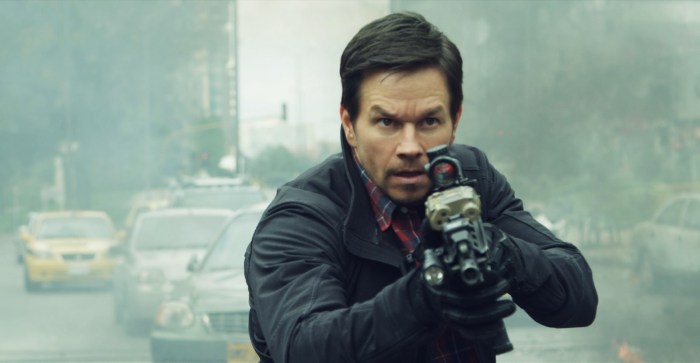
Mark Wahlberg is in MILE 22

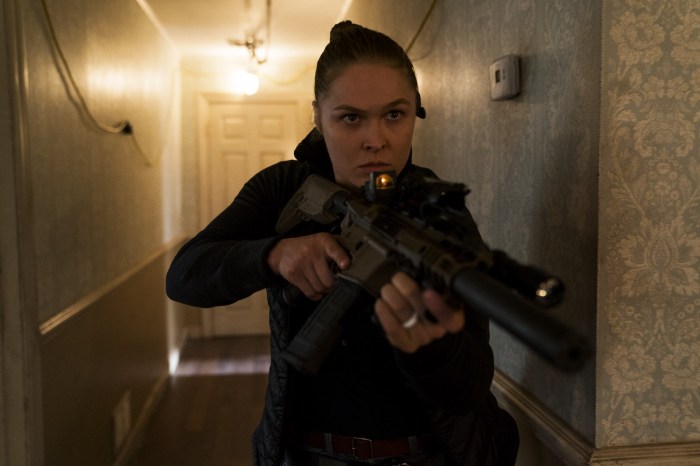
Mile 22 follows a small, deadly spy team that acts as America’s last line of conflict resolution, after “diplomacy” and “war.” Mark Wahlberg stars as team leader James Silva, accompanied by teammates played by Lauren Cohan and Ronda Rousey, with John Malkovich acting as the man behind the scenes.

Wahlberg’s character takes the leading role, what initially seems like a standard action hero, but he’s an elite military operative with extensive training, essentially transforming him into the perfect soldier. BUT he has a really wild side, so people have to watch out for him so he doesn’t snap. BUT he has a tragic past and mental issues which make him sympathetic. BUT he’s always the smartest guy in the room, so no one can ever top him. Basically, Wahlberg’s Silva is a half-blended mixture of a CBS detective, Batman, Jason Bourne, and The Punisher, executed with all the nuance you’d expect from Berg. Particularly egregious is the way it ostracizes people with mental health issues, reminiscent of Ben Affleck as an autistic assassin in Gavin O’Connor’s dreadful The Accountant. Mile 22 uses an ambiguous disorder to excuse Wahlberg’s mistreatment of his coworkers, as he starts every scene whispering and ends by screaming at the top of his lungs. Unfit to just be offensive, he’s a human crescendo, the most annoying lead in a film this side of Grown Ups.

Lauren Cohan is in MILE 22 too

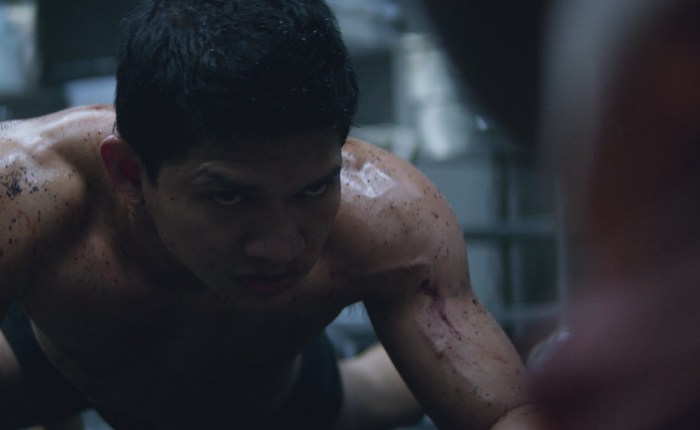
The plot kicks off when Wahlberg and his team meet Iko Uwais’ Li Noor, a mysterious foreign agent with a hard drive that contains the locations of radioactive materials. Noor promises to unlock the device provided the team can transport him to the US, and the rest of the movie focuses on getting him the 22 miles (get it) to the airport against the wishes of terrorists, gangsters, and even the foreign police. The film is 95 minutes, but it takes an hour to understand exactly what the movie is about, and then the last 30 involve traveling those 22 miles. In a sense, its “world against you” structure evokes John Wick Chapter 2, except entirely incoherent. Every scene contains hundreds of lines spoken by characters, whether they are introduced or not, who mean nothing to the plot. Different policemen, soldiers, and secret agents will pop in for a second, deliver a horrible joke or a vital plot point, then leave the film for good. Because of this, it’s a quickly paced film with dialogue flying at you from all angles, but doesn’t actually go anywhere.

Yup, that Ronda Rousey

Worse is the implicit way Berg treats people, politics, and thematic statements. Mile 22 is never all that concerned with being a political movie, but it certainly feels like writers Lea Carpenter and Graham Roland (Lost, Jack Ryan) want the audience to know it still takes place in a political world. The characters randomly will make fun of Snapchat or millennials, but will have a collection of American president bobbleheads, complete with an absolute disaster of a Donald Trump bobblehead situated next to President Obama as if Trump is just another normal American president. Obviously all of the villainous characters just happen to be people of color, while all the heroic soldiers, police officers, and secret agents are white. The message of the film is clear, whether Berg intended this or not — only trust white, American law enforcement to save the day.

John Malkovich plays “mother” is a sentence I never expected to write

For its flaws as a story, there is nothing in Mile 22 as infuriating as the way it treats Uwais. The Indonesian star of Gareth Evans’ Raid films could potentially be the greatest action star currently working, and certainly has proved he deserves a place in the conversation with Headshot and Beyond Skyline. Uwais does not come to play, and after choreographing some of the best fight scenes of all time in both films in The Raid series, I was excited to see him listed as both star and fight choreographer in this movie. When he finally started fighting people, I almost leapt out of my chair with excitement, only to sink back in with disappointment — Peter Berg is one of the worst up-close action directors I’ve ever seen. His editing style is more egregious than the fence scene in Taken 3shaking the camera and cutting away so quickly it becomes literally impossible to make out anything. In probably seven or eight battles that Uwais fights in, only two or three are actually comprehensible; the rest make you feel like you’re in a gory blender.

As a film, a piece of propaganda, and a showcase for Iko Uwais, there are very few redeeming qualities in Mile 22. In between the nonsensical plot, stomach-churning editing, and poor acting, there is no reason to see this instead of Mission: Impossible — Fallout or rewatching The Raid. Just watch one of those instead, or do literally anything else — skip on this movie from the conservative reboot of Paul Greengrass.

Mile 22 opens in theaters August 17, 2018.

Austin 3-1-1 Back to School Social Media Ad

Originally published on August 16, 2018 on Austin 3-1-1 Social Media.

As the summer of 2018 ended, I independently produced this brief, back-to-school ad that helped Austin residents understand how they can report broken school zone lights.

“Prepare to head back to school and get ready for Austin Transportation Department, City of Austin‘s school zone flashing beacons, coming to a neighborhood near you!”

Oscar-nominated Chilean film ‘A Fantastic Woman’ puts a strong trans woman in the spotlight

Oscar-nominated Chilean film ‘A Fantastic Woman’ puts a strong trans woman in the spotlight

Originally published at The Daily Texan.

Watching “A Fantastic Woman,” I couldn’t help but think about the comments underneath a recent tweet by The Washington Times.

“Is Caitlyn Jenner a woman?,” the tweet reads. “A growing body of research says no.”

The replies contained a massive pool of insults, with some calling Jenner an “it,” others called her an “alien” and others called her a “monster.”

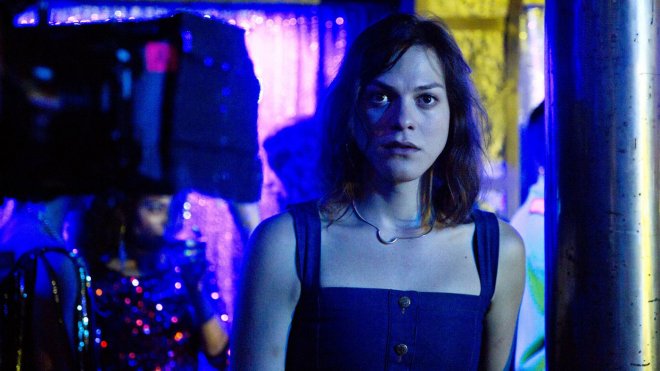
In this atmosphere, Chilean director Sebastián Lelio’s “A Fantastic Woman” boldly follows transgender woman Marina Vidal (Daniela Vega), who fights every day for the right to be herself. As the film progresses, it reveals itself as both a poignant story of loss and a window into the life of an unrepresented community. Lelio, simply by showing the struggles faced by a trans woman, is making a statement film, pulling double duty and succeeding on both levels.

The story opens with Orlando (Francisco Reyes), a divorced, cisgender, heterosexual man in a relationship with Marina. The two have a seemingly normal, healthy partnership — he works a day job, she waits tables and sings at a club, they go out for drinks and then head home to have sex. Lelio does not objectify or make a big deal out of Orlando and Marina’s sexual relationship. It just feels like another part of living. Their life feels routine, but never unromantic.

Very early on in the story, Orlando dies of a sudden aneurysm, and Marina is left to pick up the pieces of his life. Though not the first movie of this kind, “A Fantastic Woman” is a new take on the grief film, made so much more impactful by the size of the hole Orlando leaves in Marina’s life.

Orlando is survived by a brother, son and ex-wife, each of whom has their own terrible way of relating to Marina. Every member of this family represents a different manner in which society treats trans individuals, starting with Orlando’s acceptance of Marina and slowly disintegrating from there. His brother sees Marina as who she is, but is afraid to stand up to anyone for her; Orlando’s ex-wife sees Marina as a perversion, hurling verbal and psychological abuse at her in every scene; and Orlando’s son is the worst offender, physically assaulting Marina for her own existence. It makes for a brutally difficult film to watch, but a challenging, brilliant work of art.

Vega gives one of the best performances in any film released in the past year, and it’s a shame the film is only nominated for the Best Foreign Language Film Oscar. Through a wide range of nuanced facial expressions and a towering screen presence, Vega dominates the movie. She largely plays Marina as a restrained, quiet individual, allowing glimpses of her grief through small facial tics and body posture. In the few moments where she’s allowed to let loose and show her emotion, Vega shows the tragic pain of a heartbroken, misunderstood human who just seeks acceptance. These moments where her pain surfaces act as punctuation marks on an already brilliant performance, proving Vega as a fully formed performer in only her second film.

It is groundbreaking that Vega is transgender herself, as Hollywood has a history of hiring cisgender men to play trans women, including Eddie Redmayne, Jared Leto and Jeffrey Tambor. But these actors generally tell the same story about a trans woman undergoing her transition, and Lelio has no interest in Hollywood’s vision of trans women. The picture he paints is of a woman undergoing a personal loss, a woman who faces an inordinate amount of obstacles, a woman who may be called “it,” “alien” and “monster,” but emerges fantastic.

“A Fantastic Woman”
Rating: R
Runtime: 104 minutes
Score: 4.5/5 stars

Photo Credit: Courtesy of Sony Pictures Classics

Ava DuVernay’s empathy saves the groundbreaking ‘Wrinkle in Time’ from getting lost

Ava DuVernay’s empathy saves the groundbreaking ‘Wrinkle in Time’ from getting lost

Originally published at The Daily Texan.

There are 375 movies in history with a budget of over $100 million , but the first of these films directed by a woman of color arrives this Friday with “A Wrinkle in Time” from Ava DuVernay.

Much hype has followed “A Wrinkle In Time” since its announcement in 2016, and many have paired the film with last month’s “Black Panther” as milestones in Hollywood’s march toward progress. Although it doesn’t quite hit as hard as Ryan Coogler’s superhero masterpiece, DuVernay’s “Wrinkle” is a charming fantasy epic, a film that swings for the fences at every turn and hits more than it misses.

Young actress Storm Reid leads the film as Meg Murry, a brilliant 14-year-old student who has been emotionally distant ever since the disappearance of her father (Chris Pine) four years earlier. Meg’s parents are NASA scientists, but her mother (Gugu Mbatha-Raw) drifts away from the field after her husband’s disappearance. Early flashbacks and prologues show Meg and her parents working on experiments together, and it’s refreshing to see black women scientists, as opposed to bespectacled white dudes huddled around a table.

Just before Mr. Murry’s disappearance, the couple adopted a young son, Charles Wallace (Deric McCabe), who grows up with Meg. To get a sense of Meg and Charles Wallace’s life before the adventure begins, the film shows a normal day at school for the two of them, and it is incredibly painful to watch. Meg is bullied; Charles Wallace hears teachers gossip about their father; the principal gives Meg a lecture. It all feels ripped out of a lower-tier Disney Channel Original Movie. This series of events thankfully constitutes only the film’s first fifteen minutes, but it kicks off an epic fantasy adventure with a whimper.

It’s a great relief when Mrs. Which (Oprah Winfrey), Mrs. Whatsit (Reese Witherspoon) and Mrs. Who (Mindy Kaling) finally enter the film, providing it with exactly the burst of energy and light it needs. They tell Meg that they need her to help them save her father, and then they whisk her, Charles Wallace and their friend Calvin (Levi Miller) away on a galaxy-hopping adventure.

Though the first act of “A Wrinkle in Time” is conventional and exposition-heavy, it all acts as a setup for DuVernay to absolutely let loose, and the film quickly goes from cringeworthy to crowd pleasing. It does not spend too much time bogged down in the hows and whys of the characters’ supernatural abilities or otherworldly looks — these things just are. Winfrey, Witherspoon and Kaling breathe humorous guiding light into the movie, but Meg, Calvin and Charles Wallace have to figure out their own way through the universe to Meg’s father.

The extraterrestrial locales visited by the trio borrow heavily from other sources, including Dr. Seuss, “The Wizard of Oz,” “Avatar” and sometimes even Japanese video games, such as “Xenoblade Chronicles.” Some are whimsical, some are intimidating, but they are all engaging. Instead of focusing on the science of space travel and other planets, the film focuses on its characters, their relationships with one another and their relationships with themselves.

As the film goes on, DuVernay grows more confident, concluding the story with a trippy, mind-bending metaphor of a finale that one would expect from high-concept science fiction, not a Disney fantasy-adventure. Throughout the film, Meg grapples with herself and the person she feels pressured to be, rather than who she is. As she barrels toward this conclusion, it becomes clear that her journey is just as much about her own growth as it is about her father.

In spite of its flaws, “A Wrinkle in Time” is an earnest plea for how much better the world could be if we loved ourselves and loved one another. As corny as that sounds, the plea, like the movie, rings true.

“A Wrinkle in Time”

Rating: PG

Runtime: 109 minutes

Score: 3.5/5 stars


Comedy thriller ‘Game Night’ plays into genre tropes, fails to play up the laughs

Comedy thriller ‘Game Night’ plays into genre tropes, fails to play up the laughs

Originally published at The Daily Texan.

“Game Night” feels like a film conceived by two extraordinarily high filmmakers between tokes: What if David Fincher’s “The Game” met the Steve Carell/Tina Fey vehicle “Date Night,” and it was about people who liked having a game night?

The resulting story is a sloppy, half-baked franken-script of two infinitely better films, a movie which should’ve been left on the cutting-room floor. Surprisingly effective direction from John Francis Daley and Jonathan Goldstein, the helmers of 2015’s “Vacation” remake, and a brilliant cast led by Jason Bateman try their hardest to save the film, but nothing can salvage the bad script packed with cheap jokes.

Bateman and Rachel McAdams lead as Max and Annie, a hyper-competitive married couple who host game night with their friends every week. When Max’s equally competitive brother Brooks (Kyle Chandler) comes to town, he throws a wrench into their regular plans, asking to host a “very special” game night at his house.

Brooks’ idea of a game night involves hiring actors to come in and “kidnap” one of the party’s members, leading the rest in a race to find the missing individual. It’s an escape room meets The Game from “The Game,” a large-scale competition where no one knows what is real and what isn’t. From there, the plot borrows the structure and elements of “Date Night” as the group gets tied up in what seems to be real trouble, involving gangsters, drugs, a car chase and potentially real kidnapping.

While there’s nothing wrong with well-executed genre parody, films that specifically parody one other film never work, and “Game Night” is certainly the newest addition to that club. Though the film could easily have used its plot to make a broader parody of the action/thriller genre, all of its jokes fall into three categories: easy, implicit references to “The Game” (which is 20 years old), mindless references to any number of pop culture icons, and the seldom clever, well-earned joke. It leads to an exhausting time, one that moves at an extraordinarily brisk pace but is still somehow boring.

It’s a shame that writer Mark Perez drops the ball so hard, because everyone else attached to the movie puts in some of their best work. However, no one matches Jesse Plemons as creepy neighbor Gary. Plemons steals the show in only three or four scenes, each of which are the film’s only laugh-out-loud moments.

Daley and Goldstein miraculously show themselves as fully formed comedy directors, trying their hardest to work with the script they’re given. All of the establishing shots in “Game Night” are not the typical footage of exteriors, but of highly detailed dioramas, making the whole movie feel like it takes place on a game board. These little touches give the film its only semblance of personality.

However, none of these touches are as impactful as the comedic action centerpiece, a multi-minute single take that is some of the best physical comedy in any recent movie not featuring the small bear Paddington. The camera dances around a massive house, following the many characters and giving each a chance to stand out, not unlike the casino fight in last week’s “Black Panther.”

Brilliant direction and hilarious performances abound in the film, but it’s hard to love. Last year, “The Big Sick” and “Darkest Hour” proved strong scripts can overcome sloppy direction. If there’s anything “Game Night” proves, it’s that no amount of excellence can save a bad script.

“Game Night”

Rating: R

Runtime: 100 minutes

Score: 2.5/5 stars