
Originally published at CBR on January 20, 2020.
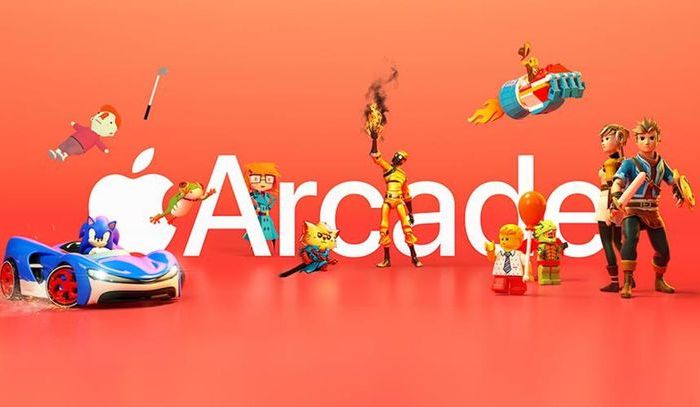
In September, Apple launched Apple Arcade, a $5-per-month subscription service that provides unlimited access to a massive library of video games, exclusively on Apple devices. Joining the heavy-hitting likes of the PlayStation Now and Xbox Game Pass subscription services was never going to be easy for other companies, but Apple had a particularly massive hill to climb. The company has spent the past decade earning a bad reputation for its deep catalog of largely terrible iPhone games, with only a handful of truly great titles. Apple combated that by restricting who was allowed to make games for the service.
Arcade is a curated selection of games specifically commissioned for the service. Some games are simply available on Apple Arcade, but for others, the tech giants shelled out the big bucks, purchasing the mobile rights for indie games from popular companies like Simogo and Capy.
At launch, Apple Arcade provided members with about 60 games, but that number has quickly elevated to well more than 100, consistently offering more and more reason to come back to the service. Many of these games, like Oceanhorn 2, Marble it Up: Mayhem and Shinsekai: Into the Depths offer fully-fledged gaming experiences that are best with a controller, showcasing the service’s versatility. But on the other hand, most of the games finally deliver on the promise of the App Store in 2008: fun, delightful, bite-sized experiences optimized for a small touch screen, making any commute pass by in no time. These are just some of Apple Arcade’s can’t miss entries as of January 2020.
GRINDSTONE
Grindstone is, quite easily, the perfect encapsulation of Apple Arcade. Featuring all of the fun, addicting trappings of any great mobile game, but unburdened by ads or microtransactions, it represents the massive promise of the service. And on top of that, it’s an absolute blast.
The core of Grindstone is very simple and will be very familiar to most players. It is a color-matching puzzle game, similar to Candy Crush or Bejeweled, but with plenty of its own flourishes. To start, it has some of the best 2D hand-drawn art in any video game from last year, focusing on a heavily muscled brawler (you, the player) as he slashes his way through a dungeon of monsters (which are, of course, the color-coded pieces of the puzzle). Each level asks the player to destroy the monsters and make their way out of the dungeon, with optional collectibles along the way. And just when it feels like Grindstone will ask the player to wait to recharge before they can continue, or buy a pass, or watch an ad, or do some other menial task to monetize the game…it doesn’t. The 150 levels fly by in a flash, thanks to a Nintendo-level commitment to keep introducing new elements to keep gameplay fresh.
WHAT THE GOLF
There are very few games that understand humor on the level of What the Golf. Rather than relying on text-based humor like Donut County or the situational humor of Untitled Goose Game, What the Golf uses the language of video games to continuously surprise and delight players.
Ostensibly, the game is about golf. For the first few levels, it’s a 3D golfing game. And then, at the drop of a pin, it’s something much more. The wildly subversive game offers surprise after surprise, using the basic premise of being a golf game to deliver minigames that include hockey, platforming and, uh, driving? I won’t spoil anything else from the game, but trust that it’s a touch-screen wonder, bringing hours of fun, surprise, and laughter to your iPhone.
LEGO BUILDERS JOURNEY
On paper, LEGO Builder’s Journey doesn’t make a ton of sense. The popular toy brand has already planted its flag in the games industry by making a brand out of fun, quick-paced, child-friendly brawlers based on a popular IP. From the early days of LEGO Star Wars to the most-recent LEGO DC Super-Villains, there is already a clear template for LEGO games. LEGO Brawls, which was available at Apple Arcade’s launch, shirked those expectations slightly, but still featured that same fun, funny LEGO atmosphere.
LEGO Builders Journey completely bucks this trend and goes all the way in the other direction. Much closer to a meditative, quiet mobile puzzle game like Monument Valley, Builder’s Journey is tremendous. It follows a father and son, made out of abstract legos rather than the usual minifigs, as they go on an adventure. The slow, haunting music perfectly accompanies their story, as the player uses their knowledge of the decades-old toy to build the environments and help the pair along their way.
SAYONARA WILD HEARTS
Sayonara Wild Hearts is one of the best albums of 2019. Full of fun, poppy earworms, the game’s soundtrack absolutely must be heard. On its own, the game sort of defies description. Partly a level-based runner game, party a rhythm game and party a story-based drama, it’s something new entirely. Though some of the touchscreen controls can be sort of unresponsive, the game’s beautiful, colorful visuals and absolute banging soundtrack easily make up for that.
On top of this, it’s also a very beautiful love story between two women, which unfortunately is a type of love story that doesn’t get told often enough. This subtext isn’t new to gaming but Sayonara Wild Hearst finds brilliant ways to use gaming to tell a story that otherwise might not have found an audience.
CRICKET THROUGH THE AGES
Much like What the Golf, Cricket Through the Ages uses a very basic gaming premise as the set up for surprise, delight and plenty of laughs. The central conceit is that you, the player, are playing cricket in ages since the dawn of man. A posh British narrator explains how cricket has impacted the course of human history, which is all, of course, fictional.
It’s a short, fun journey from dinosaurs to cowboys and everything in between, and though it doesn’t live up to the true inventiveness of What the Golf, it’s still a small delight.
SUPER IMPOSSIBLE ROAD
Super Impossible Road, like Grindstone, has the basic structure of a dreadful mobile game. The player controls a ball on a track, with neon visuals and an annoying EDM soundtrack. But there is a basic reason why “ball on a track” games have been successful on flash sites and app stores for so long, in spite of bad design and obtrusive ads—they are simple and fun. Super Impossible Road is no different, in spite of that dreadful name.
Players can upgrade and modify their ball, but the progression system is slightly tacked-on. The real meat of the gameplay is driving on the road, or rather, off of it. The hook here is that you will never win a race if you simply stay on the track, so you have to jump off and let gravity be your shortcut, reading the track and landing back on it before falling into an abyss. The game really isn’t all that different from previous games of its kind, but it has a few very important things going for it: no microtransactions, no ads and plenty of content to keep you busy.
 Justin Don Jones