All of Christopher Nolan’s movies are about exploring what scares him most

All of Christopher Nolan’s movies are about exploring what scares him most

Originally published at Polygon.com.

From Memento to the Dark Knight movies to the new Oppenheimer, one running theme links his stories.

In 2018, an interview with Oppenheimer director Christopher Nolan went viral — possibly because it was the first time he’d ever appeared relatable. In that conversation, he said his children sometimes jokingly call him Reynolds Woodcock, after the aloof, reserved protagonist of Paul Thomas Anderson’s Phantom Thread. Though Nolan’s scripts often feature signature, repeated (and often mocked) tropes, including time manipulation, dead spouses, and protagonists who face complex moral decisions, he injects very little of his own personality into his movies. Characters like Leonardo DiCaprio’s troubled team leader in Inception and Robert Pattinson’s equally troubled handler in Tenet are clearly styled after Nolan himself. But viewers rarely come away from Nolan movies with a greater understanding of his worldview, at least compared to the way directors like Martin Scorsese or Quentin Tarantino put their personalities on screen in every movie they make.

One underappreciated idea does recur over and over in Nolan’s work, though, and it surfaces again in Oppenheimer. The protagonists of many Nolan films become obsessed with a specific fear and go to great lengths to better understand or control their terror. In Nolan’s first blockbuster, Batman Begins, gangster Carmine Falcone (Tom Wilkinson) tells Bruce Wayne (Christian Bale), “You always fear what you don’t understand.” The quote acts as something of a guiding light not just for Bruce, but for Nolan’s back shelf of protagonists who seek a deeper knowledge of their phobias for the sake of control. In Oppenheimer, Nolan imprints this narrative device on a historical figure for the first time, and it feels like he’s being more open than ever about revealing what keeps him up at night.

There is no evidence that J. Robert Oppenheimer, the father of the atomic bomb, struggled with frightening visions of high-energy subatomic particles. This doesn’t come through in any documents about Oppenheimer the man, and Nolan seems to have added the idea to dramatize the film, as Oppenheimer periodically pauses to register and recoil from flashes of light, particles, and fire, all representing wordless fears he can’t explain. Though the movie’s dialogue never explicitly references these mysterious events, Nolan’s evocative imagery asks the audience to fill in the gaps themselves — are we seeing what’s in his mind, his future, or something else entirely?

Nolan’s Oppenheimer presents as an awkward, unsociable student with something off about him. It isn’t hard to imagine that he’s troubled by something. And what does this frightful student do? He dives deep into particle physics, devoting his life to understanding and attempting to control his fear — until it reaches critical mass.

The origin story in Batman Begins is the clearest example of this phenomenon: Batman’s vigilante persona was inspired by a traumatic childhood experience with bats. That plot point hews closely to Frank Miller and David Mazzucchelli’s classic 1987 comic arc Batman: Year One, but the film dives far deeper into Bruce’s fervent need to understand and control his terror. In a number of sequences featuring fear gas used by the movie’s villain, Scarecrow (played by Cillian Murphy, who also plays Nolan’s Oppenheimer), the filmmaker dips his toes into horror-inflected imagery. The Gothic architecture of Gotham combines with nightmarish sequences where villains see the superhero as a demonic monster, literalizing the metaphor of Bruce becoming his fear.

Following Batman Begins, Nolan’s Batman movies continue to dwell on this theme. Nolan assaults his protagonist with a series of villains who take on the shape of new nightmares. It’s as if he’s trying to teach Batman how to overcome the things he most dreads.

In addition to Bruce Wayne, the two protagonists Oppenheimer most resembles in this way are Leonardo DiCaprio’s Dom Cobb in Inception and Guy Pearce’s Leonard Shelby in Memento. The latter, Nolan’s mainstream breakthrough, focuses on a man with short-term memory loss who is so afraid of forgetting his purpose that he has it tattooed on his body. A significant portion of Inception takes place within Cobb’s dreams, which, through a very thinly veiled metaphor, are haunted by his wife Mal, played by Marion Cotillard. Guilt-ridden by the circumstances of her death, he subconsciously creates a murderous avatar in the shape of the shame he’s too afraid to face. He wrestles for control within his memory, attempting to hide her in a symbolic (and literal) basement in his mind. It doesn’t exactly work out.

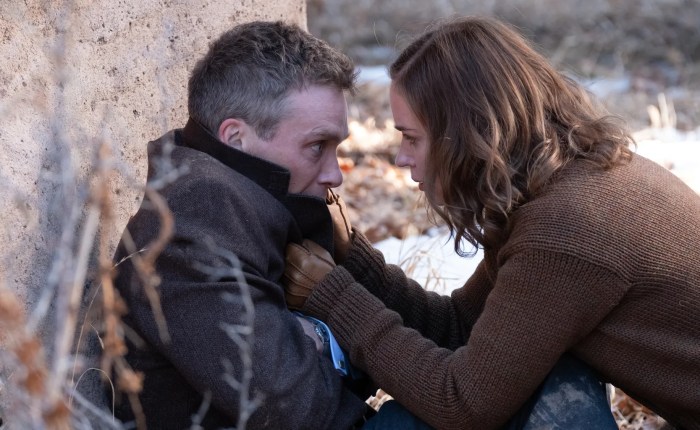
Throughout Oppenheimer’s three-hour run time, Cillian Murphy’s protagonist struggles with existential horrors that are much larger than his personal regrets. In addition to the frightening visual bursts of atomic space, the film focuses most of its second-act tensions on the threat that the first atomic bomb test might ignite the hydrogen in Earth’s atmosphere. In real life, that threat was discussed and dismissed by the physicists at Los Alamos. But Nolan lingers on it, sending Oppenheimer to get the opinion of Albert Einstein, who acts as a sort of patron saint of science in the film. But Einstein provides no comforting answers, which ratchets up the tension and fear felt by characters and audience alike.

The threat of humans bringing about their own extinction is no new ground for Nolan’s films. And that may answer why, exactly, he’s so obsessed with fear and the war for control. In Interstellar, climate change devastates crops with a futuristic, dystopian blight. In his 2020 movie Tenet, an unseen society in the future attempts to reverse the flow of time to stop climate change before it gets out of hand. Between those two movies lies the World War II film Dunkirk, about the struggle for survival against a faceless threat. Though the Nazi presence implicitly hangs over the movie, Dunkirk doesn’t linger on a potential apocalypse in quite the same way as other Nolan movies. But the pervasive dread remains.

The fearsome final minutes of Oppenheimer drive this point home, as Nolan gives his protagonist a vision of a future devastated by nuclear apocalypse. His visions of dancing particles and flames give way to a clear, unambiguous doomsday — an uncountable number of rockets fire from an unknown country, streaking across the globe and detonating. Fire consumes everything.

Nolan’s devotion to the theme of people wrestling with their fears ties him to his protagonists, and his more recent focus specifically on humanity causing its own doom ramps that fear up to a universal level. It’s a heavy, existential worry, but it’s an illuminating glimpse into the mind of an artist who rarely lets the audience in. In his films, when a character obsesses about a topic, it typically means that’s the fear that keeps them up at night and drives them toward obsession as a means of control. Both Nolan and his iteration of J. Robert Oppenheimer are exposing their fears that humanity has the power to devastate life on Earth. And as climate change and political tensions simultaneously rise across the planet, it’s hard to blame him. 
In Defense of the Modern Late Winter Horror Film

In Defense of the Modern Late Winter Horror Film

Originally published at Crooked Marquee on 03/20/2020.

It’s October. The first trailer for a movie drops, and a journalist whom the studio provided free travel, dinner, and set visits proclaims it ‘The scariest movie since last year.’ All other press is embargoed until release day, when the film breaks some sort of new record for poor reviews. Three weeks later, no one even remembers this movie.

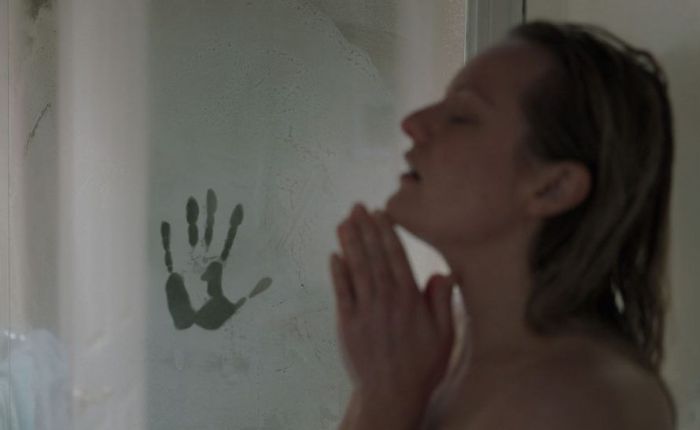
The phenomenon of the Late Winter Horror Film is not a new one, but it’s certainly seen an uptick in recent years. From the social media-friendly antics of The Boy in 2016 to the one-two punch of ‘F’ Cinemascores in The Grudgeand The Turning earlier this year, the first quarter is now an annual window packed full of low-budget thrillers with a heavy dosage of schlock. This excludes  big-budget horror like John Krasinski’s A Quiet Place (2018) or Gore Verbinski’s A Cure for Wellness (2016) of course, as well as prestige horror that happens to launch in this season, like Robert Eggers’ tremendous The Witch in February 2016 or Jordan Peele’s duo of Get Out and Us in 2017 and 2019. I’m talking about the fun, dumb ride of something like the unfairly maligned The Turning or even Leigh Whannell’s new-to-VOD The Invisible Man, which uses the joys of Late Winter Horror to reflect cracks in modern society.

Sure, films of this ilk routinely turn a profit, but their reputations couldn’t be worse; audiences and critics frequently dismiss them as formulaic tripe, overly reliant on jump-scares. It puts these movies in an odd place: seemingly panned by everyone, but attracting an endless supply of moviegoers. Yet the very formula that puts so many off is what brings others in the door in the first place.

In The Spierig Brothers’ Winchester (2018), there’s a moment just a few minutes in when the film lays the premise bare—Jason Clarke, as a doctor who doesn’t believe in ghosts, is assigned to perform a psychological evaluation on one of the most famously haunted people in American history, in one of its most famously haunted locations. If you gave each audience member a moment to predict, beat-for-beat, how the rest of the story would unfold, most would probably land every major moment. But is that… a bad thing?

When audiences sit down for a mid-summer action blockbuster starring the most beautiful, muscular people on the planet, they know exactly what they’re getting, and are typically effusive with their praise when it delivers on that promise. Twitter may have thrashed Martin Scorsese when he compared superhero films’ formulaic construction to theme park rides, but most horror fans would probably admit that the most favorable comparison for movies like Winchester is that of a roller coaster. Each scene features the same up-and-down structure, beginning with a scary noise accompanied by tense music which leads to a journey down a creepy hall, SNEAK ATTACK, and then a calm moment of safety before it all starts again.

It should be no different when trashy, low-budget thrillers can satisfyingly provide audiences the cinematic comfort food they paid for than when the standard, lifeless costumed superhero saves the day to widespread praise. You know what you’re getting with movies like these. That’s part of their appeal.

Beyond predictability, Winchester may well be the perfect example of this archetype, packed to the brim with two-dimensional characters and jump scares that land about half the time. But enough effort is put into the creepy set design, quaint “let’s play dress-up” period costuming, and delightfully dark atmosphere that it all works anyway. The defining elements are all there, from the handful of D-list performers supporting one or two beloved actors to the laughable, left-field twist ending. It’s made with just enough craft (particularly an effective, intense long-take sequence at the midpoint) that it doesn’t need to be enjoyed with irony or alcohol— though the latter can certainly add to the experience.

Within the broader label of Late Winter Horror, there are a few specific divisions that stand out. The first is the ghost story, made up of haunted houses like Winchester, haunted children like The Turning, and haunted dolls like the two Boy movies. These films aren’t all necessarily actually about ghosts, but hinge on a central mystery of whether a ghost is actually present.

All four haunts have twist endings without any semblance of set-up, and their degrees of success vary wildly. The Boy (2016) ends with an admirably insane climax kicked off by pulling the rug out from under the audience as a grown man emerges from the walls, delightfully resolving the film’s mystery and taking the last act into slasher territory. On the other hand, its follow-up Brahms: The Boy 2 (2020), tries to one-up the first twist and unwittingly undermines everything that made the first film work. The Turning barely has an ending, instead opting for an attempted mind-F second only to 2012’s The Devil Inside in failing to wrap up its narrative.

Secondly, you have late entries into dead or slowly dying horror franchises like The Grudge (2020), Insidious: The Last Key (2018) and The Strangers: Prey at Night (2018). Typically, when major horror franchises shift from the typical October power month to late Winter, it’s not a good sign for the series. These films have their moments, and boast the trappings of the genre, but all feel slightly trapped by the series in which they’re set. None of them can truly embrace the grotesque quirks of the best Late Winter Horror films, and sort of feel like diet entries in both their franchise and the genre. Even The Grudge, which boasts an uncharacteristically impressive cast led by John Cho, fails to deliver anything memorable aside from a confidently bleak conclusion.

One of the more interesting of these specific archetypes is the single-location “real world” thriller, devoid of anything supernatural. In Escape Room (2019), The Belko Experiment (2016), and this month’s The Hunt, a small cast of characters are trapped in a dreadful situation as their numbers slowly dwindle. Borrowing narrative structure from video games, the heroes survive waves of obstacles until only one or two remain. These movies certainly bring the roller coaster element of Late Winter Horror Films, and the central mystery of “what is happening” keeps the stories engaging.

Of the realistic, single-location thrillers, only The Hunt tries to use the premise to actually say something, but it’s largely bungled by a confused tone. It functions decently as a fun, empty showcase of star Betty Gilpin’s talents and a handful of effective action sequences, but has no idea how to use the language of satire. Writers Damon Lindelof and Craig Zobel attempt to make a grand statement about the hypocrisy of well-off liberals, but can’t land on how to say it, instead coming off as gleefully cruel. Probably the bottom of the barrel in this genre, The Hunt is at the very least an ambitious effort with flashes of brilliance, which is more than one can say about the mindless glut of the most expensive blockbusters.

And finally, in 2020 a new type of Late Winter Horror Film has arrived, and it could very well be the one that actually changes the (undeserved) reputation of the genre. The Lodge and Leigh Whannell’s Invisible Man operate in the same realm as Jennifer Kent’s The Babadook (2014), utilizing a rich subtext to give their films a larger meeting. And much like Hereditary (2018), The Lodge uses long, static takes that immerse the viewer in a deeply unsettling house, creating an ever-present sense of dread even before the story ramps up into outright terror. On top of this appeal to arthouse audiences, they stay true to their roots, imbuing “prestige horror” with the unsettling absurdity of the traditional, schlocky late winter horror film.

Late in The Invisible Man, when the film’s statement about the way society treats women who speak out is clear, it still pauses for an action sequence reminiscent of Scooby Doo. The scene is visually arresting, and Whannell shows off the same action chops he flexed throughout Upgrade (2018), but it’s tonally jarring to jump from addressing a grave matter to a full-on fight with a character that the camera doesn’t show. Characters are flung around a hallway, pulled by the hair and shot, and it’s just a little goofier than one might expect. But where this would feel out of place in a drama that plays everything straight, this adds to its potency, playing on expectations of the genre itself. As it nears the conclusion, The Invisible Man lands precisely because of the way it interacts with the genre’s trappings—inverting the twist ending by affirming the protagonist’s fears.

Outside of the horror genre, the first quarter of the year, once seen exclusively as a dumping ground for all bottom-of-the-barrel projects, has actually become quite a destination. Superhero blockbusters like Captain Marvel in 2019, family friendly fare like Paddington 2 in 2018, and arthouse horror like Get Out and The Witch have helped to kill the myth of the post-Oscars drought. And now, we may just well be witnessing the start of a critical reassessment of the so-called trashy entries that are so intertwined with the release window itself.

A New Hope: Clone Wars & The Mandalorian Show Star Wars’ Bright Future

A New Hope: Clone Wars & The Mandalorian Show Star Wars’ Bright Future

Originally published at CBR on 02/17/2020.

With Season 1 of The Mandalorian satisfyingly wrapped-up, Season 2 on the horizon, and the last season of The Clone Wars just around the corner, it’s a good time to be a Star Wars fan. Just two months removed from The Rise of Skywalker capping off a wildly divisive run of cinematic releases from a galaxy far, far away, what’s changed? It goes back to one man: Dave Filoni.

In 2008, Filoni was a little-known animator, fresh off experience on the first season of Avatar: The Last Airbender. George Lucas surprised many by choosing Filoni to help shape Star Wars’ on-screen future after the conclusion of the prequels, as the director of the Clone Wars animated movie and creative force behind the proceeding Cartoon Network series. The existence of the film itself was bewildering — do we need more prequel era stories about Anakin and Obi-Wan? And its about Anakin’s padawan, who is just never discussed again? And after all, the prequels are bad! Though the theatrically released film was universally panned, it proved successful enough for the series to continue, and what a miracle it was.

After the boring, seemingly pointless Clone Wars movie, who would’ve thought that the series it spawned, on Cartoon Network no less, would be one of the best-told stories in the Star Wars Universe. The first on-screen story to truly feel removed from Lucas’ own sensibilities, the larger narrative was aimed under the guidance of the world’s creator but was first and foremost a Dave Filoni story. Interestingly enough, you can see how Filoni matured as a storyteller along with the show in the first few seasons, growing from an imitation of the live-action films to embracing its own little corner of the universe.

Over time, fans began to embrace what made The Clone Wars so special, cheering on the recurring appearances of characters created for the show like Hondo Ohnaka and the handful of clone troopers with personality, rather than just crossover appearances from established characters like Yoda and Darth Maul. Just as the show was really hitting its groove, telling some of the boldest stories in the Star Wars universe and addressing the gray-area morality of the Jedi acting as a militarized group, Disney pulled the plug.

Though Clone Wars wrapped its story up quicker than the fans and creators had hoped, it still provided a satisfying conclusion, fully overcoming the bad rap of the film and the early episodes. When you look back on those first five televised seasons as a whole, the show did a few things many would consider unthinkable — it offered actual depth to the prequel films while creating something entirely new in the process.

Star Wars Rebels, Filoni’s follow-up to The Clone Wars, had a far less steep hill to climb. Unburdened from the constraints of a brief timeline between two films and without the need to work around the canon of major characters, Filoni, along with new collaborators, Simon Kinberg, Carrie Beck and Greg Weisman, learned from his mistakes and delivered something interesting right out of the gate.

The premise was far simple and offered a more compelling hook, as the show followed a team of rebels, pre-Original trilogy, led by one of the few surviving Jedi and his new Force-sensitive padawan. Eventually, Filoni pulled out the rug from everyone and the show dove headfirst back into the same corner of the universe as The Clone Wars, bringing back many of the characters and themes from his earlier show. Longtime fans of the previous series found it to be incredibly rewarding, but this was a bold risk considering the many new viewers of Rebels, itself more appealing to younger audiences on the new home of Disney XD.

Nevertheless, Filoni was clearly staking his claim, promising that his pieces of the Star Warsuniverse would work together, building upon one another to tell a larger, more epic story.

But since the premiere of Rebels, much has changed in the Star Wars universe. In theaters, Disney’s Star Wars films have sort of led to the fandom tearing itself apart. In 2015 and 2016, Episode VII: The Force Awakens and Rogue One: A Star Wars Story seemed to hint at a future of fun, passable films that couldn’t quite replicate Lucas’ original magic. But then Episode VIII: The Last Jedi came out, and for the last two and a half years arguing about Star Wars has become one of our most beloved pastimes. Much like Filoni’s many stories, Rian Johnson’s film took huge risks with the property.

The Last Jedi is easily the boldest and most unique story in the canon and a massive step forward on every level. It forced the characters that so many grew up admiring to actually look at themselves and question who they are. The film humanized these larger-than-life figures in a way audiences had never seen before, including addressing the gray morality of the Jedi, who once considered themselves the ultimate arbiters of Justice. Many didn’t see the film this way, and were largely put off by Johnson’s boldness. Rather than view the story as a whole, and analyze what it means, many viewers instead felt it betrayed what they loved about Star Wars in the first place, and couldn’t get behind the new risks it took. Just months later, this was followed-up with Solo: A Star Wars Story, a lifeless, gray Han Solo origin that lost its filmmakers halfway through shooting.

Now, here we are, just months after Episode IX: The Rise of Skywalker, the most divisive film in the series in a whole two years. Though certainly not bad, JJ Abrams’ Skywalkerseemed to focus far more on delivering what fans said they wanted than achieving a more unique vision, and almost feels more like a 150-minute highlight reel than a conclusion to the 42-year saga. With no more announced films in the franchise, rapidly declining box officereturns and the worst reviews of any live-action movie in the series, one would expect fans of the series to be pessimistic. Thankfully, the last few years of Star Wars television have been very kind, and promise to only improve.

On smaller screens, Rebels offered another satisfying conclusion from the Cowboy Hat-wearing animator in early 2018. The finale comes full-circle, building upon The Clone Warsand potentially setting up a third story in that vein, though there’s been little movement on that front. He also helped create Star Wars Resistance for Disney XD, and though Filoni took a less hands-on role in its storytelling, it still found universally positive reception. And last year, Jon Favreau recruited Filoni to help create The Mandalorian for Disney+.

The show, along with the now inescapable Baby Yoda, became Disney’s first entry in the Star Wars universe to have a large-scale cultural impact and inspire widespread, deep admiration. In The Mandalorian’s final moments, it mirrored what he did in the finale of Season 1 of Rebels, once again delivering a final twist that this story also occupies that same, Dave Filoni corner of the Star Wars universe. On top of all of this, next week the creator’s beloved Clone Wars returns to tie up all of those loose threads.

Whether you love or hate Disney’s wildly divisive live-action Star Wars entries, odds are you have seen (and enjoyed) something with Dave Filoni’s fingerprints. Now, with the future of the galaxy far, far away largely obscured, there’s reason for optimism, because it lies in good hands.

Premiering Friday, Feb. 21, on Disney+, the final season of Star Wars: The Clone Wars stars Matt Lanter as Anakin Skywalker, Ashley Eckstein as Ahsoka Tano, Dee Bradley Baker as Captain Rex and the clone troopers, James Arnold Taylor as Obi-Wan Kenobi, Katee Sackhoff as Bo-Katan, and Sam Witwer as Maul.

Comic Book Movies Don’t Need the Academy’s Approval – Especially Not Joker

Comic Book Movies Don’t Need the Academy’s Approval – Especially Not Joker

Originally published at CBR on 1/18/2020.

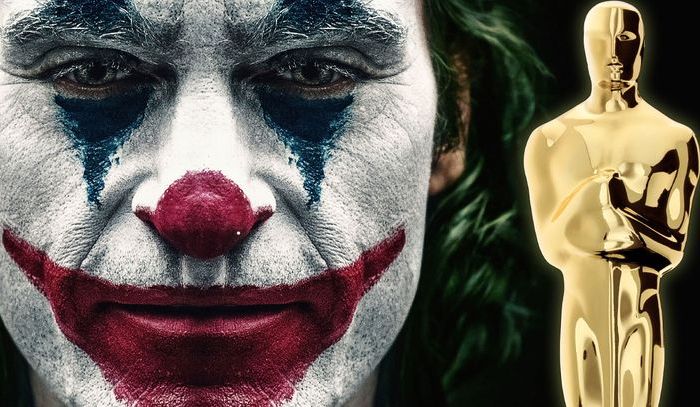
In February 2009, Heath Ledger won a posthumous Academy Award for Best Performance by an Actor in a Supporting Role. Ledger’s win, awarded for a genre-redefining take on The Joker, marked the first time a blockbuster superhero film had broken into a major category. A decade later, Todd Phillips’ Joker led all 2019 films with 11 Oscar nominations and is a favorite for many. It completes this cycle of superhero films, closing the loop on a decade that birthed the idea of a Cinematic Universe as we know it and saw superheroes rise to the top.

In many ways, this growth is exciting. Those who were raised on comic books and niche science fiction might see this as the public finally embracing something they once derided, but the question needs to be asked—why does it matter if these films are “embraced?” And is Joker really the best we can do?

The Dark Knight, released in 2008 by writer/director Christopher Nolan, was unlike many other comic book films at the time. While films like Raimi’s Spider-Man were bright and vibrant, The Dark Knight operated with a muted color palette, an atmosphere more reminiscent of crime thrillers. The film’s more prestigious tone, along with Ledger’s powerhouse performance, allowed the movie to finally get taken seriously by audiences and the film industry as a whole. Though previous movies had established that capes and cowls can draw audiences, this was a new breed, earning rave reviews and even convincing the Oscars to expand the field of Best Picture.

But as Marvel’s Cinematic Universe grew beyond its humble origins in the following decade and allowed comic book movies to “go weird,” the broader resistance to take movies of their kind seriously returned. The massively budgeted films could gain nominations in categories like Best Visual Effects and Best Sound Editing but always fell short to “prestige” films and smaller, quieter material. But, while all of this happened, the MCU passed Harry Potter as the highest-grossing franchise of all time in just seven years of existence. The Avengers had the highest opening weekend of all time in 2012. DC got in on the Cinematic Universe game, and though it took a while, finally found their footing with Wonder Woman. Countless franchises attempted to ape what superheroes had, and the genre became ubiquitous, dominating theaters with even more films each year that continued to succeed. Despite what can frequently be a harsh reputation, film critics embraced many of these films, and the MCU collectively averages just over 83% positive reviews on Rotten Tomatoes. And last year, to put a final exclamation point on everything, Avengers: Endgame became the highest-grossing film of all time worldwide.

Yet, after all of this, fans still clamored to be taken seriously by critics groups and award voters. As time goes on, the fandom has grown more impatient with those who do not ascribe to their way of thinking. Any time a public figure has something negative to say about the genre, just take a look at any comments section—fans are bewildered that anyone could hate their precious (billion-dollar) films.

It wasn’t until 2019 that Marvel Studios broke out of the technical categories and won a Best Picture nomination for Ryan Coogler’s Black Panther. A clear representation of everything superhero films should be, Black Panther broke the mold by taking massive steps forward in terms of representation for black artists, both in front of and behind the camera. The film takes the standard superhero template (hero, villain, fight scenes, car chases), and uses it to tell a moving story about personal responsibility and flawed governments, bathed in subtext as a response to the racism that has enveloped modern society and kept movies like this from ever coming before.

If ever there was a film that should represent what superheroes can do when they deserve to be taken seriously, it’s Black Panther. With its seven nominations and three victories, the film certainly earned a place in the conversation, but didn’t earn a nomination in any acting, writing, or directing categories, and was never considered a real competitor for the Oscar for best picture. Unfortunately, the first blockbuster comic book superhero film to actually make that step is Todd Phillips’ Joker, a film that shares many similarities with Black Panther, but many stark differences.

Though not quite a bad film, Joker’s greatest mistake is failing to make a compelling argument for its own existence. Were it simply an intimate, cynical thriller about the consequences of a broken, selfish society, Phillips’ film would work. Instead, it becomes this weird meeting place of decades-old comic book lore, a cinematic love letter to the ‘70s crime films of Martin Scorsese and a tone-deaf screed against a nonspecific idea of “society,” muddling the actually effective story that lies beneath the surface. That’s not to take away the craft with which Phillips makes the film, expertly evoking Scorsese’s style with a few of his own flourishes, as well as Joaquin Phoenix’s in-your-face performance and Hildur Guðnadóttir evocative score, which all form a perfectly well-created movie. But underneath this surface-level technical skill, there just isn’t anything there.

Aside from the fact that it mostly feels like a story that has already been told in a style that has been done to death, Joker also marks a troubling landmark for Hollywood as a whole. As first brought up in critic David Ehrlich’s review of the film, the success of Joker could very well make the film a precursor to a new wave of cinema that is bold but wouldn’t exist without an existing IP grafted on top of it. Though it certainly pushes boundaries in terms of content and what’s allowable in a big-budget mainstream studio movie, there’s no way the movie exists without the presence of Bruce Wayne, negating any actual bravery the movie would otherwise possess.

When it comes to the Awards, the Motion Picture Academy of Arts and Sciences has made its purpose clear—to honor the best and boldest movies of each year. They’ve certainly strayed from that by nominating and awarding safe, less-than-stellar choices in recent years like Bohemian Rhapsody and Green Book, and choosing to honor Joker only continues down that path. For years, comic book fans have gleefully watched as their favorite genre became a titan in modern culture and dominant at the box office, but it wasn’t enough. And now, they’re just another mistake in a pattern of mistakes at the Oscars, validating nothing but the audience’s vanity.

Groundbreaking CAPTAIN MARVEL Flies in With the Best Origin Story Since IRON MAN

Groundbreaking CAPTAIN MARVEL Flies in With the Best Origin Story Since IRON MAN

Originally published March 7, 2019 at Cinapse.co.

Captain Marvel is something of a miracle. It somehow took the most massive franchise in cinema history almost a decade to star a female superhero, as well as let a woman co-direct, and after all of that fervor there was almost no way it could live up to what it needed to be. As a sequel to the previous films in the series, it needed to be funny, look like a Marvel Movie, have a franchise-relevant MacGuffin, and feature a beloved actor as a villain. To adequately tell a story for female fans of the series, it couldn’t just be unique because it starred a woman, it needed to address this, but also show her as a strong hero independent of her gender. As a response to all of the children on the internet who couldn’t handle a female superhero, it needed to — well it didn’t need to do anything, but it would be nice to poke fun at them. Thankfully, it succeeds on all of these levels, and though it bears the flaws of most Marvel movies, isn’t that kind of the point?

Brie Larson takes the title role as Carol Danvers (aka Vers), who begins the film as some sort of alien super-soldier on the alien planet of Hala, home of alien race The Kree. Though The Kree were the villains of 2014’s Guardians of the Galaxy, they’re just people in their own civilization here, ruled by a being known only as The Supreme Intelligence. Gifted with the power to shoot weird beams of power from her fists, he works together with a team that basically functions as a Kree answer to the Guardians of the Galaxy, led by their very own Normal White Guy, Jude Law’s Yon-Rogg. Yon-Rogg and the rest of the Kree, in their own Jedi Order-like way, insist that emotion is the enemy, and the only way to properly control her power is by suppressing it. The first act is full-on space-fantasy, focusing heavily on the Kree’s war with the Skrull, a villainous, shape-shifting race. It takes a surprisingly dark tone that is sure to turn some people off, as it’s a bit of a break against form for the franchise, but it works quite well — we’re introduced to the mostly brutal life of a soldier in space, and then the whole thing starts to unravel.

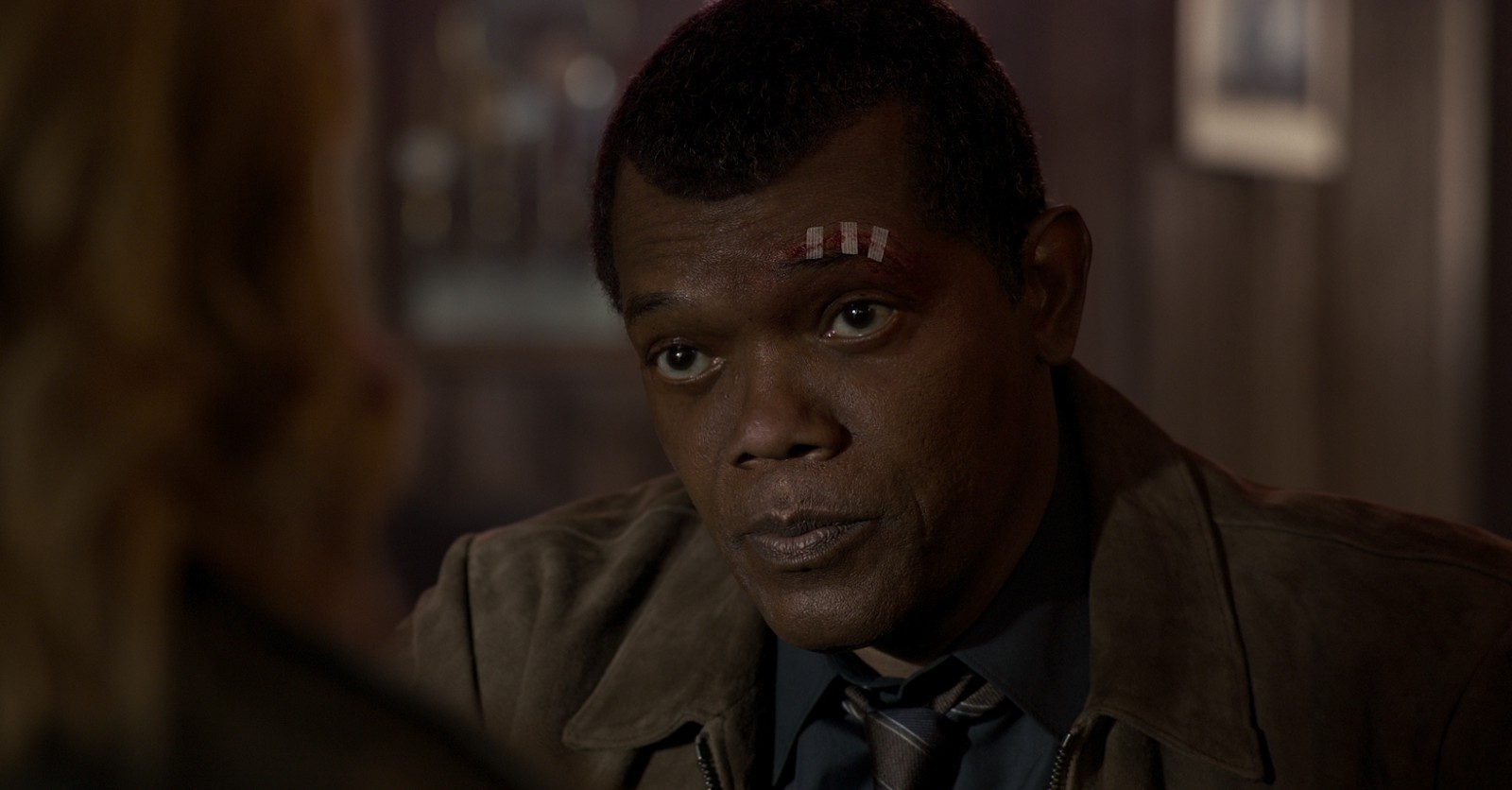
Inevitably, the war leads Carol to Earth, a place she’s seemingly never been, but it awakens dormant memories of life as a normal human. Everything takes a hard turn in the second act, as directors Anna Boden and Ryan Fleck shift everything on its head, pairing Carol with a young Nick Fury (Samuel C.G.I. Jackson). This wildly fun midsection swings fully into Jason Bourne-meets-Shane Black, as they try to decipher her past whilst slinging banter and fighting enemies. The visual effects that make Jackson look like the 90s version of himself are pretty astounding, miles ahead of Michael Douglas’ rubbery face in 2015’s Ant-Man. Jackson works brilliantly in the role again, convincingly naive but still the cynical character we know as an adult. As we see him start to understand his own place in the larger universe, Jackson is probably the best he’s been as Fury since first putting on the eyepatch 11 years ago. He plays brilliantly against Larson, who herself delivers a powerful performance that embodies the uncertainty and courage of a super-weapon learning to become a superhero. Her stoic demeanor at the beginning starts to fade away as she becomes a sort of fun-loving cornball, impressed with her own powers.

Basically every performance in Captain Marvel rules, but Boden and Fleck’s greatest success is the film’s always-interesting, frequently shifting tone. The very dark, war-heavy opening is a great way to introduce the person who Carol is at the film’s start, but it transforms just as she does. As she (and filmmakers Boden and Fleck) clearly starts to become more comfortable, the movie embraces a sense of fun. It’s not a joke factory, the way your Ant-Mans and Iron Mans are, but the jokes have a wickedly high success rate. The filmmakers are even able to milk some hilarious moments from the villainous Skrull Talos, played tremendously by Ben Mendelsohn. Mendelsohn adopts a variety of accents for his many forms, each more ridiculous than the last, but always keeps a humorously aloof face, even under pounds of prosthetic makeup. He’s also not the only one to mine facial humor, which seems to be a style choice by Boden and Fleck — basically everyone in this movie delivers odd, perfectly timed bits of physical humor, and it’s a great departure from the MCU’s typical quip-based humor.

Because of this perfectly executed tone and a cast packed full of lovable, smaller characters that I won’t spoil in this reviewthe 124-minute runtime flies by. This is a very good thing, but it makes it easy to overlook some of the issues that arise when looking back on the film. When you piece together the story and look at everything as a whole, there isn’t anything too uncommon about the story itself. Deftly handled subtext aside, it’s just another Marvel story with a forgettable villain and a simple, a-to-b-to-c plot. Additionally, there’s an unfortunate fact that most Marvel fans don’t care to admit, but has always been true: these films are usually ugly. Aside from outliers like Black Panther and Guardians of the Galaxy, they usually lack any sense of visual style. Grays dominate most of these movies, with wide shots and backlit environments making every moment clear and easily-accessible, but devoid of personality. Captain Marvel is sadly not an outlier, mostly retaining that same color palette and lighting technique. If anything, some moments are even worse, burying key story moments in a cloud of darkness. This is a problem Marvel needs to fix, but the question is how? Is the issue that Feige keeps too tight of a leash on his filmmakers. To paraphrase fellow film critic Sam Banigan of the Welcome Back podcast, will the next phase of Marvel films be a slog to sit through, or will Feige finally allow filmmakers like Edgar Wright (who was fired from Ant-Man) to make something weird in the universe?

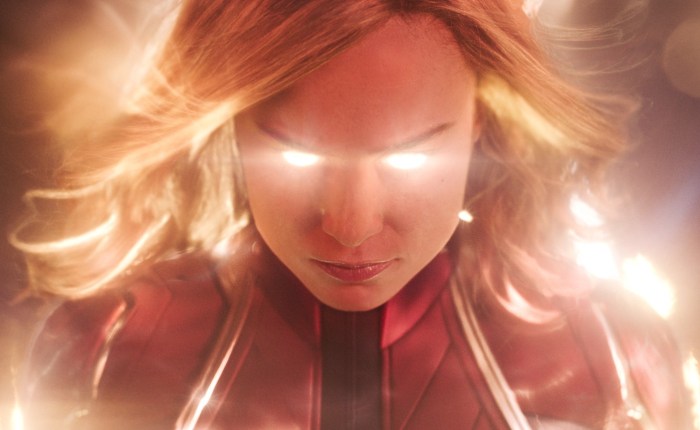
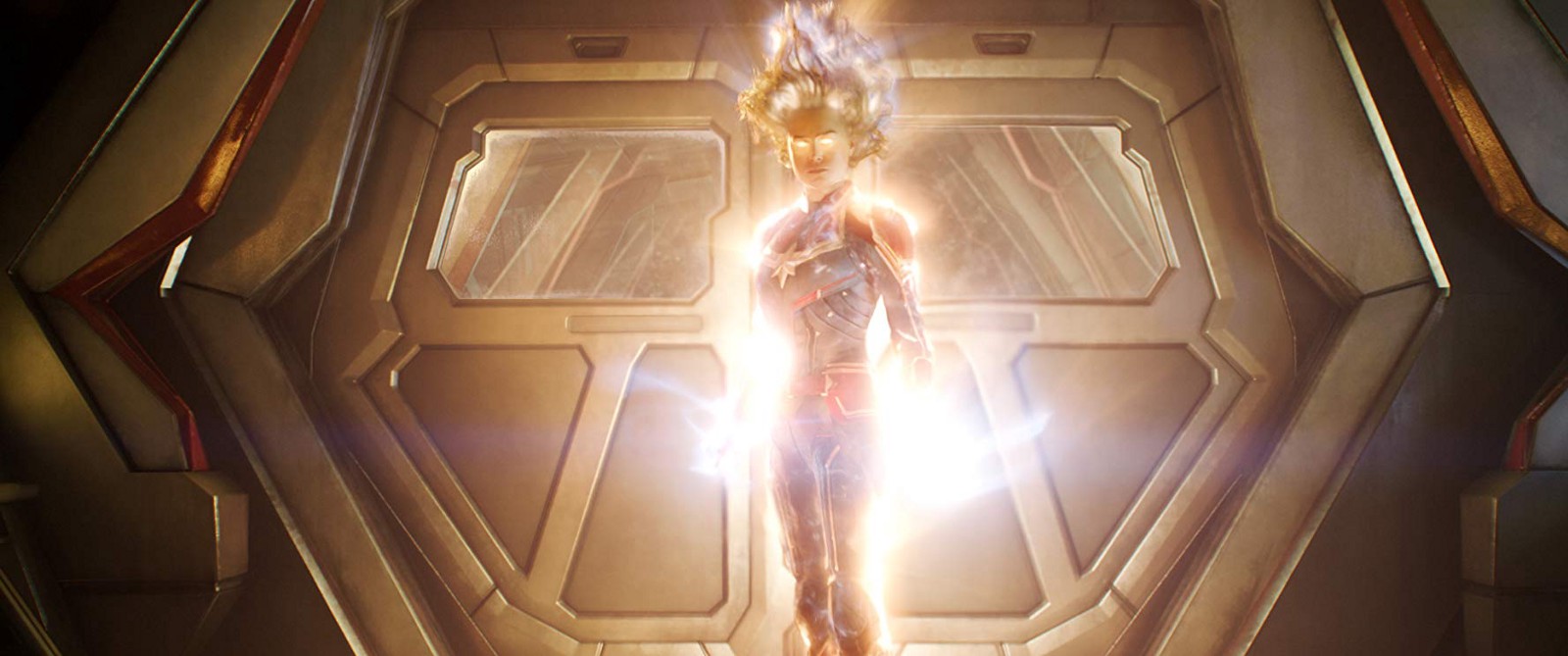
Though the look and general narrative feels stale, the six credited writers still do a brilliant job and one of the toughest tasks — addressing the character’s importance in her universe, but also our own. Over these last 11 years, Marvel Entertainment has produced a whopping 20 movies, the longest continuous story in film history. Though it undoubtedly took Feige far, far too long, he’s finally taking steps forward, in just the last 16 months delivering Thor: Ragnarok (the first directed by a person of color), Black Panther (one of the first predominantly black casts in a blockbuster film, and a groundbreaking step forward for black representation in cinema), Ant-Man and the Wasp (the first to feature a woman as the co-lead). Captain Marvel understands its groundbreaking place in this line of films, and expertly uses the platform to tell a story about being a female-presenting person in modern society. Whether Carol is dealing with Kree, humans, or the sci-fi embodiment of cultural norms, people continue to find reasons to tell her she can’t do something. When we finally see her overcome that and become Captain Marvel, it’s a breathtaking, powerful moment, one that stands up to anything else in the Marvel Universe.

Throughout the MCU’s first 20 entries, six have been origin stories. Boss Kevin Feige kept a high focus on hero-creation narratives in the early days of The Marvel Cinematic Universe, but has pared down in recent years, instead focusing on sequels and fully formed heroes in their own right — to mixed success. Where Ryan Coogler found success with this formula by beginning Black Panther in a world where T’Challa is already a hero, Spider-Man: Homecoming faltered. John Watts briefly flashed past Uncle Ben’s death and turned Peter Parker into a generic, quippy child, devoid of the motivation and buried tragedy that defines the character. With Captain Marvel, Boden and Fleck wisely go back to the origin story, allowing us to meet Carol Danvers before she inevitably groups up with The Avengers. Through a masterful grasp on tone, a bevy of strong performances and a hell of a moving climax, it bypasses every origin since we first saw Tony Stark break out of a cave with the first Iron Man suit. And now, 11 years later, we only have to wait two months before Captain Marvel becomes the one to save him, and connect fists with with the Universe — and her fists with Thanos’ face.

The New Halloween is The Last Jedi of the Series – And That’s a Good Thing

The New Halloween is The Last Jedi of the Series – And That’s a Good Thing

Originally published October 21, 2018 at CBR.com.

From its opening scene, Halloween (2018) plays with the viewer’s expectations. Director David Gordon Green clearly knows what franchise die-hards expect, and has absolutely no intention of delivering on it, instead opting to take the movie in a new, exciting direction. His ability to breathe subversive life into a 40 year old franchise is one-of-a-kind in our nostalgia-focused culture of remakes, reboots and Legacy Sequels, save for one exception: Rian Johnson’s breathtaking Star Wars: The Last Jedi.

The new Halloween begins in a chess-like checkered courtyard, as two podcasters (it is 2018 after all) confront the imprisoned Michael Myers in a mental health institute. Though the continuity of the film ignores all entries in the series save the first, it expects you to know what happens next: The Shape will rise, murder the ones harassing him and escape.

Instead, Green and co-writers Danny McBride and Jeff Fradley turn the script on its head and Michael does nothing. Try as hard as they can, even bringing out the infamous mask, the podcasters only end up disturbing the other prisoners, and the film’s intro is unceremoniously over.

This opening sequence, while full of Halloween’s trademark dread, proves massively unconventional for the series. By introducing a familiar situation but bucking the trend in its resolution, the scene creates far more questions than answers, and makes a clear statement: this is still Halloween, but not like you know.

In last December’s Star Wars: The Last Jedi, Johnson broke ground by weaponizing expectations in the same way, but for the George Lucas’ acclaimed sci-fi franchise. In The Last Jedi, Johnson sets up common Star Wars scenarios, like a rebel assault on an enemy base or a secret plan that will surely save the day, and perfectly subverts the way these typically pan out.

RELATED: Listen to the Halloween Reboot Soundtrack in its Entirety

Johnson, knowing that the rebels always get away and that poorly hatched schemes always work out, grounds his film with legitimate consequences. When Luke Skywalker barely considers snuffing out a padawan, he creates one of the greatest villains in the series. When Poe Dameron ignores orders, he destroys half the fleet of The Resistance.

Though the Star Wars franchise has had great moments in the last couple of decades, The Last Jedi brought back the propulsive energy of uncertainty the series lacked since Return of the Jedi.

The two films, released only 10 months apart, mark a huge step forward, not just in the history of the franchises, but in blockbuster filmmaking. Today, there is significant uproar about the idea of “nostalgia” as it affects the film industry. Studio executives vie for any property they can, because they know audiences will pay for the fuzzy feelings nostalgia can provide.

RELATED: Halloween Works Best When It’s About Female Empowerment

Ready Player One and Wreck It Ralph, for example, throw audiences back to their favorite “retro” experiences, but wrapped up in new stories; the idea of the ‘80s makes an appeal in Stranger Things and It (which doubles as a remake); and dozens of dormant franchises found revival both on TV and in theaters. For some reason, someone remade The Mummy. But the tendency to retread has grown old and worn, leading to art that feels stagnant and a wave of movies that are just “fine.”

But the brilliance of The Last Jedi, and now Halloween, lies in the practical path forward that they present. When a franchise shifts too far, audiences will reject it, like they did Halloween III: Season of the Witch, an entry which ditched Michael Myers altogether and failed miserably at the box office.

Though it still has a devoted group of fans, the left turn was too radical for the series, almost ending John Carpenter’s franchise in the process. But Johnson and Green introduce a new idea to reinvigorate their franchises: invest in recreating the atmosphere and basic story beats of the series, but use the crowd’s comfort to catch them off guard.

The last act of each film illustrates this perfectly, mirroring a specific series moment before unleashing all hell on the audience. Just as Kylo Ren betrays his master to join Rey, calling back to Darth Vader’s throne room turn in Return of the Jedi, Johnson reveals that it was out of selfish ambition rather than a selfless desire to save anyone else. Then, everything shifts and the story focuses on Luke’s helpless regret, and the small light of hope for the future.

On the flip side of that, with 30 minutes remaining in the new Halloween, it seems like Green is setting up a shameless re-do of the original’s last act. But as Allyson Strode follows in her grandmother’s footsteps, fleeing from Michael Myers to a neighbor’s doorbell, the neighbor actually answers the door and saves her life. Rather than take audiences back into a climactic cat-and-mouse showdown, the movie goes absolutely nuts.

RELATED: Rian Johnson Confirms His Star Wars Trilogy is Still Coming

The therapist, dubbed by Laurie as the “new Loomis,” adorns Michael’s mask and murders a police officer. Another officer’s head is used as a jack-o-lantern. In the end, the Strodes’ battle with Michael almost feels like a horrific version of Home Alone. The two movies go absolutely wild at their very ends, but not without first luring viewers into a false sense of security.

However, one thing that can’t go ignored is the fan response to these films. Time will tell how viewers respond to Halloween, but The Last Jedi had a very peculiar reception. The narrative a few months after release was that the film proved highly divisive among hardcore Star Wars fans, but recent studies have cast suspicion on that conclusion.

Apparently, many political figures (somehow including those from Russia) latched on to the progressive themes of the movie, leading an organized campaign to derail the film. Johnson’s film still made over a billion dollars worldwide, but it does have a very vocal minority of fans who cannot stand it. All you have to do is read the comments of any one of CBR’s own posts about Johnson or The Last Jedi to see they’re there.

Whether this is thanks to an aversion to the movie’s politics or a rejection of the way it changes what the series can be is a bit of a mystery, but it could potentially prevent this sort of radical push forward for franchises from coming again.

Hopefully the film industry will see the critical and box office success of these two movies and take note. As the creative sluggishness of nostalgia-mongering has held back so much of cinema in the past decade, these two huge breaths of fresh air have proven massively relieving. If we’re lucky, we might just be on the precipice of an amazing, fresh wave of blockbuster filmmaking.

REVIEW: Netflix’s Apostle Is Ambitious Horror That Falls Short in the End

REVIEW: Netflix’s Apostle Is Ambitious Horror That Falls Short in the End

Originally published at cbr.com.

Netflix’s Apostle has everything it should need to be one of the year’s best horror films. The cast, headlined by Dan Stevens and Michael Sheen, is stacked with underrated actors. The premise, about a man who goes undercover in a cult to save his sister, has intrigue but is open enough to go anywhere. The director, Gareth Evans, has two of the greatest action films of all time under his belt in The Raid and its sequel, and is returning to cult horror after an acclaimed segment in V/H/S 2. But it’s a shame the movie never quite comes together, giving each of its elements a chance to shine yet never quite working as a whole.

In The Raid and its sequel, Evans took a huge swing for the fences. The first is a claustrophobic masterclass in action cinema, and the second is a flawed but ambitious crime saga, punctuated by the director’s trademark eye for fight scenes. Apostle is every bit as ambitious as those first two efforts, but lacks the narrative cohesion to reach those highs. The action beats remain better than pretty much anything else attempted these days, but they’re strung together by a lackluster script. It feels as if the movie can’t decide whether it’s psychological horror, a gore showcase or an all-out action film, and is never able to mesh the three into something coherent.

RELATED: Gareth Evans’ Bloody Apostle Trailer Pits Dan Stevens Against a Cult

Stevens stars as Thomas Richardson, who in 1905 goes undercover on an island inhabited by a fanatical cult to rescue his sister, whom they’ve kidnapped. From there, the plot takes more twists and turns than one can count, and it’s best to go in as blind as possible; if you can avoid the trailers, do so at all costs. The opening hour or so, before it takes that darker turn, is a slow burn that feels closer to Karyn Kusama’s The Invitation than the wild action of The Raid. It’s this quiet, more deliberate segment where Apostle shines brightest, utilizing Evans’ proclivity for visual storytelling but never indulging in it. The film uses the freedom of having extra time to build an uneasy tone and establish the characters, while also planting seeds that there is something deeply wrong on the island.

The broad cast of characters is actually quite deep, from young lovers played by Bill Milner and Kristine Froseth to a disgruntled villager portrayed by the scene-stealing Ross O’Hennessy. The strongest of these supporting players are Sheen as the town prophet and Lucy Boynton as his daughter Andrea. Sheen is brilliant as the prophet, confident as he leads the village, but a crumbling, weak man when confronted with difficulty. He has the appearance of strong leadership in front of the cult members, but Sheen shows that he’s riddled with self-doubt, a shadow of the man who gives the sermons. Boynton is even better as his daughter, one of the village’s most compassionate members, sometimes disobeying leadership to show kindness. Her performance demonstrates just how earnest Andrea is, imbuing her every word with meaning, a refreshing change of pace from the rest of the manipulators in the cast.

Unfortunately, a great roster of underrated actors is not enough to carry a film, and in the end an inconsistent script lets them down. The superior first act sells a growing dread quite well, slowly building the tension and teasing the darkness to come. As Stevens creeps around the creepy village, he finds clues and begins to piece together the evil that lies beneath the charming veneer of the town.

In movies that slowly build to a tone shift, there is usually a moment where the director makes a clear statement to the audience: This is no longer the same film. In Jeremy Saulnier’s Green Room, it switches from a tense thriller to a massive bloodbath within seconds, punctuated by a character’s arm taking a brutal chop from a machete. It’s this sort of moment that’s missing from Apostle, which leads to a really muddled transition. Based on the appeal of the trailers and marketing, Apostle was clearly leading to a gut-wrenching shower of gore from the start. Once it finally does reach this long-awaited payoff, it lands with a thud, killing off a primary character in a mean-spirited, offhanded way that doesn’t come off meaning anything.

RELATED: Overlord Is (Almost) Everything You Want From a Zombie Nazi Movie

From a technical perspective, every moment of Apostle is brilliantly crafted. Even the long stretch of brutality at the end, while unearned, is unmatched in modern filmmaking. Evans puts his action sensibilities to use and delivers one pulse-pounding barbarity after another. His kinetic, free-flowing camera keeps the stomach-churning bloodshed in clear view and forces you to watch, which is sure to have viewers at home screaming from their sofas. It’s just really disappointing that these scenes, while well-directed, don’t gel with the rest of the film, killing off the characters with glee as if they meant nothing to the story.

In Netflix’s Apostle, life is a never-ending hell. You can choose to believe in a God who demands living sacrifices or nothing at all, but you’ll probably meet an agonizing end anyway. The first hour or so builds to a nightmare of a conclusion, but it takes a far too convoluted path to get there. Fans of horror cinema with a heavy dose of nastiness, or those who are particularly attached to Evans’ unique brand of brutality, will surely find something to love. But after making two of the greatest genre films of the century, it’s disappointing to see the director brush with greatness yet fail to reach it.


Directed by Gareth Evans, Apostle stars Dan Stevens, Michael Sheen and Lucy Boynton. The film screened at Fantastic Fest in Austin, Texas ahead of its Oct. 12 release on Netflix.

Cast Shines, Not Much Else in Matthew McConaughey’s WHITE BOY RICK

Cast Shines, Not Much Else in Matthew McConaughey’s WHITE BOY RICK

Originally published at Cinapse.

Just ten years ago, Matthew McConaughey was unreliable at best. Generally, if he was in a movie, it was a safe bet he’d be the worst part of a mostly mediocre film. The early years of his career saw some success with films like Dazed and Confused and Contact, but that mid/late-2000s streak was *rough*. Failure to Launch? Fool’s Gold? Some movie called Surfer, Dude which is somehow a real flick about a surfer’s existential crisis? It looked down for the University of Texas graduate — and then The McConaissance struck. The exact start date is still up for debate, but around 2011 a switch struck, and within three years he had an Oscar and became one of Hollywood’s finest actors. With director Yann Demange’s biopic White Boy Rick, he’s completed his transformation, shining as the brightest part of a mostly mediocre film.

McConaughey plays Richard Wershe Sr., a supporting player to the film’s primary focus: Rick Wershe Jr. (newcomer Richie Merritt), his son and a prodigy drug dealer. Set in the mid ’80s, Wershe Jr. starts the movie selling guns for his ambitious father, but is slowly pulled into the world of drugs out of need for money and hereditary ambition. He is quickly recruited by the FBI and Detroit PD to be an informant, creating an interesting dichotomy for the character. This stretch of White Boy Rick is actually quite good, functioning as a knock-off brand Goodfellas with a dash of Scott Cooper’s Black Mass (remember that movie?!).

(Spoilers for a thirty-year-old true story, I guess) Obviously, things turn sour for the teenage kingpin, and so does the film. It’s a perfectly fine watch for 45 minutes or so, but unfortunately gets bogged down when it makes a turn for the serious. Now the film is never a comedy, but it’s an enjoyable watch as we see the character’s initial success. As he starts selling drugs for himself and the cops, Wershe Jr. earns the name White Boy Rick from his almost entirely black consumer base/new friend group. Merritt embodies this name change with his performance, slowly shifting the way he talks and even carries himself through the movie, a really impressive debut for a 17-year-old. But as it grows more grim, it almost feels like Demange loses touch with the film, delivering a lifeless, pretty boring final act.

For a film set in Detroit that opens at an NRA gun show, White Boy Rick doesn’t have a whole lot to say. Sure, it offhandedly addresses that white people caught with drugs will face a far shorter prison sentence, but it stops there. With so much else to discuss, it mostly just wants to talk about how badly the FBI screwed over this one kid. It is just sort of disappointing to sit through, watching Wershe Jr. absorb the speaking style and interests (and job, for that matter) of Detroit’s black community, but ending with passive-aggressive epilogue titles that are only angry at the FBI’s treatment of him. Reagan’s “Just Say No” campaign simmers in the background of the film, but the ending comes off as tone-deaf, ignoring the executive office’s campaign that disproportionately affected the lives of countless people of color, just to focus on a white man.

Without question, the brightest part of White Boy Rick is the performances from the absolutely stacked cast. Obviously, McConaughey steals every scene, acting as an imposing force upon the film. He plays it with a vaguely southern style, which doesn’t really match with a man who has spent his whole life in Michigan, but it works in the role. He’s switches, sometimes simultaneously, from a larger-than entrepreneur to a weak, self-conscious father who just wants his children to love and respect him. Even when McConaughey isn’t on screen, his presence is felt, as Merritt brilliantly mimics bits of his fictional father’s mannerisms and speaking style.

The supporting players of White Boy Rick are also great, with one of the year’s deepest rosters of great small roles. RJ Cyler (Me and Earl and the Dying Girl) and Jonathan Majors are also great, acting as Rick’s intro into Black society in Detroit. Cyler is particularly great, bringing a sense of life and fun to his scenes as Boo, Rick’s best friend. Jennifer Jason Leigh, Rory Cochrane, and Atlanta’s Brian Tyree Henry excel as the law enforcement officers that work with Rick. Henry is particularly enjoyable, humorously playing his DPD officer as one who is constantly annoyed with everyone. On the other hand, JJL does her best Kyra Sedgwick impression, acting as a cold foil to Henry’s antics. And finally, in their few scenes, Bruce Dern and Piper Laurie knock it out of the park as Wershe Sr.’s parents. Though they kind of feel like they walked out of a different movie, the two are absolutely hilarious, bickering and griping with everyone in sight, providing plenty of welcome laughs.

Despite the overwhelming amount of great performances, spotty direction and a highly flawed script sink White Boy Rick. It’s certainly worth seeing for the wealth of amazing actors, but there’s a reason it was released a month before the heart of Oscars season.

White Boy Rick opened in theaters September 14, 2018.

REVIEW: Halloween Is a Breathtaking Throwback That Moves the Series Forward

REVIEW: Halloween Is a Breathtaking Throwback That Moves the Series Forward

Originally published at cbr.com.

David Gordon Green’s Halloween is something of a miracle. After all, the creative team, whose experience is exclusively in comedy, had to deliver legitimate scares while making sense of a franchise with 11 films’ worth of convoluted history, and simultaneously doing something new. The odds seemed stacked against it, but Green presents an astonishing work that dives into the consequences of the 1978 original while still moving into uncharted territory.

In this age of reboots, remakes and rehashes, Halloween utilizes arguably the most intriguing approach to resurrecting a dormant property: the legacy sequel, which typically take place in the same same universe as the original, and frequently feature returning cast members, but make use of the time gap to present the franchise to a new generation. J.J. Abrams’ Star Trek and Disney’s Tron: Legacy have found mild success in that arena, but the revived Star Wars saga holds the real blueprint for injecting life into these old stories. And while Halloween doesn’t reach the heights of Rian Johnson’s Star Wars: The Last Jedi, it certainly represents a high-water mark, respectful of the past but never restrained by it.

RELATED: Listen to John Carpenter’s Revamped Halloween Theme

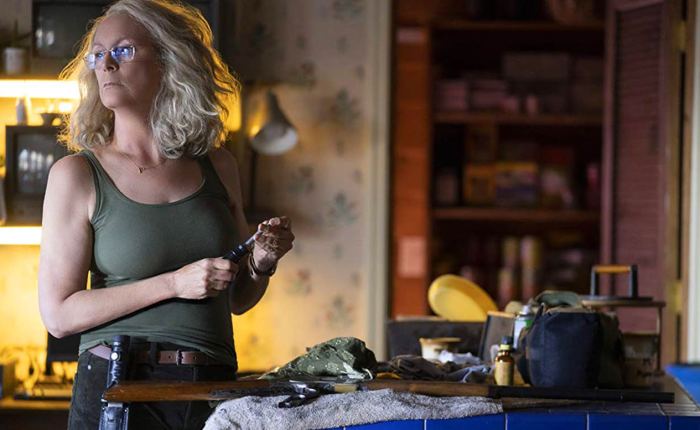
Jamie Lee Curtis returns to the series for the first time in 20 years as the original final girl, Laurie Strode. Writers Green, Danny McBride (yep, that Danny McBride) and Jeff Fradley decided to ignore every entry in the series that came after the John Carpenter original, which permitted them to effectively start from scratch. It’s 40 years to the day after Michael Myers terrorized Laurie and killed her friends, and the trauma of that experience has taken over her life. She’s spent four decades preparing for Michael’s return, basically barricading herself in a fortress, surrounded by weapons. Excavating real-world consequences from a 40-year-old slasher film is an interesting turn for the series, reminiscent of how Creed found a way to explore a darker fallout from the goofy Rocky IV. Curtis plays the role perfectly, transforming into a seemingly hardened warrior, who nevertheless frequently cracks under the paranoia that comes from having faced evil himself.

Halloween 2018

The portrayal of Michael also works surprisingly well, fleshing out the horror icon while retaining a necessary sense of mystery. The audience is introduced to Old Man Michael in the opening minutes as he’s interrogated by true-crime podcasters. Intriguingly, he doesn’t wear his classic mask until about a third of the way through the film, and it’s exactly that kind of restraint that makes this new vision of Halloween so great. Green withholds the mask from the viewers, waiting to unleash it at just the right time. The decision pays off, as Michael Myers’ first real moment back in costume is one of the best horror scenes in years, a tracking shot that follows The Shape in a violent return to form

Michael’s impact on the story can be felt in every scene, even when he’s absent. Laurie’s fear of the killer has poisoned her relationship with her family. Daughter Karen (Judy Greer), who was raised to prepare for Michael’s return, resents her mother’s all-consuming fear, but as the story begins, granddaughter Allyson (Andi Matichak) is desperate for her grandmother to play a role in her life.

RELATED: Halloween Early Reviews Call the Film the Best Since the Original

Among the most interesting parts of Halloween is how it uses the generational dynamic to investigate the lasting impacts of trauma. It’s odd to see such deep themes in a sequel to a 90-minute slasher, but it works surprisingly well. Laurie’s experience with Michael in 1978 could stand in for any harrowing experience, and Green’s point would remain: Allowing your life to become overwhelmed by fear is permitting evil to win. As the family starts to come together once again, it’s touching to see that dawn finally on Laurie.

When Halloween approaches its conclusion, it appears as if Green will take the easy way out, setting up a third act that goes for a recreation of the original’s. But just as you think you know how the rest of the film will play out, it takes an unexpected turn, and ends with a climax as surprising as it is thrilling. The final 45 minutes or so are wall-to-wall payoff — edge-of-your-seat filmmaking that’s both terrifying and electrifying.

With a creative team out of left field and the seemingly head-scratching decision to ignore 40 years of continuity, there weren’t many reasons to be optimistic about Halloween. But expectations be damned, the film is a blast from start to finish. The return of Laurie Strode, to say nothing of the mystery and brutality of Michael Myers, is welcome, but it’s the new additions that help to make Halloween a deeper, richer film than any the series has seen before. Respectful of the past but bold enough to push the series into the future, it’s among the best legacy sequels audiences could hope to see.


Directed by David Gordon Green, Halloween stars Jamie Lee Curtis, Judy Greer, Andi Matichak, Will Patton, Virginia Gardner and Nick Castle. The film screened at Fantastic Fest in Austin, Texas, ahead of its Oct. 19 theatrical release.