
Originally published at Cinapse.
Director Peter Berg knows exactly what he’s doing. Since 2013’s ‘Merican war film Lone Survivor, he’s made Deepwater Horizon (a film about the BP oil spill that refused to engage with the entire oil industry’s problems) and the much-maligned Patriot’s Day, an all-too-soon adaptation of the Boston Marathon Bombings which Buzzfeed compared to a superhero movie about American police.
Through all of these thematic issues, unsettling as they are, Berg has shown a clear mastery of technical craft. Even in his earlier work, with Hancock and the film Friday Night Lights, he’s shown an understanding of story structure and directing techniques that justify the price of admission, despite how rough it can be to sit through the films. In Mile 22, Berg throws everything he knows about filmmaking out the window, settling for one of 2018’s most poorly made movies (with a dash of xenophobia).
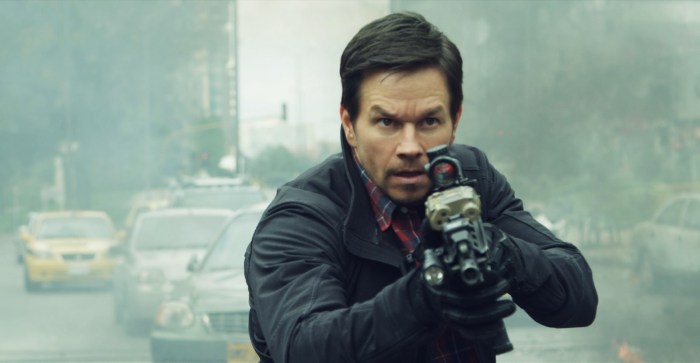
Mile 22 follows a small, deadly spy team that acts as America’s last line of conflict resolution, after “diplomacy” and “war.” Mark Wahlberg stars as team leader James Silva, accompanied by teammates played by Lauren Cohan and Ronda Rousey, with John Malkovich acting as the man behind the scenes.
Wahlberg’s character takes the leading role, what initially seems like a standard action hero, but he’s an elite military operative with extensive training, essentially transforming him into the perfect soldier. BUT he has a really wild side, so people have to watch out for him so he doesn’t snap. BUT he has a tragic past and mental issues which make him sympathetic. BUT he’s always the smartest guy in the room, so no one can ever top him. Basically, Wahlberg’s Silva is a half-blended mixture of a CBS detective, Batman, Jason Bourne, and The Punisher, executed with all the nuance you’d expect from Berg. Particularly egregious is the way it ostracizes people with mental health issues, reminiscent of Ben Affleck as an autistic assassin in Gavin O’Connor’s dreadful The Accountant. Mile 22 uses an ambiguous disorder to excuse Wahlberg’s mistreatment of his coworkers, as he starts every scene whispering and ends by screaming at the top of his lungs. Unfit to just be offensive, he’s a human crescendo, the most annoying lead in a film this side of Grown Ups.

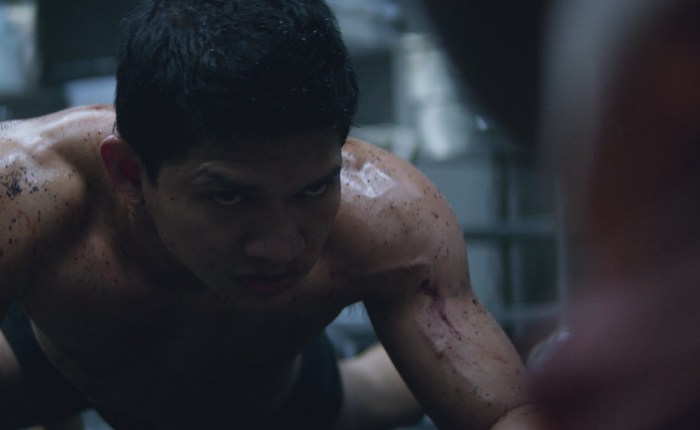
The plot kicks off when Wahlberg and his team meet Iko Uwais’ Li Noor, a mysterious foreign agent with a hard drive that contains the locations of radioactive materials. Noor promises to unlock the device provided the team can transport him to the US, and the rest of the movie focuses on getting him the 22 miles (get it) to the airport against the wishes of terrorists, gangsters, and even the foreign police. The film is 95 minutes, but it takes an hour to understand exactly what the movie is about, and then the last 30 involve traveling those 22 miles. In a sense, its “world against you” structure evokes John Wick Chapter 2, except entirely incoherent. Every scene contains hundreds of lines spoken by characters, whether they are introduced or not, who mean nothing to the plot. Different policemen, soldiers, and secret agents will pop in for a second, deliver a horrible joke or a vital plot point, then leave the film for good. Because of this, it’s a quickly paced film with dialogue flying at you from all angles, but doesn’t actually go anywhere.

Worse is the implicit way Berg treats people, politics, and thematic statements. Mile 22 is never all that concerned with being a political movie, but it certainly feels like writers Lea Carpenter and Graham Roland (Lost, Jack Ryan) want the audience to know it still takes place in a political world. The characters randomly will make fun of Snapchat or millennials, but will have a collection of American president bobbleheads, complete with an absolute disaster of a Donald Trump bobblehead situated next to President Obama as if Trump is just another normal American president. Obviously all of the villainous characters just happen to be people of color, while all the heroic soldiers, police officers, and secret agents are white. The message of the film is clear, whether Berg intended this or not — only trust white, American law enforcement to save the day.

For its flaws as a story, there is nothing in Mile 22 as infuriating as the way it treats Uwais. The Indonesian star of Gareth Evans’ Raid films could potentially be the greatest action star currently working, and certainly has proved he deserves a place in the conversation with Headshot and Beyond Skyline. Uwais does not come to play, and after choreographing some of the best fight scenes of all time in both films in The Raid series, I was excited to see him listed as both star and fight choreographer in this movie. When he finally started fighting people, I almost leapt out of my chair with excitement, only to sink back in with disappointment — Peter Berg is one of the worst up-close action directors I’ve ever seen. His editing style is more egregious than the fence scene in Taken 3, shaking the camera and cutting away so quickly it becomes literally impossible to make out anything. In probably seven or eight battles that Uwais fights in, only two or three are actually comprehensible; the rest make you feel like you’re in a gory blender.
As a film, a piece of propaganda, and a showcase for Iko Uwais, there are very few redeeming qualities in Mile 22. In between the nonsensical plot, stomach-churning editing, and poor acting, there is no reason to see this instead of Mission: Impossible — Fallout or rewatching The Raid. Just watch one of those instead, or do literally anything else — skip on this movie from the conservative reboot of Paul Greengrass.
Mile 22 opens in theaters August 17, 2018.




 Justin Don Jones