All of Christopher Nolan’s movies are about exploring what scares him most

All of Christopher Nolan’s movies are about exploring what scares him most

Originally published at Polygon.com.

From Memento to the Dark Knight movies to the new Oppenheimer, one running theme links his stories.

In 2018, an interview with Oppenheimer director Christopher Nolan went viral — possibly because it was the first time he’d ever appeared relatable. In that conversation, he said his children sometimes jokingly call him Reynolds Woodcock, after the aloof, reserved protagonist of Paul Thomas Anderson’s Phantom Thread. Though Nolan’s scripts often feature signature, repeated (and often mocked) tropes, including time manipulation, dead spouses, and protagonists who face complex moral decisions, he injects very little of his own personality into his movies. Characters like Leonardo DiCaprio’s troubled team leader in Inception and Robert Pattinson’s equally troubled handler in Tenet are clearly styled after Nolan himself. But viewers rarely come away from Nolan movies with a greater understanding of his worldview, at least compared to the way directors like Martin Scorsese or Quentin Tarantino put their personalities on screen in every movie they make.

One underappreciated idea does recur over and over in Nolan’s work, though, and it surfaces again in Oppenheimer. The protagonists of many Nolan films become obsessed with a specific fear and go to great lengths to better understand or control their terror. In Nolan’s first blockbuster, Batman Begins, gangster Carmine Falcone (Tom Wilkinson) tells Bruce Wayne (Christian Bale), “You always fear what you don’t understand.” The quote acts as something of a guiding light not just for Bruce, but for Nolan’s back shelf of protagonists who seek a deeper knowledge of their phobias for the sake of control. In Oppenheimer, Nolan imprints this narrative device on a historical figure for the first time, and it feels like he’s being more open than ever about revealing what keeps him up at night.

There is no evidence that J. Robert Oppenheimer, the father of the atomic bomb, struggled with frightening visions of high-energy subatomic particles. This doesn’t come through in any documents about Oppenheimer the man, and Nolan seems to have added the idea to dramatize the film, as Oppenheimer periodically pauses to register and recoil from flashes of light, particles, and fire, all representing wordless fears he can’t explain. Though the movie’s dialogue never explicitly references these mysterious events, Nolan’s evocative imagery asks the audience to fill in the gaps themselves — are we seeing what’s in his mind, his future, or something else entirely?

Nolan’s Oppenheimer presents as an awkward, unsociable student with something off about him. It isn’t hard to imagine that he’s troubled by something. And what does this frightful student do? He dives deep into particle physics, devoting his life to understanding and attempting to control his fear — until it reaches critical mass.

The origin story in Batman Begins is the clearest example of this phenomenon: Batman’s vigilante persona was inspired by a traumatic childhood experience with bats. That plot point hews closely to Frank Miller and David Mazzucchelli’s classic 1987 comic arc Batman: Year One, but the film dives far deeper into Bruce’s fervent need to understand and control his terror. In a number of sequences featuring fear gas used by the movie’s villain, Scarecrow (played by Cillian Murphy, who also plays Nolan’s Oppenheimer), the filmmaker dips his toes into horror-inflected imagery. The Gothic architecture of Gotham combines with nightmarish sequences where villains see the superhero as a demonic monster, literalizing the metaphor of Bruce becoming his fear.

Following Batman Begins, Nolan’s Batman movies continue to dwell on this theme. Nolan assaults his protagonist with a series of villains who take on the shape of new nightmares. It’s as if he’s trying to teach Batman how to overcome the things he most dreads.

In addition to Bruce Wayne, the two protagonists Oppenheimer most resembles in this way are Leonardo DiCaprio’s Dom Cobb in Inception and Guy Pearce’s Leonard Shelby in Memento. The latter, Nolan’s mainstream breakthrough, focuses on a man with short-term memory loss who is so afraid of forgetting his purpose that he has it tattooed on his body. A significant portion of Inception takes place within Cobb’s dreams, which, through a very thinly veiled metaphor, are haunted by his wife Mal, played by Marion Cotillard. Guilt-ridden by the circumstances of her death, he subconsciously creates a murderous avatar in the shape of the shame he’s too afraid to face. He wrestles for control within his memory, attempting to hide her in a symbolic (and literal) basement in his mind. It doesn’t exactly work out.

Throughout Oppenheimer’s three-hour run time, Cillian Murphy’s protagonist struggles with existential horrors that are much larger than his personal regrets. In addition to the frightening visual bursts of atomic space, the film focuses most of its second-act tensions on the threat that the first atomic bomb test might ignite the hydrogen in Earth’s atmosphere. In real life, that threat was discussed and dismissed by the physicists at Los Alamos. But Nolan lingers on it, sending Oppenheimer to get the opinion of Albert Einstein, who acts as a sort of patron saint of science in the film. But Einstein provides no comforting answers, which ratchets up the tension and fear felt by characters and audience alike.

The threat of humans bringing about their own extinction is no new ground for Nolan’s films. And that may answer why, exactly, he’s so obsessed with fear and the war for control. In Interstellar, climate change devastates crops with a futuristic, dystopian blight. In his 2020 movie Tenet, an unseen society in the future attempts to reverse the flow of time to stop climate change before it gets out of hand. Between those two movies lies the World War II film Dunkirk, about the struggle for survival against a faceless threat. Though the Nazi presence implicitly hangs over the movie, Dunkirk doesn’t linger on a potential apocalypse in quite the same way as other Nolan movies. But the pervasive dread remains.

The fearsome final minutes of Oppenheimer drive this point home, as Nolan gives his protagonist a vision of a future devastated by nuclear apocalypse. His visions of dancing particles and flames give way to a clear, unambiguous doomsday — an uncountable number of rockets fire from an unknown country, streaking across the globe and detonating. Fire consumes everything.

Nolan’s devotion to the theme of people wrestling with their fears ties him to his protagonists, and his more recent focus specifically on humanity causing its own doom ramps that fear up to a universal level. It’s a heavy, existential worry, but it’s an illuminating glimpse into the mind of an artist who rarely lets the audience in. In his films, when a character obsesses about a topic, it typically means that’s the fear that keeps them up at night and drives them toward obsession as a means of control. Both Nolan and his iteration of J. Robert Oppenheimer are exposing their fears that humanity has the power to devastate life on Earth. And as climate change and political tensions simultaneously rise across the planet, it’s hard to blame him. 
In Defense of the Modern Late Winter Horror Film

In Defense of the Modern Late Winter Horror Film

Originally published at Crooked Marquee on 03/20/2020.

It’s October. The first trailer for a movie drops, and a journalist whom the studio provided free travel, dinner, and set visits proclaims it ‘The scariest movie since last year.’ All other press is embargoed until release day, when the film breaks some sort of new record for poor reviews. Three weeks later, no one even remembers this movie.

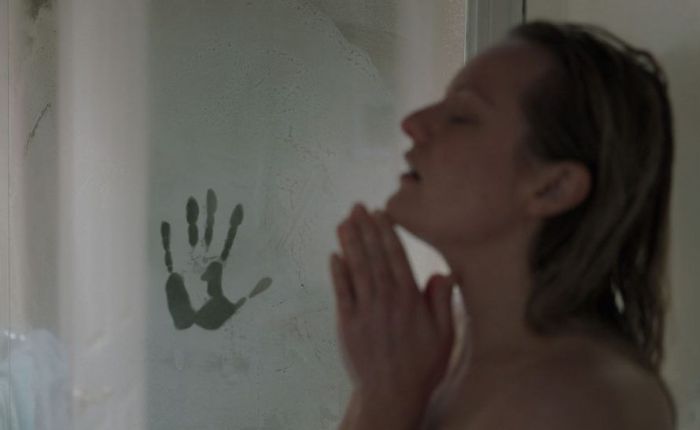
The phenomenon of the Late Winter Horror Film is not a new one, but it’s certainly seen an uptick in recent years. From the social media-friendly antics of The Boy in 2016 to the one-two punch of ‘F’ Cinemascores in The Grudgeand The Turning earlier this year, the first quarter is now an annual window packed full of low-budget thrillers with a heavy dosage of schlock. This excludes  big-budget horror like John Krasinski’s A Quiet Place (2018) or Gore Verbinski’s A Cure for Wellness (2016) of course, as well as prestige horror that happens to launch in this season, like Robert Eggers’ tremendous The Witch in February 2016 or Jordan Peele’s duo of Get Out and Us in 2017 and 2019. I’m talking about the fun, dumb ride of something like the unfairly maligned The Turning or even Leigh Whannell’s new-to-VOD The Invisible Man, which uses the joys of Late Winter Horror to reflect cracks in modern society.

Sure, films of this ilk routinely turn a profit, but their reputations couldn’t be worse; audiences and critics frequently dismiss them as formulaic tripe, overly reliant on jump-scares. It puts these movies in an odd place: seemingly panned by everyone, but attracting an endless supply of moviegoers. Yet the very formula that puts so many off is what brings others in the door in the first place.

In The Spierig Brothers’ Winchester (2018), there’s a moment just a few minutes in when the film lays the premise bare—Jason Clarke, as a doctor who doesn’t believe in ghosts, is assigned to perform a psychological evaluation on one of the most famously haunted people in American history, in one of its most famously haunted locations. If you gave each audience member a moment to predict, beat-for-beat, how the rest of the story would unfold, most would probably land every major moment. But is that… a bad thing?

When audiences sit down for a mid-summer action blockbuster starring the most beautiful, muscular people on the planet, they know exactly what they’re getting, and are typically effusive with their praise when it delivers on that promise. Twitter may have thrashed Martin Scorsese when he compared superhero films’ formulaic construction to theme park rides, but most horror fans would probably admit that the most favorable comparison for movies like Winchester is that of a roller coaster. Each scene features the same up-and-down structure, beginning with a scary noise accompanied by tense music which leads to a journey down a creepy hall, SNEAK ATTACK, and then a calm moment of safety before it all starts again.

It should be no different when trashy, low-budget thrillers can satisfyingly provide audiences the cinematic comfort food they paid for than when the standard, lifeless costumed superhero saves the day to widespread praise. You know what you’re getting with movies like these. That’s part of their appeal.

Beyond predictability, Winchester may well be the perfect example of this archetype, packed to the brim with two-dimensional characters and jump scares that land about half the time. But enough effort is put into the creepy set design, quaint “let’s play dress-up” period costuming, and delightfully dark atmosphere that it all works anyway. The defining elements are all there, from the handful of D-list performers supporting one or two beloved actors to the laughable, left-field twist ending. It’s made with just enough craft (particularly an effective, intense long-take sequence at the midpoint) that it doesn’t need to be enjoyed with irony or alcohol— though the latter can certainly add to the experience.

Within the broader label of Late Winter Horror, there are a few specific divisions that stand out. The first is the ghost story, made up of haunted houses like Winchester, haunted children like The Turning, and haunted dolls like the two Boy movies. These films aren’t all necessarily actually about ghosts, but hinge on a central mystery of whether a ghost is actually present.

All four haunts have twist endings without any semblance of set-up, and their degrees of success vary wildly. The Boy (2016) ends with an admirably insane climax kicked off by pulling the rug out from under the audience as a grown man emerges from the walls, delightfully resolving the film’s mystery and taking the last act into slasher territory. On the other hand, its follow-up Brahms: The Boy 2 (2020), tries to one-up the first twist and unwittingly undermines everything that made the first film work. The Turning barely has an ending, instead opting for an attempted mind-F second only to 2012’s The Devil Inside in failing to wrap up its narrative.

Secondly, you have late entries into dead or slowly dying horror franchises like The Grudge (2020), Insidious: The Last Key (2018) and The Strangers: Prey at Night (2018). Typically, when major horror franchises shift from the typical October power month to late Winter, it’s not a good sign for the series. These films have their moments, and boast the trappings of the genre, but all feel slightly trapped by the series in which they’re set. None of them can truly embrace the grotesque quirks of the best Late Winter Horror films, and sort of feel like diet entries in both their franchise and the genre. Even The Grudge, which boasts an uncharacteristically impressive cast led by John Cho, fails to deliver anything memorable aside from a confidently bleak conclusion.

One of the more interesting of these specific archetypes is the single-location “real world” thriller, devoid of anything supernatural. In Escape Room (2019), The Belko Experiment (2016), and this month’s The Hunt, a small cast of characters are trapped in a dreadful situation as their numbers slowly dwindle. Borrowing narrative structure from video games, the heroes survive waves of obstacles until only one or two remain. These movies certainly bring the roller coaster element of Late Winter Horror Films, and the central mystery of “what is happening” keeps the stories engaging.

Of the realistic, single-location thrillers, only The Hunt tries to use the premise to actually say something, but it’s largely bungled by a confused tone. It functions decently as a fun, empty showcase of star Betty Gilpin’s talents and a handful of effective action sequences, but has no idea how to use the language of satire. Writers Damon Lindelof and Craig Zobel attempt to make a grand statement about the hypocrisy of well-off liberals, but can’t land on how to say it, instead coming off as gleefully cruel. Probably the bottom of the barrel in this genre, The Hunt is at the very least an ambitious effort with flashes of brilliance, which is more than one can say about the mindless glut of the most expensive blockbusters.

And finally, in 2020 a new type of Late Winter Horror Film has arrived, and it could very well be the one that actually changes the (undeserved) reputation of the genre. The Lodge and Leigh Whannell’s Invisible Man operate in the same realm as Jennifer Kent’s The Babadook (2014), utilizing a rich subtext to give their films a larger meeting. And much like Hereditary (2018), The Lodge uses long, static takes that immerse the viewer in a deeply unsettling house, creating an ever-present sense of dread even before the story ramps up into outright terror. On top of this appeal to arthouse audiences, they stay true to their roots, imbuing “prestige horror” with the unsettling absurdity of the traditional, schlocky late winter horror film.

Late in The Invisible Man, when the film’s statement about the way society treats women who speak out is clear, it still pauses for an action sequence reminiscent of Scooby Doo. The scene is visually arresting, and Whannell shows off the same action chops he flexed throughout Upgrade (2018), but it’s tonally jarring to jump from addressing a grave matter to a full-on fight with a character that the camera doesn’t show. Characters are flung around a hallway, pulled by the hair and shot, and it’s just a little goofier than one might expect. But where this would feel out of place in a drama that plays everything straight, this adds to its potency, playing on expectations of the genre itself. As it nears the conclusion, The Invisible Man lands precisely because of the way it interacts with the genre’s trappings—inverting the twist ending by affirming the protagonist’s fears.

Outside of the horror genre, the first quarter of the year, once seen exclusively as a dumping ground for all bottom-of-the-barrel projects, has actually become quite a destination. Superhero blockbusters like Captain Marvel in 2019, family friendly fare like Paddington 2 in 2018, and arthouse horror like Get Out and The Witch have helped to kill the myth of the post-Oscars drought. And now, we may just well be witnessing the start of a critical reassessment of the so-called trashy entries that are so intertwined with the release window itself.

Onward is Pixar’s True Successor to The Incredibles

Onward is Pixar’s True Successor to The Incredibles

Originally published at CBR on 03/15/2020.

Mountains and rolling fields. Fantastical creatures. Magical spells. Staffs and quests.

At this point the conventions of high fantasy, largely established by J. R. R. Tolkien, have been so well-trodden, replicated, parodied and criticized that there’s almost no way to make them feel fresh anymore. But much as it did with the equally overdone tropes of the superhero genre with The Incredibles, Pixar has done the impossible and breathed new life into fantasy with its latest film Onward.

In The Incredibles, director Brad Bird makes his intentions clear from the very start — sure, this is a send up and deconstruction of the superhero genre, but it’s also a celebration of what makes the genre work in the first place. Likewise, Onward makes its intentions very clear early on, asking the viewer to make connections to Dungeons and Dragons and Lord of the Rings. But in the end, both films know why they exist in the first place, and function, above all else, as effective, humanistic stories with everything else grafted on top of that.

Through specific, intentional echoes of famous superhero and spy stories, The Incredibleshas a lot of fun with its premise. To start with, the main family of heroes each correspond almost directly to a member of the Fantastic Four, from their personalities all the way down to their superpowers. On top of that, many of the tools and gadgets are ripped straight from the Mission: Impossible films, and composer Michael Giacchino’s theme is clearly riffing on music from the James Bond franchise. In specific moments, characters reference a villain who “monologues,” or the dangers of capes. Even the general premise, a world where superheroes once had a heyday but are now illegal, calls Watchmen to mind.

However, what really makes The Incredibles tick as a send-up of classic superhero tales is its villain, Syndrome. A stand-in for the entitlement of fan culture, Syndrome forces Mr. Incredible to face the mistakes of his past and the arrogance of his present. Bird attacks the hypocrisy of superheroes and fandom head-on, but in the end allows his heroes to grow, improve, and save the day. Ultimately, though it takes a postmodern, deconstructionist approach, The Incredibles is a celebration of the joys, the awe and the wonder of our modern superhuman myths.

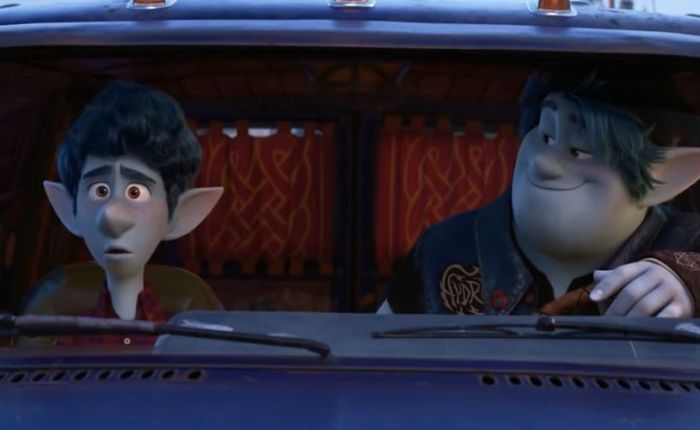
In that same vein, Onward pokes small, fun jabs at fantasy properties, but it’s all in the service of a larger point. The most obvious comparison is not in any tales of Middle Earth, but in Faerûn. Of course, the “historical” role playing game that Barley (Chris Pratt) plays is an almost exact recreation of Dungeons and Dragons, but it bleeds into the structure of the story as well. Much like a group of friends gathered around a table in the middle of the night with nothing but character sheets and a handful of dice, each obstacle Barley and his little brother, Ian (Tom Holland), face is solved in increasingly absurd ways. Rather than handle their troubles the way Frodo, Aragorn and Gandalf would, the pair always rely on their luck and ingenuity rather than any sort of skill in battle.

Onward

Though not quite as sophisticated as The Incredibles’ approach of using genre to confront its fans, Onward uses this fun, familiar adventure to draw in the audience, disguising an achingly human story of growth under the surface. Ian and Barley have spent most of their lives without their father, who died when they were young. Of course, they love each other and their mother (Julia Louis-Dreyfus), but the two have often yearned for the father they barely even knew. In a fantastical world that has lost its magic, they go on an epic adventure for the chance to speak to him one last time. Along the way, the two grow closer and make the world a little brighter. The characters’ growth mirrors the way a D&D hero’s stats level-up, but they’re instead developing as people, or in this case elves.

Ian’s growth as a wizard becomes clear around the film’s midway point in an action-packed moment when he is forced to use magic to save someone’s life, and reflexively casts a successful spell at the last moment. The moment lands perfectly, earned through time spent struggling with magic, much in the way a D&D character grinds before leveling up. But as he gains magical prowess, Ian is also learning more about himself, who he is and how much his brother Barley really means to him. This all comes to a head in the emotional climax, one of the most powerful moments in the history of a studio known for emotional resonance.

Onward

This focus on telling a powerful, human story in the context of a genre send-up is what makes Onward click together so perfectly as The Incredibles’ spiritual successor, and it’s also the arena in which The Incredibles 2 falters. The sequel, also directed by Bird, puts too great a focus on living up to the fun and style of the original, but fails to capture the thematic richness. The reveals of the villains, full of twists and turns, is seemingly for the sake of the spectacle, but does very little to build out what the story is actually trying to say or how it impacts and develops the Parr family. Though certainly action-packed and imbued with the same spirit of superheroic fun, The Incredibles 2 is too concerned with living up to its predecessor to earn its place as a genuine successor.

On the whole, Onward, director Dan Scanlon’s follow-up to Monsters University, is a sharp step forward for the storyteller, and could be a portent of a brighter future for Pixar itself. In recent years, only Inside Out and Coco were able to leave a strong impression, with a heap of sequels like Cars 3 and Toy Story 4 and misguided, generic experiments like The Good Dinosaur unable land the way the studio’s films once did. Instead of a direct sequel, Onwardsuccessfully recaptured the magic of The Incredibles by doing what that film did back in 2004 — telling a unique story. With Soul, another original film, just months away, perhaps this is a sign of what’s to come.

Written and directed by Dan Scanlon, Pixar’s Onward stars Chris Pratt, Tom Holland, Julia Louis-Dreyfus, and Octavia Spencer. The film is now in theaters.

A New Hope: Clone Wars & The Mandalorian Show Star Wars’ Bright Future

A New Hope: Clone Wars & The Mandalorian Show Star Wars’ Bright Future

Originally published at CBR on 02/17/2020.

With Season 1 of The Mandalorian satisfyingly wrapped-up, Season 2 on the horizon, and the last season of The Clone Wars just around the corner, it’s a good time to be a Star Wars fan. Just two months removed from The Rise of Skywalker capping off a wildly divisive run of cinematic releases from a galaxy far, far away, what’s changed? It goes back to one man: Dave Filoni.

In 2008, Filoni was a little-known animator, fresh off experience on the first season of Avatar: The Last Airbender. George Lucas surprised many by choosing Filoni to help shape Star Wars’ on-screen future after the conclusion of the prequels, as the director of the Clone Wars animated movie and creative force behind the proceeding Cartoon Network series. The existence of the film itself was bewildering — do we need more prequel era stories about Anakin and Obi-Wan? And its about Anakin’s padawan, who is just never discussed again? And after all, the prequels are bad! Though the theatrically released film was universally panned, it proved successful enough for the series to continue, and what a miracle it was.

After the boring, seemingly pointless Clone Wars movie, who would’ve thought that the series it spawned, on Cartoon Network no less, would be one of the best-told stories in the Star Wars Universe. The first on-screen story to truly feel removed from Lucas’ own sensibilities, the larger narrative was aimed under the guidance of the world’s creator but was first and foremost a Dave Filoni story. Interestingly enough, you can see how Filoni matured as a storyteller along with the show in the first few seasons, growing from an imitation of the live-action films to embracing its own little corner of the universe.

Over time, fans began to embrace what made The Clone Wars so special, cheering on the recurring appearances of characters created for the show like Hondo Ohnaka and the handful of clone troopers with personality, rather than just crossover appearances from established characters like Yoda and Darth Maul. Just as the show was really hitting its groove, telling some of the boldest stories in the Star Wars universe and addressing the gray-area morality of the Jedi acting as a militarized group, Disney pulled the plug.

Though Clone Wars wrapped its story up quicker than the fans and creators had hoped, it still provided a satisfying conclusion, fully overcoming the bad rap of the film and the early episodes. When you look back on those first five televised seasons as a whole, the show did a few things many would consider unthinkable — it offered actual depth to the prequel films while creating something entirely new in the process.

Star Wars Rebels, Filoni’s follow-up to The Clone Wars, had a far less steep hill to climb. Unburdened from the constraints of a brief timeline between two films and without the need to work around the canon of major characters, Filoni, along with new collaborators, Simon Kinberg, Carrie Beck and Greg Weisman, learned from his mistakes and delivered something interesting right out of the gate.

The premise was far simple and offered a more compelling hook, as the show followed a team of rebels, pre-Original trilogy, led by one of the few surviving Jedi and his new Force-sensitive padawan. Eventually, Filoni pulled out the rug from everyone and the show dove headfirst back into the same corner of the universe as The Clone Wars, bringing back many of the characters and themes from his earlier show. Longtime fans of the previous series found it to be incredibly rewarding, but this was a bold risk considering the many new viewers of Rebels, itself more appealing to younger audiences on the new home of Disney XD.

Nevertheless, Filoni was clearly staking his claim, promising that his pieces of the Star Warsuniverse would work together, building upon one another to tell a larger, more epic story.

But since the premiere of Rebels, much has changed in the Star Wars universe. In theaters, Disney’s Star Wars films have sort of led to the fandom tearing itself apart. In 2015 and 2016, Episode VII: The Force Awakens and Rogue One: A Star Wars Story seemed to hint at a future of fun, passable films that couldn’t quite replicate Lucas’ original magic. But then Episode VIII: The Last Jedi came out, and for the last two and a half years arguing about Star Wars has become one of our most beloved pastimes. Much like Filoni’s many stories, Rian Johnson’s film took huge risks with the property.

The Last Jedi is easily the boldest and most unique story in the canon and a massive step forward on every level. It forced the characters that so many grew up admiring to actually look at themselves and question who they are. The film humanized these larger-than-life figures in a way audiences had never seen before, including addressing the gray morality of the Jedi, who once considered themselves the ultimate arbiters of Justice. Many didn’t see the film this way, and were largely put off by Johnson’s boldness. Rather than view the story as a whole, and analyze what it means, many viewers instead felt it betrayed what they loved about Star Wars in the first place, and couldn’t get behind the new risks it took. Just months later, this was followed-up with Solo: A Star Wars Story, a lifeless, gray Han Solo origin that lost its filmmakers halfway through shooting.

Now, here we are, just months after Episode IX: The Rise of Skywalker, the most divisive film in the series in a whole two years. Though certainly not bad, JJ Abrams’ Skywalkerseemed to focus far more on delivering what fans said they wanted than achieving a more unique vision, and almost feels more like a 150-minute highlight reel than a conclusion to the 42-year saga. With no more announced films in the franchise, rapidly declining box officereturns and the worst reviews of any live-action movie in the series, one would expect fans of the series to be pessimistic. Thankfully, the last few years of Star Wars television have been very kind, and promise to only improve.

On smaller screens, Rebels offered another satisfying conclusion from the Cowboy Hat-wearing animator in early 2018. The finale comes full-circle, building upon The Clone Warsand potentially setting up a third story in that vein, though there’s been little movement on that front. He also helped create Star Wars Resistance for Disney XD, and though Filoni took a less hands-on role in its storytelling, it still found universally positive reception. And last year, Jon Favreau recruited Filoni to help create The Mandalorian for Disney+.

The show, along with the now inescapable Baby Yoda, became Disney’s first entry in the Star Wars universe to have a large-scale cultural impact and inspire widespread, deep admiration. In The Mandalorian’s final moments, it mirrored what he did in the finale of Season 1 of Rebels, once again delivering a final twist that this story also occupies that same, Dave Filoni corner of the Star Wars universe. On top of all of this, next week the creator’s beloved Clone Wars returns to tie up all of those loose threads.

Whether you love or hate Disney’s wildly divisive live-action Star Wars entries, odds are you have seen (and enjoyed) something with Dave Filoni’s fingerprints. Now, with the future of the galaxy far, far away largely obscured, there’s reason for optimism, because it lies in good hands.

Premiering Friday, Feb. 21, on Disney+, the final season of Star Wars: The Clone Wars stars Matt Lanter as Anakin Skywalker, Ashley Eckstein as Ahsoka Tano, Dee Bradley Baker as Captain Rex and the clone troopers, James Arnold Taylor as Obi-Wan Kenobi, Katee Sackhoff as Bo-Katan, and Sam Witwer as Maul.

Comic Book Movies Don’t Need the Academy’s Approval – Especially Not Joker

Comic Book Movies Don’t Need the Academy’s Approval – Especially Not Joker

Originally published at CBR on 1/18/2020.

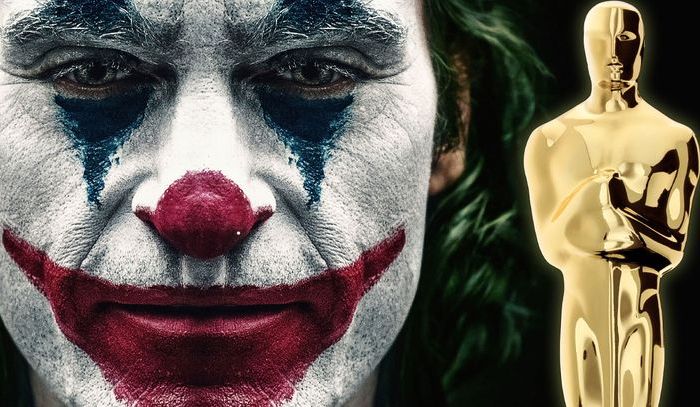
In February 2009, Heath Ledger won a posthumous Academy Award for Best Performance by an Actor in a Supporting Role. Ledger’s win, awarded for a genre-redefining take on The Joker, marked the first time a blockbuster superhero film had broken into a major category. A decade later, Todd Phillips’ Joker led all 2019 films with 11 Oscar nominations and is a favorite for many. It completes this cycle of superhero films, closing the loop on a decade that birthed the idea of a Cinematic Universe as we know it and saw superheroes rise to the top.

In many ways, this growth is exciting. Those who were raised on comic books and niche science fiction might see this as the public finally embracing something they once derided, but the question needs to be asked—why does it matter if these films are “embraced?” And is Joker really the best we can do?

The Dark Knight, released in 2008 by writer/director Christopher Nolan, was unlike many other comic book films at the time. While films like Raimi’s Spider-Man were bright and vibrant, The Dark Knight operated with a muted color palette, an atmosphere more reminiscent of crime thrillers. The film’s more prestigious tone, along with Ledger’s powerhouse performance, allowed the movie to finally get taken seriously by audiences and the film industry as a whole. Though previous movies had established that capes and cowls can draw audiences, this was a new breed, earning rave reviews and even convincing the Oscars to expand the field of Best Picture.

But as Marvel’s Cinematic Universe grew beyond its humble origins in the following decade and allowed comic book movies to “go weird,” the broader resistance to take movies of their kind seriously returned. The massively budgeted films could gain nominations in categories like Best Visual Effects and Best Sound Editing but always fell short to “prestige” films and smaller, quieter material. But, while all of this happened, the MCU passed Harry Potter as the highest-grossing franchise of all time in just seven years of existence. The Avengers had the highest opening weekend of all time in 2012. DC got in on the Cinematic Universe game, and though it took a while, finally found their footing with Wonder Woman. Countless franchises attempted to ape what superheroes had, and the genre became ubiquitous, dominating theaters with even more films each year that continued to succeed. Despite what can frequently be a harsh reputation, film critics embraced many of these films, and the MCU collectively averages just over 83% positive reviews on Rotten Tomatoes. And last year, to put a final exclamation point on everything, Avengers: Endgame became the highest-grossing film of all time worldwide.

Yet, after all of this, fans still clamored to be taken seriously by critics groups and award voters. As time goes on, the fandom has grown more impatient with those who do not ascribe to their way of thinking. Any time a public figure has something negative to say about the genre, just take a look at any comments section—fans are bewildered that anyone could hate their precious (billion-dollar) films.

It wasn’t until 2019 that Marvel Studios broke out of the technical categories and won a Best Picture nomination for Ryan Coogler’s Black Panther. A clear representation of everything superhero films should be, Black Panther broke the mold by taking massive steps forward in terms of representation for black artists, both in front of and behind the camera. The film takes the standard superhero template (hero, villain, fight scenes, car chases), and uses it to tell a moving story about personal responsibility and flawed governments, bathed in subtext as a response to the racism that has enveloped modern society and kept movies like this from ever coming before.

If ever there was a film that should represent what superheroes can do when they deserve to be taken seriously, it’s Black Panther. With its seven nominations and three victories, the film certainly earned a place in the conversation, but didn’t earn a nomination in any acting, writing, or directing categories, and was never considered a real competitor for the Oscar for best picture. Unfortunately, the first blockbuster comic book superhero film to actually make that step is Todd Phillips’ Joker, a film that shares many similarities with Black Panther, but many stark differences.

Though not quite a bad film, Joker’s greatest mistake is failing to make a compelling argument for its own existence. Were it simply an intimate, cynical thriller about the consequences of a broken, selfish society, Phillips’ film would work. Instead, it becomes this weird meeting place of decades-old comic book lore, a cinematic love letter to the ‘70s crime films of Martin Scorsese and a tone-deaf screed against a nonspecific idea of “society,” muddling the actually effective story that lies beneath the surface. That’s not to take away the craft with which Phillips makes the film, expertly evoking Scorsese’s style with a few of his own flourishes, as well as Joaquin Phoenix’s in-your-face performance and Hildur Guðnadóttir evocative score, which all form a perfectly well-created movie. But underneath this surface-level technical skill, there just isn’t anything there.

Aside from the fact that it mostly feels like a story that has already been told in a style that has been done to death, Joker also marks a troubling landmark for Hollywood as a whole. As first brought up in critic David Ehrlich’s review of the film, the success of Joker could very well make the film a precursor to a new wave of cinema that is bold but wouldn’t exist without an existing IP grafted on top of it. Though it certainly pushes boundaries in terms of content and what’s allowable in a big-budget mainstream studio movie, there’s no way the movie exists without the presence of Bruce Wayne, negating any actual bravery the movie would otherwise possess.

When it comes to the Awards, the Motion Picture Academy of Arts and Sciences has made its purpose clear—to honor the best and boldest movies of each year. They’ve certainly strayed from that by nominating and awarding safe, less-than-stellar choices in recent years like Bohemian Rhapsody and Green Book, and choosing to honor Joker only continues down that path. For years, comic book fans have gleefully watched as their favorite genre became a titan in modern culture and dominant at the box office, but it wasn’t enough. And now, they’re just another mistake in a pattern of mistakes at the Oscars, validating nothing but the audience’s vanity.

ONCE UPON A TIME IN HOLLYWOOD Invites You to Hang Out in Quentin Tarantino’s Head

ONCE UPON A TIME IN HOLLYWOOD Invites You to Hang Out in Quentin Tarantino’s Head

Originally published at Cinapse.co.

The specifics of the title of Once Upon a Time in Hollywood have become a subject of much debate over the past few weeks. Is the title Once Upon a Time…in Hollywood? Is it Once Upon a time in…Hollywood? Is the ellipsis even necessary? Now, this debate wasn’t half of the shitstorm that was the Angry Scorsese Discourse and the Tarantino Rankings Discourse, but the varying forms of the title in different pieces of marketing perplexed a lot of us: in the end, why are there two variations on the title? Thankfully, the movie (which I’ll just refer to without the ellipsis) offers a conclusive answer — it’s both. But before we get there, we need to look back at just what the filmmaker was evoking with these two variations in the first place. And look, I know you didn’t click on a review of the new Tarantino movie just for the whole thing to be about the title, but bear with me — I got this.

In 1968, Italian Western filmmaker Sergio Leone, a clear inspiration on basically everything Tarantino’s ever done, released Once Upon a Time in the West, a beautiful western that many consider his masterpiece. Cinema has seen this title turn into something of a genre in its own right, defining films epic in scale and length that frequently attempt cap off a popular genre with an ode to the movies that came before. From Leone’s own gangster-themed follow-up Once Upon a Time in America to Robert Rodriguez’ Once Upon a Time in Mexico, the title evokes Leone’s seminal Western while offering an air of gravitas to the movie itself. Tarantino’s latest, itself a film about the industry, goes all in on the meta-commentary, and uses the title to bolster those themes. By placing the ellipsis just before the word “Hollywood,” “Once Upon a Time in…Hollywood” draws attention to the way Tarantino plays with film history in the movie itself.

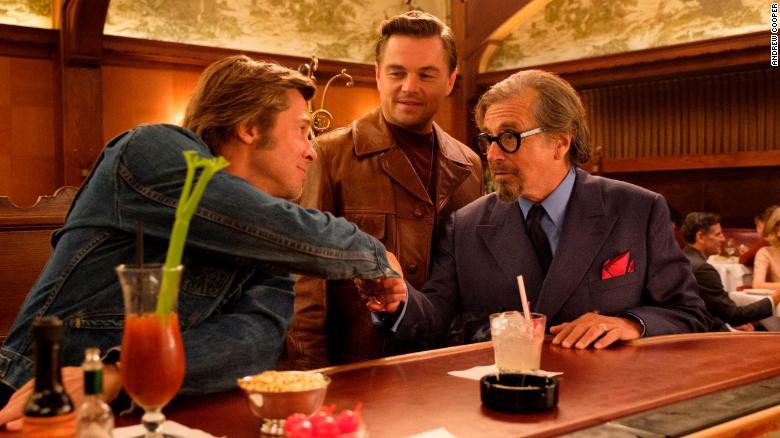
Throughout the film, Tarantino obviously uses the movie’s 1969 Hollywood to voice his own thoughts on the industry itself, but it seems the director has learned a touch of finesse he’s never quite shown before. In previous outings, when the filmmaker takes inspiration from film history itself, it can often seem like being hit in the head by a Film Bro’s Superior Intellect, and it’s often just exhausting. But when the lead characters of OUATIH, Leonardo DiCaprio’s Rick Dalton and Brad Pitt as his stuntman Cliff Booth, interact with the period-accurate film industry, it’s never overbearing. These almost slice-of-life moments compose a heavy percentage of the movie’s runtime, as Dalton, who feels like a failed version of John Wayne and Clint Eastwood combined together, simply does his job. DiCaprio and Pitt excel throughout the runtime, but it’s a transcendent combination of a director helming a scene about filmmaking that’s draped in a reverence for the process, and actors playing actors in a scene that’s equally as reverent to the art of acting. Now this might be all lofty, but these are some of the best moments in the story; they’re a love letter to film history and the art of cinema itself without ever becoming too clouded with nostalgia or bogged-down in specific inspirations. There are some moments where it feels like the story might be going to a more meaningful place, critiquing the inherent flaws of what the film industry once was and how it’s improved, but they’re just played off for laughs. I can see how this can become a gamebreaking issue for some, as the Love Letter to Cinema is half of the movie’s conceit and it almost feels empty without having much to say, but I would say it works in spite of feeling quite shallow.

On the other side of the title’s meaning, “Once Upon a Time…in Hollywood” draws attention to the fairytale nature of the film, as he inserts two fictional characters into a much-studied piece of cinematic, and American, history. Dalton is a next-door neighbor to Margot Robbie’s Sharon Tate, and Tarantino uses this to tell her story in a way we haven’t ever really seen before. So much of the story of the Tate murders and the crimes of the Manson family are buried in the cold, calculated style of true crime. Instead of telling the audience about who Tate was, true crime stories condense the person down just to what happened to her. This story rejects that and films her scenes with the wonder of a fairy tale, allowing Tarantino to finally, fully let go of the bitter, cynical artist that made The Hateful Eight.

Robbie, as the third lead of the story, is the only lead playing a real person, and had a tough task ahead of her. Most of the film takes place in early 1969, when Tate was three months pregnant, but five months away from her murder at the hands of the Manson Family. If the scenes of 1969-style film production are a love letter to cinema, the sequences that follow Tate are a sacred text, as Tarantino treats the late star as a shining example of the best that Hollywood could be. We see her go out of her way to show kindness to people, gleefully soak in crowd reactions to her own movie, and live life with a free joy that so many of us can only dream of. Without needing to say anything, these extended episodes make you appreciate the person she was, and wonder what could’ve been. Though I had never seen a movie with Sharon Tate, Once Upon a Time in Hollywood makes an earnest plea to seek her out, to see the legend she could’ve become, and to understand how much she could’ve done. Tarantino captures all of this with an earnest, sincere sense of admiration and melancholy, and I hope he doesn’t abandon it after this movie.

With Spider-Man: Far From Home, the MCU Finally Gets Peter Parker Right

With Spider-Man: Far From Home, the MCU Finally Gets Peter Parker Right

Originally published at CBR.com on July 9, 2019.

WARNING: The following contains spoilers for Spider-Man: Far From Home, in theaters now.

When Spider-Man: Homecoming was released in 2017, fans and critics fell head over heels for director Jon Watts’ take on Marvel’s web-slinger. It was a refreshingly small-stakes blast, but it lacked the one thing it needed most: a vision of Peter Parker that actually lives up to the source material. Thankfully, Spider-Man: Far From Home is nearly a complete reversal, spring-boarding off the tragedy of Avengers: Endgame to create a fully realized, and wholly new, wall-crawler.

Between its fun style and star Tom Holland’s magnetic performance, Homecoming was easy to like, but Peter lacked the depth of previous iterations. It worked well as an extension of the Marvel Universe, and the depiction of his life as a high-school student was brilliant, but by focusing primarily on Peter’s relationship with Tony Stark, it failed to deliver emotional depth. By looking to the history of the character, both on and off the big screen, Watts, with writers Chris McKenna and Erik Sommers, finally gave the Marvel Cinematic Universe the Spider-Man it deserves.

In 2002, Sam Raimi’s Spider-Man was a smash hit because it fired on all cylinders. Raimi’s dynamic direction, combined with a story of hope buried beneath a layer of tragedy, created the perfect movie for the moment. Around the end of the first act, Peter Parker’s Uncle Ben is murdered, and he blames himself. By focusing Peter’s story on his growth after Uncle Ben’s death, it laid the groundwork for the character’s emotional arc across the trilogy. Though Peter continued to crack jokes and find hope in the darkness, it almost acted as a veil for the despair that would plague him otherwise.

Although Peter’s history with Uncle Ben clearly happened in some way in the MCU, it’s mostly glossed over. Despite some references to a sad past, and a briefcase marked “BFP,” Peter’s backstory goes unaddressed over five films featuring the character. Everyone involved likely wanted to avoid the issues with Marc Webb’s The Amazing Spider-Man, which rehashed the story, the decision to skip over it entirely undoes a central part of what makes Spider-Man so great.

Additionally, Raimi’s vision, as with most other adaptations, took Uncle Ben’s death as Peter’s motivator. Just hours before his death in the first Spider-Man film, Ben echoed his comic book counterpart’s most famous line, “With great power comes great responsibility.” Peter takes that to heart, and although he doesn’t always want to be the superhero, he acknowledges his abilities give him a responsibility to help people. While Tom Holland’s Peter echoes that sentiment in Captain America: Civil War, something is lost in translation on the way to Homecoming, and it’s kind of dropped from the character.

The baffling decision to bypass the emotional fallout of Uncle Ben’s death led directly to losing the character’s most interesting dramatic motivator: the internal battle between power and responsibility. Now, Homecoming still has plenty of drama to supplant that, but it never quite clicks into place. Peter’s relationship with Liz and the surprise of Adrian Toomes (aka The Vulture) as her father played out in a fun, roller-coaster ride of a movie, but it lost the gravity that made Raimi’s movies so effective.

In 2015, when work began on Spider-Man: Homecoming, the public had largely grown tired of origin stories. Ant-Man had just come out, and The Amazing Spider-Man 2 had under-performed at the box office the year before. So, it’s likely they chose to dodge Peter’s relationship with Uncle Ben’s tragedy because they didn’t want to completely redo a story that had already been told twice before.

Nevertheless, they could have used everyone’s knowledge of Peter’s past as an emotional groundwork for the story they told. There’s even precedent in the MCU, as The Incredible Hulk opens with a title sequence that recaps Bruce Banner’s familiar story. Homecoming didn’t need to take that route, and could have looked to the brilliant 2008 animated series, The Spectacular Spider-Man, for influence. Like last year’s Spider-Man: Into the Spider-Verse, it basically assumes you already know Spider-Man’s origin, and goes from there.

They both still acknowledge the inherent tragedy to Peter’s story and the dramatic tension of grappling with the responsibility of being a hero, but don’t beat you over the head with Uncle Ben’s death. Instead, Jon Watts settled for a middling, shallow interpretation of the character his first time around, a movie that delivered thrills and laughs and not much else.

Thankfully, Watts and co. completely stepped their game up with the sequel, and delivered a glorious return to form in Spider-Man: Far From Home. It’s a triumphant return to a recognizable interpretation of Peter Parker as Spider-Man, with enough extensions and adjustments to make it feel like a breath of fresh air. In Tom Holland’s fifth performance as the character in the span of only three years, the best portrayal of Spider-Man is finally given a script to fit the talent.

In one fell swoop, the movie solves all of the issues and obstacles placed in its way by Homecoming with the death of Tony Stark. Peter struggles to overcome his mentor’s tragic death, but he’s also coming to terms with how to fill his shoes. His internal journey throughout the story heavily revolves around learning to move on and live in a way that would’ve made Tony proud.

Tom Holland Sad Peter Parker Spider-Man Far From Home

That’s not to say Far From Home is remotely as dramatic as Avengers: Endgame, but it provides a necessary grounding point for the otherwise cheerful character. It doesn’t remove any focus from Peter’s relationship with his classmates or his life in high school, instead of lending additional weight to the whole story. On top of this, Peter has been left a technological gift from Tony that forces Peter to reckon with his own responsibility to help people and brings the character full circle.

By basically replacing the death of Uncle Ben with the sacrifice of Tony Stark as Peter’s emotional grounding, Spider-Man: Far From Home may alienate some die-hard comic absolutists, but it works so well that it’s easy to forgive. Director Tom Watts followed up a fairly weak outing for the webhead with one of his absolute best, along with this bold declaration: this iteration of the character is in firmly MCU, and he’s here to stay. He’s not just a friendly neighborhood Spider-Man anymore, and that might just be a good thing.

Directed by Jon Watts, Spider-Man: Far From Home stars Tom Holland, Samuel L. Jackson, Zendaya, Cobie Smulders, Jon Favreau, JB Smoove, Jacob Batalon and Martin Starr, with Marisa Tomei and Jake Gyllenhaal.

Disney’s Aladdin Shows the Promise (and Peril) of Disney’s Live-Action Remakes

Disney’s Aladdin Shows the Promise (and Peril) of Disney’s Live-Action Remakes

Originally published at CBR.com on May 30, 2019.

Questionable marketing and rough CGI led audiences to fear Guy Ritchie’s 2019 Aladdin remake. After all, why even remake the movie if it’s just going to be a lesser rehash of the 1992 classic? Fortunately, the end product is better than many anticipated, but it’s hard to shake the feeling that Disney squandered the chance to make something truly special.

In an unintentional, metatextual metaphor for the studio itself, 2019’s Aladdin starts with daring, clever choices and devolves into a safe, easy cash grab. It shows viewers how these remakes, in theory, could work, and then proves that Disney lacks the bold vision to recapture the magic it once had.

There were signs. After Aladdin‘s first trailer dropped, the internet exploded with angry questions: Why does everything look fake? Why does the genie look like that? Why release a clip of “Prince Ali” when it’s just Will Smith doing a bad Robin Williams impression? Again, why does the genie look like that?

Will Smith as Genie in Aladdin

In just the first few minutes, though, Ritchie is able to show that the movie isn’t just a hollow remake, shifting and tweaking the characters and the way the story unfolds, providing more depth and his own trademark style. But as the film approaches the original’s recognizable set piece sequences at the midpoint, these updates start to fade, and the movie transitions into the sort of bland reskin that was Beauty and the Beast.

When work first began on the original Aladdin 1988, Disney Animation Studios was in desperate need of a hit. After a string of box office flops, the studio made the gutsy call to move forward with projects that had been kicking around for a while, and by the time Aladdin made it to release in ’92, the Disney Renaissance was in full swing.

It was a time packed to the brim with some of the best animated features ever, including The Little Mermaid, Beauty and the Beast and The Lion King. The Renaissance saw the studio embrace risky moves out of necessity, and it paid off tremendously.

Just as The Little Mermaid showed the animation studio the proper way forward in terms of making animated fairy tales that feel simultaneously modern and magical, pieces of Guy Ritchie’s Aladdin remake illuminate the proper way to remake one of these cherished classics.

First and foremost, the script, from Guy Ritchie and John August, reworks much of the story, improving bits and pieces in many ways. From Jasmine’s newfound depth as a character to an overall willingness to embrace Agrabah as a setting in an actual world, many pieces click together beautifully.

On top of this, there are moments sprinkled throughout that allow Ritchie to embrace his own style. Though a filmmaker known for kinetic British crime stories and underrated big budget failures seemed an odd choice, he brings a sense of life when he’s given room to work.

This is especially on display in “One Jump Ahead,” the song in which Aladdin leads Jasmine across the city, running away from the palace guards after stealing food. While the song’s beat stays the same, the movement of the characters fluctuates between high speed and slow motion, bringing a palpable sense of energy and tension to the scene. Unfortunately, that pace quickly fades out, and the movie’s true colors start to show.

Though the movie on the whole isn’t quite as disappointing as Disney’s remakes of Alice in Wonderland and Beauty and the BeastAladdin falls prey to similar issues. Every time Aladdin gets going, it’s dragged back down to recreate diet versions of moments from the original movie.

Ritchie and Will Smith try their hardest when introducing Smith’s Genie character to the tune of “Friend Like Me,” but it just comes off as a lame recreation of Robin Williams’ terrific rendition. This happens over and over in these movies, sucking all the energy out and delivering lifeless, boring sequences simply because they couldn’t deviate too greatly from the source material, and it’s a major bummer.

With something like the brilliant 2016 remake of Pete’s Dragon, it was a different case because the original was little remembered and little loved, allowing director David Lowery more freedom. The big ones, like Aladdin, are packed with memorable, beloved sequences, and it’s clear Disney is too afraid to move too far away from them.

These days, Walt Disney Studios, as a company, sits atop the filmmaking world, miles removed from where they were just 30 years ago. Now they rely on sequels, remakes and reboots, increasingly abandoning strong choices for easy money, and it’s more than a little disheartening to see.

Theaters are inundated with these lackluster nostalgia trips, from Dumbo a couple of months ago to The Rise of Skywalker this December, with at least half a dozen remakes and sequels between them. If the brilliant additions and changes to Aladdin prove that live-action remakes of Disney’s most beloved movies can actually work, the very nature of the studio today proves they may never be worthwhile.

For the company to allow their directors enough freedom to make daring choices, they’d have to lay off the nostalgia-mongering, and anyone who’s seen the studio’s six-year slate knows that likely won’t happen anytime soon.

Just a few months from now, Disney will release Jon Favreau’s remake of The Lion King. If there’s anyone in the world that Disney CEO Bob Iger would trust to make a courageous reimagining of their most beloved movie, it’s Favreau.

By directing Iron Man and The Jungle Book, he helped give birth to two of Disney’s most reliable sources of income — the Marvel Cinematic Universe and these remakes. Maybe Favreau will deliver a significant departure from the source material and we’ll actually get something worthwhile, maybe that will be the studio’s proverbial “diamond in the rough.” But from there, we may have a dark, dull road ahead.

Directed by Guy Ritchie, Aladdin stars Mena Massoud as Aladdin, Will Smith as Genie, Naomi Scott as Princess Jasmine, Marwan Kenzari as Jafar, Navid Negahban as the Sultan of Agrabah, Billy Magnussen as new character Prince Anders, and Frank Welker and Alan Tudyk as the voices of Abu and Iago, respectively. The film is now in theaters.

AVENGERS: ENDGAME Packs Marvel’s Strongest Emotional Punch to Date

AVENGERS: ENDGAME Packs Marvel’s Strongest Emotional Punch to Date

Originally published at Cinapse.co on April 26, 2019.

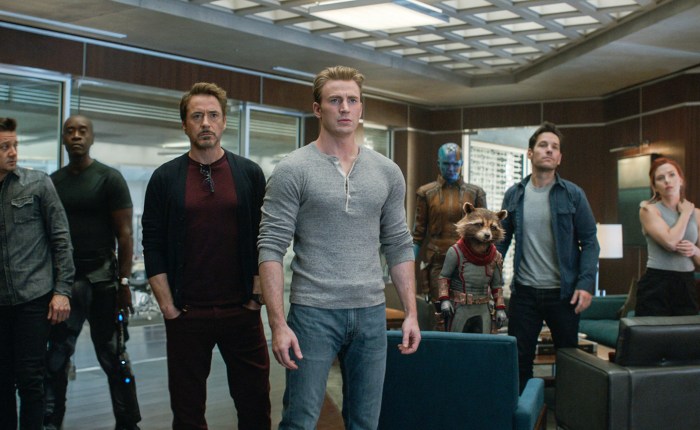
The Marvel Cinematic Universe is a wild achievement. The most ambitious project in cinema history and seemingly the only successful interconnected universe, it has attracted a massive amount of conversation over the last 11 years. The debates have ranged in topic from the usefulness of corporate art to the existence of Superhero Fatigue to Marvel’s lackluster color palette to the importance of representation to the Death of Cinema. Obviously, hyperbole has followed viewers at every turn, but it’s undeniable that producer Kevin Feige has engineered the franchise to dominate the cultural conversation, and it has for over a decade. And now we’re here at the “End,” whatever that means to a story defined by its inability to cease. With Avengers: Endgame, Marvel’s task was as large as the universe itself — directly follow-up Avengers: Infinity War, deliver a satisfying conclusion to this saga, and, most importantly, justify the existence of the last 21 films. Directors Joe and Anthony Russo, along with their writing partners Christopher Markus and Stephen McFeely, return as the first directors to make a fourth entry in the universe, and somehow, they pull off a massive success on every level. Miraculously, the team has created an overwhelming triumph on every front with the universe’s strongest, most impactful, and best entry to date.

The task of approaching a pre-release review for a film of this magnitude is tough, as I obviously want to stay entirely spoiler-free, but also need to figure out how to convey the truly momentous accomplishment of Endgame. Typically, this is the part of the review that features a brief breakdown of the plot and the characters, but how necessary could that possibly be for the 22nd entry in the biggest franchise ever, on a follow-up to a bonkers cliffhanger? So here’s all I can muster: Thanos won and killed half of the universe. The original six Avengers survived, plus a few of their less-important friends. Tony Stark is stuck in space. Captain Marvel is here now. They have to devise a plan and figure out just what it is superheroes do after suffering their greatest failure.

The closest thing to a main character in Avengers: Infinity War was Thanos, which finally added depth to a villain who’d been teased for six years, but sacrificed some of the time spent with the huge roster of heroes. As a result, the breakneck pace and disregard for character introductions put many off from the movie, making it feel more like a “fans only” experience than a standalone entry. In Endgame, the Russos fix some of these issues, but it’s not a 360-turnaround. Whereas Infinity War felt like the duo fully embracing their style of Marvel movie, convoluted plot and all, Endgamefeels more like a traditional Avengers movie. The added running time (and shortened character roster) provides breathing room, allowing the movie to be truly character-focused in the way that Joss Whedon’s two Avengers films were. And though this creates a more welcoming tone for viewers, the script is so saturated with reverence for the universe that even die hard series fans might miss moments, and newcomers could be entirely lost.

The secret of Marvel’s success doesn’t lie, like many other franchises, in grand stories that ape ancient myths or even the impeccable casting of heroes, but in the rewarding payoff of an intersecting universe. By placing all of their heroes in a single, frequently overlapping world, Kevin Feige helped create a series that is always seconds away from a little injection of fun from another time, place or tone. Need an Avenger to make your small-scale Ant-Man movie feel important? Boom, Falcon is here. Need to connect your space saga to the main story? Blam, Thanos pops in to act menacing. Not sure where to take the last Thor movie? Try popping in The Hulk just to see what happens. Sure, some of these were cheap ploys to achieve something the movie hadn’t earned, but it was almost always rewarding to see characters you love surprisingly stop in when you weren’t expecting them. Avengers films were meant to take that feeling and run with it for two hours, but nothing has ever quite succeeded in this regard like Avengers: Endgame. As the climax of the series, it delivers the longest and most powerful sustained payoff I’ve ever witnessed outside of the Japanese Zombie hit One Cut of the Dead (it rules). And once this thing approaches its third act, it ratchets up to a whole other level, packing in an entirely earned hour of pure bliss. Some are sure to deridingly call it fanservice, but when something is perfectly set up and well-earned, does that word even apply anymore? Nevertheless, the finale is so brilliant and so powerful, it justifies every moment that’s come before, even The Incredible Hulk and Thor: The Dark World.

In 2012’s The Avengers, Tony Stark knows that Loki has gone to Stark Tower because of his vanity: “He wants a monument built to the skies with his name plastered on it.” Avengers: Endgame is Marvel’s monument built to the skies. It’s massive, prideful, and unquestionably in love with itself. Viewers who’ve found themselves disenfranchised will find little to love, but True Believers will relish in every moment, callback, and interaction. And why wouldn’t they? This saga has been a comforting, reliable bit of positive escapism for the past 11 years, and now the fans and filmmakers are taking one last victory lap together. It’s with us till the end of the line.