The Importance of Sports

The Importance of Sports

Originally published on The Armchair All Americans.

As the final notes of “God Bless America” rang out on a saxophone at last night’s Texas Rangers game, fans began to chant “USA,” hoping to show signs of unity and healing. Eventually, the entire stadium joined in, demonstrating a rare moment where people of all backgrounds and all fanbases joined together as one.

America has an unfortunate history of tragedy at home, but a more hopeful history of healing through sports. After the events of 9/11, baseball became a “unifying moment in a time of crisis.” As the Yankees marched through the postseason that year, the city of New York came together.

After the Boston Bombing in 2013, the Red Sox embraced #BostonStrong as an ideal, and brought it wherever they went. The team participated in community outreaches, healed through a collective love of Neil Diamond’s “Sweet Caroline,” and player David Ortiz even said “This is our (expletive) city!”

Unity through sports is not unique to America, seen through South Africa in the 1995 Rugby World Cup. Told in the film “Invictus,” South Africa won the World Cup just a year after the end of Apartheid and the election of Nelson Mandela. Rugby did not fix the nation’s problems, but it united the nation in a single pursuit.

In any culture and in any society, one constant is sports. There is something about joining together with complete and total strangers and rooting together for a single goal. This common interest crosses boundaries of race, class, occupation. A common support of a single team can build bonds just as quickly as support of rival teams causes strife. Like it or not, sports are here, and fans are passionate.

The only Dallas-area major sports team active right now is the Texas Rangers, and they were in the difficult spot of playing a game in a town which desperately needs healing. Injustices had occurred across America as well as in the hometown. And this article is not about politics, but make no mistake, these were all injustices. The shooting of Alton Sterling in Louisiana was unjust. The shooting of Philando Castile in Minnesota was unjust. And the mass shooting of police officers in Dallas was unjust.

In the face of injustice and an attack on their home, last night’s Texas Rangers game at Globe Life Park in Arlington at least started some form of healing. Earlier in the day, Rangers minor-leaguer Joey Gallo shared a story on Instagram of an experience he had months ago with current-Ranger Nomar Mazara.

While walking down the street, Patrick Zamarripa, one of the police officers killed in the Dallas shootings, had recognized Gallo and Mazara and requested a picture.

“He was an avid Rangers fan. But more importantly a great person, and family man,” said Gallo.

Before tonight’s game began, a two-jet flyover and a moment of silence honored Sterling, Castile, and those fallen in Dallas. With a somber, quieter mood than normal, the game begins.

As the game continues, the fans start to return to what some would call “normal.” They cuss at the umpire, cheer for all fly balls hit to mid-to-deep outfield, and boo a pitcher who considers a pickoff move. They even do the wave*. As runs score, fans who have never met high-five and share opinions on where the Rangers will go this season.

The lead changes hands multiple times throughout the game, but the final lead change comes in the bottom of the 6th inning. Shortstop Elvis Andrus triples to score Outfielder Nomar Mazara, and then scores the eventual game-winning run off of a sacrifice fly by catcher Bobby Wilson.

When the game reaches the seventh inning, fans rise for the singing of “God Bless America.” But today, it is played on a saxophone and the fans are left to sing the words. Upon the completion of the song, most of the audience is singing along, united as both fans, citizens of Dallas, and Americans. They start chanting “USA!” repeatedly until they sing again, this time “Take Me Out to the Ballgame.”

The rest of the game flows mostly smooth for Texas, and they win the game with a score of 6-5. Audio man Chuck Morgan plays victory song “I Like Texas,” by Pat Green and fans celebrate a much-needed win. Elvis Andrus is named player of the game, and speaks in support of the city in his post-game interview.

“Texas is really strong, the same way as Dallas,” said Andrus.


Follow @ACAllAmericans for quality and up-to-date sports reporting.

*this is not in any way an endorsement of the wave. But hey, Dallas had a bad day.

The Great Film vs. Digital Debate

What is the difference, who supports each side, and which is actually better?

A large debate rages on in the film industry as professionals take sides on whether to shoot movies with either digital film or “true” film.

What may appear to be a slight difference actually affects how filmmakers create movies and the way they appear in theaters. With new technology rising in popularity across the world, the film industry is searching for a way to keep up.

The Facts

Many facets of this debate remain rooted in subjective questions: What format do you prefer? What feels more “cinematic?” They can make approaching the situation daunting, but facts lay hidden within the conversation.

The History of Film and Digital Film

In the 1890’s the Lumière brothers invented the first projected film. Invented in France, it used strips of film to project pictures at 16 frames-per-second, creating the illusion of movement. After being captured, the strips of film had to be developed in a chemical process.

Over time, the industry standard became 24 frames-per-second, still projecting physical strips of film onto a screen. Cameras and projectors both developed and became higher resolution, as well as adding sound and color. Despite these changes, the fundamental tools which captured film and projected it remained largely the same.

Two primary types of film emerged, known as 35 millimeter film and 70 millimeter film. 35mm became the standard, with 70mm reserved for movies with a grander scale and larger budget, such as “Ben-Hur” and “2001: A Space Odyssey.”

Once the 21st century came around, studios and filmmakers began looking into digital cameras and projectors. These digital systems took quite a while to catch up to the film industry, but George Lucas ushered in the “digital age” with “Star Wars: Episode II –  Attack of the Clones.”

Lucas was one of the first directors to ever shoot an entire movie on digital film, and “Star Wars: Episode II” helped it gain popularity. Movie theaters began take notice of the technology, and see it as a financially viable option.

By 2016, 98.2% of theaters have converted to digital projectors, according to technology.ihs.com. Many directors, like Christopher Nolan and Quentin Tarantino, still shoot their movies on film and offer benefits to theaters which project film prints of their movies.

The Difference Between Film and Digital Film

The first distinction to know is between cameras and projection. The most “pure” experience is to shoot a movie on film camera and project it on film. However, movies can still be shot on film and converted to be shown on a digital projector, so the way a movie is shot does not impact how many theaters it will play in.

The objective difference between these formats comes down to two values: cost and resolution. In general, physical film costs more time and money to capture and project, but have a far superior appearance.

Both film cameras and digital cameras have a similar price, but film cameras require purchasing expensive film stock beforehand. Including processing costs, a 35mm 120 minute film with three takes per shot will cost about $25,713. On 70mm, the same film would cost $46,881.

Projecting a movie on 35mm film requires a projectionist dedicated to one to two projectors at a time. Projection of a 70mm film will require two dedicated projectionists on a single projector. Both also need time for preparation and setup of the projector.

Projecting a digital film requires only a digital server which an employee selects. A single employee can run every projector in a theater at once with little to no time between showings.

The debate itself does not revolve around the extra costs themselves, but whether they are worth it. Appearances and preferences can be deeply opinion-based, but also have factual components.

Movies shot on film can be stored more reliably, simply placed away rather than relying on a computer. On the flip side of this coin, film can sometimes age poorly, losing its color and acquiring an overly grainy look.

The resolutions of the movies themselves heavily favor film. The clarity of the projection quality is measured by how many pixels lay along the horizontal, measured in “K.” The average digital projector and HD TV show images in 2K. Higher-scale projectors such as those used at Alamo Drafthouse theaters use digital 4K projectors.

When using 35mm film, the projected images would translate to a 6K image, and 70mm translates to about 18K.

These facts show pros and cons to each side, but it can be hard to see which side has greater pros than cons.

The Sides

Many famous and popular filmmakers have taken public stances on both sides of the issue.

Pro-Film

The pro-film side argues that the authenticity and clarity of movies shown on film outweigh the costs required to capture and show them. The projectionist at Austin’s Alamo Drafthouse Ritz believes the work required is worth it to show such an “amazing” image.

Recently, famous Hollywood filmmakers Christopher Nolan and Quentin Tarantino have come out in a very public support of the option to shoot and project on film. They offered incentives for theaters across the world to show their movies on film projectors.

“I’m not anti-digital in any way, but I’m absolutely committed to getting this choice back into the hands of the director,” said Nolan.

Others argue that film ought to be preserved for the sake of legacy. As the first movies ever made were on film, and continued that way for many decades, some believe it is worth continuing.

“Film has a history, and that history doesn’t begin with digital formats, it begins with film. So yes, I believe it is essential to preserve that choice,” said filmmaker Martin Scorcese.

In an official statement, the Directors Guild of America said they would be pleased if “film will remain a viable option for filmmakers for the foreseeable future.”

Overall, those who advocate for film do not wish for the entire industry to end digital film, but to keep the opportunity to shoot and show movies on film.

Pro-Digital

Advocates for digital film do not wish for the entire industry to shift to 100% digital cameras and projectors, but acknowledge the value of a digital industry.

Andrew Thomas, an AMC projectionist, supports the ease-of-use of digital projectors.

“I can just go up and press a button, or program them. It’s unbelievably easy,” Thomas said.

The cost of filming also opens up many opportunities for low-budget, student filmmakers. Recent UT graduate and local Austin filmmaker Joel Deeter plans to dedicate his life to making movies, but doesn’t believe he’ll ever receive a budget large enough to shoot on film.

Some Hollywood filmmakers even see little-to-no difference between what they can do with digital cameras and film. Academy Award Nominated cinematographer Roger Deakins sees nothing he can’t do on film with digital.

“Whether I’ll shoot on film again, I don’t know,” said Deakins.

The pros and cons of each format eventually outweigh one another, depending on the person.

My Opinions

This week, I saw Brian DePalma’s film “The Untouchables,” presented in a test screening on 70mm at Austin’s Alamo Drafthouse Ritz. The phrase “test screening” refers to the fact that the showing was a test, preparing to show it to the public.

Because it was a test screening in a hard format, the movie had three technical difficulties. While they do not expect to have these difficulties when screening for the public, it only underscored the difficulty of showing a 70mm film.

The projection of the film itself was absolutely gorgeous. Stephen H. Burum’s cinematography absolutely popped with a wider screen, darker blacks, and brighter colors.

A long tracking shot, following a person sneaking through shadows in a single take came to life when projected in 70mm. The foreground and the background appeared in perfect clarity as though it were seeking to singlehandedly prove the superiority of the format.

Some grain appeared on the screen, as well as lines and streaks which served to distract viewers every so often. These were not enough to detract heavily from the overall experience, but served as light distractions.

Having now seen modern and classic films in digital, 35mm, and 70mm, I have enough moviegoing experience to personally form a professional opinion.

Despite the extra money and effort required to capture, develop, and project a movie on film, it is absolutely worth it when a 70mm image is projected on a screen. The costs can be overwhelming, but given the proper budget, I believe the art justifies itself.

Full Disclosure for this section: I am an employee at the Alamo Drafthouse Ritz, which is how I was able to attend this screening. I am, however, only a food runner, and have no stake in the prosperity of the company and was provided no compensation for this article.

What’s Next?

Moving forward, the film industry will continue its general push further toward digital filmmaking. Some niche theaters in local markets will resist the trend and still show classic as well as modern movies on film.

Director JJ Abrams has headed up new “laser” projector technology, said to be indistinguishable from the appearance of film. With this, the ease of digital can combine with the beauty of film, but they are only in select locations.

As technology progresses and becomes more common, it is possible the film vs. digital debate will fade, but until then, it is worth looking into personally.

Sources: American Widescreen Museum, kodak.com, Cinelab, Directors Guild of America, The Austin Chronicle, indiewire.com, slashfilm.com


Austin Police make arrest in rock throwing case

The Austin Police Department arrested a man they believe responsible for the “lion’s share” of Austin rock throwing attacks in the past few years.

The man charged is Patrick Eugene Johnson, a 59-year-old self-identified “Texas Towing Guru.” Police arrested him in a still-ongoing child sexual abuse case last August. Police said they plan to charge Johnson with attempted murder and end the rock throwing.

Local citizens are shocked by the consistent rock throwing combined with the “incompetence” of the police. An Austin-based Facebook group titled “Stop the Rock Throwing!” has 27 members, and calls for more safety in the city.

“We must continue with our efforts to make our city officials accountable. WE NEED FENCES,” the group’s description reads.

A rock struck the window of Texas State student Jillian Lueders as recently as June 14. The hunt for a suspect was still ongoing, and Lueders was simply passing through Austin, taking Interstate 35 back to her home in Colorado.

“I hear a loud bang on top of my car as if a rock was thrown at it. I was keeping my eyes open but I couldn’t see where they were throwing from,” Lueders said in Facebook posts.

The members of the Stop the Rock Throwing! Facebook group are clear that their anger stems from the length of time it took the police to make an arrest. Lueders said she “can’t believe” someone is doing it.

“We were facing a tough set of circumstances. Looking for a needle in a haystack,” said an APD spokesperson.

“Driving in fear” is not the only cost of rock throwing incidents in Austin, as replacing a windshield can have quite a cost. Don’s Paint and Body shop in Austin has not had to fix any of these damages, but they are prepared.

“It could cost as low as $250 but it could go up to way higher than that,” they said.

Some citizens are not fazed by these incidents, and opt to “keep their head up,” and not live in fear. Joel Deeter, an Austin resident who uses the lower level of I-35 to commute to work, says he will not let Johnson or any other criminal make him afraid.

“I just don’t see the point in being afraid. There’s so little chance of actually being hit, it just isn’t worth worrying about. I do feel safer now they have made an arrest, but it doesn’t make too much of a difference,” said Deeter.

Johnson, the man arrested for the crime, already faces up to 60 years in prison for his pending sexual abuse of a child case. The case has made little to no progress over two years, but he now faces a $200,000 bail and probable attempted murder charge.

Going forward, the police said they are hoping to put together a strong case with strong evidence against Johnson, and will move to prosecute soon. In spite of this, some citizens are still in disbelief.

“What is this world coming to. Keep Austin weird is an understatement at this point,” said Lueders.

City Council Approves East Austin Affordable Housing Development

The Austin City Council voted to apply for multi-family housing units on Oak Springs Drive last Thursday.

The application had seven votes in favor, with only Council Member Don Zimmerman voting against and Council Members Delia Garza and Ann Kitchen absent. The applica- tion will now go to the Texas Department of Housing and Community Affairs.

Zimmerman was the voice of dissent in the discussion of the development. He pressed Betsy Spencer, director of the Neighborhood Housing and Community Development. He asked about the apartments’ square footage, the cost, and whether they will be new.

In the end the council outvoted Zimmerman, with Council Member Ellen Troxclair deliv- ering closing statements. She responded to Zimmerman but pressed forward.

“If we do affordable housing it’s really important that we do it in smart places. I am con- cerned about the cost but in this case it seemed like a really smart location,” Troxclair said.

The city plans to work with Austin Travis County Integral Care for the development. David Evans, CEO of the organization, argued the merits to the Council in an open fo- rum.

“Permanent supported housing is a critical component to solving homelessness. This is an area that has enjoyed the support of the surrounding citizens, and new construction is long past due on that location,” he said.

Austin Travis County Integral Care has worked with the city in the past for care services. The organization provides many programs for citizens of all ages, including what are called “integrated care” clinics. The clinics combine physical health services with mental health services. These create convenient one-stop locations for citizens across Austin.

Council Member Sabino Renteria discussed the utility of new housing in the Oak Springs Drive location. His previous familiarity with the area helped him know the condi- tions are “in pretty bad shape.” Although in this type of location, the proposed area is just blocks from Oak Springs Elementary School and the Willie Mae Kirk Branch Library.

Council Member Ora Houston took delight in the development, moving to adopt the project “with glee.” She cited the city’s past success partnering with Evans and his com- pany, as well as citizens in the area supporting the development.

“Everybody is welcoming the new development and the services. We welcome them into the neighborhood,” Houston said.

Zimmerman’s concerns about the development’s financial needs led him to continue his questioning.

“When I do the math, I come up with nearly $400,000 per unit,” he said.

Spencer immediately responded.

“The number is misleading because this project, in addition to 50 efficiency units, has common space, an integrated healthcare clinic, and a supported employment space,” Spencer said.

Despite the expense, the rest of the City Council voted to move forward with the request. If the Texas Department of Housing approves, the development will be officially titled Housing First Oak Springs Apartments at 3000 Oak Springs Drive.

Austin Outdoor Industry Booms

Many business owners in the growing outdoor industry are choosing Austin to expand and open new businesses due to its location and enthusiastic outdoor- loving communities.

A panel last Tuesday brought together a group of industry executives downtown to discuss Austin’s prosperity in the area. The group included the leaders of Yeti Coolers, who make high-quality steel coolers and cups, and Austin B-Cycle, public bicycle stations. They discussed what makes Austin a great place for the outdoor products business, and listed the city’s climate, culture, and age among its benefits.

“When you’re in the outdoor space you have the ability to build an experience as opposed to a brand,” said Ravi Parikh, co-founder and CEO of RoverPass, an Austin-based camping mobile app.

In recent years, America’s entire outdoor recreation economy has shown strong signs of growth and prosperity. Outdoor retailer REI reported record profits last year, and their competitor Cabela’s shows a five-year increase in profits, according to marketwatch.com. The Outdoor Industry Association reports $646 billion in yearly outdoor recreation spending.

Corey Maynard, vice president of Yeti Coolers, explained the industry’s appeal through his personal experience in the field.

“Being in an environment where people love and believe in what they are doing is pretty special and unique to the outdoor space,” Maynard said.

The outdoor space has many appeals to companies, among them the passion they inspire within their customers. With the opportunity to create such a uniquely positive experience, businesses are creating brand ambassadors. Brand ambassadors are customers who have such a strong love for a company that they advertise the products to the people around them.

However, reliance on brand ambassadors doesn’t crowd out online advertisement. Peter Li, CEO of Atlas Wearables, an Austin-based fitness electronics company, merges online advertisement with their brand ambassadors.

“Our experience is a little bit of a different experience because it’s digital,” Li said. “This company can lead and grow the community through online and social media.”

Not all companies based in Austin in the outdoor industry have experienced

immediate growth. Investors have bases in larger cities and aim their spending toward larger markets. Parikh addressed that most of the capital is located on the West Coast.

Li and Parikh both experienced significant difficulties finding funding. Parikh said Austin is “a smaller market compared to San Francisco and New York. Funding is difficult, but requires more hustle.”

One of the most important elements of these companies is their location in Austin. The panelists listed the location, the community, and the culture as benefits of basing their business in Austin.

The city has not only allowed the growth of the outdoor industry, but cultivated it as well. Elliott McFadden, CEO and founder of Austin B-Cycle, listed Austin’s “laid back culture,” the fact that it’s a pretty location and the University of Texas. Austin B-Cycle, a private company, partnered with the City of Austin to allow citizens rent bicycles for a short period of time.

Ally Davidson, CEO of Camp Gladiator, noted the “great attitude and accepting culture” of Austinites as the reason for the city’s outdoor development. When asked for his opinion, Mark, a San Diego native who attended the panel, said he believes the city has “a lot of passion. Really what it takes.”

All of the executives who attended the panel remain confident about the future of Austin’s outdoor industry, but unsure where it will go.

“Innovation comes from something that is broken,” Davidson said. “24 Hour Fitness, Lifetime Fitness is boring. Whoever can disrupt this, look out for them.”

VIDEO: Rangers’ Prospects Slugging Way Through Spring

VIDEO: Rangers’ Prospects Slugging Way Through Spring

Originally published on The Armchair All Americans in March 2016.

With roughly two weeks remaining of 2016 Spring Training, the Texas Rangers farm system is showing they earned the number seven spot in Baseball America’s organization rankings.

Few organizations have had as consistently great management as Texas; the team is always anticipating the arrival of at least one high-profile prospect. Their top three prospects, 22-year-old infielder Joey Gallo, 21-year-old outfielder Lewis Brinson, and 20-year-old outfielder Nomar Mazara, respectively.

They are all having phenomenal springs. Gallo is batting .333 with three homers, Brinson is batting .353 with one homer, and Mazara is batting .379 with a home run. Collectively, the trio is batting .357 in 70 at-bats. With that in mind, here is each player’s highlight of spring training (so far).

Top-Prospect Joey Gallo absolutely demolished a homer into the parking lot of Temple Diablo Stadium in a March 13th game against the Angels.

Outfielder Lewis Brinson hit a walk-off home run just a couple days ago, in a high-profile game at the Alamodome against defending World Series champions, the Kansas City Royals.

Nomar Mazara starting spring training with an absolutely beautiful homer on March second. I covered this just a couple weeks ago, but here it is again. Unfortunately, Mazara left yesterday’s game after fouling a ball off of his foot. He is listed as day-to-day.

For more analysis of the Texas Rangers, follow the author @justjustin42 on Twitter.

All stats provided by Baseball-Reference.com.  Featured Image Credit: (Smiley N. Pool/The Dallas Morning News)

Top 10 Crying Jordan Memes

Top 10 Crying Jordan Memes

Source

In the past year, the meme known as “Crying Jordan” has swept the internet. Taking over the relatively small demographic of sports fans who are also social media lovers, the Crying Jordan has grown rapidly in popularity. The meme uses this image of Michael Jordan, taken at his Hall of Fame induction:

Screen Shot 2016-03-07 at 1.46.59 AM
AP

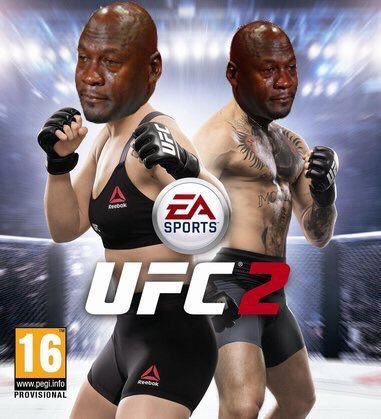
Then it is photoshopped over the face of a sad person, typically after a devastating sports loss, a joke at the expense of the “loser”. This weekend a new meme featuring Jordan’s crying face over both Conor McGregor and Ronda Rousey went viral, after McGregor’s loss Saturday night and Ronda Rousey’s loss last November. In honor of this post, here is the definitive ranking of the top 10 Crying Jordan memes.

10. Cryin’ Fitzpatrick

02770E8A-A279-4512-A0F8-8CA876581134_zpsuaaxeqqv.jpg
Credit: barstoolsports.com

9. Crying Megatron

8. Crying Tom

CZhcKEgVAAA5zUG.jpg
Twitter: User @clutchlikeromo

7. Crying LeBatman

Cc65x-rUkAEc0yB.jpg
Twitter: User @highkin

Note: See LeBron’s recent Instagram post for clarification

6. Crying Vikings

CYY1jPxUwAAzvvb.jpg
Twitter: User @whoisjoserivera

5. Crying Kanye

CZwUHZ1WQAE50Nn.jpg
Twitter: User @writerfrombklyn

A parody of the cover of My Beautiful Dark Twisted Fantasy, and Kanye’s bank account. 

4. Crying Panther

CbiMTfJVAAEJtts.jpg
Twitter: User @world_wide_wob

3. Crying Apple

CSyLY9FWEAAfM1f.png
Twitter: User @TheScore

Note: Typically a Home Run Apple.

2. Crying Champions

Cc1-sDDXEAAaEjX.jpg
Twitter: User @boneystarks

1. Crying Fans

CcUFCWoW8AEfCQ1.jpg
Twitter: User @nick_pants

Easy to miss the subtlety in this one. In the midst of Steph Curry’s logic defying shot to beat Oklahoma City last week, notable Twitter photoshopper @nick_pants saw an opportunity. He placed a Crying Jordan on the face of every fan in the audience doing the “surrender cobra,” placing both hands on the back of their head in anguish. The result is an image worth zooming in and attempting to count.

And this Honorable Mention would definitely have made it on the list, but is not technically a Crying Jordan meme. In a reverse, twitter ‘shopper @whoisjoserivera placed Leonardo DiCaprio’s face on a dunking Jordan, celebrating his recent Academy Award.

HM. Dunking Leo

CcW0cIBWAAEsqKE.jpg
Twitter: User @whoisjoserivera

So what do you think? Did I miss any Crying Jordan memes you love? Please let us know and leave them in the comments!


Rangers Rookie Nomar Mazara Shines in First Two Weeks

Rangers Rookie Nomar Mazara Shines in First Two Weeks

Source

On Sunday, some were recuperating from Beyoncé’s absolute dominance of the internet or watching to see if [SPOILER] actually [SPOILER]’d at the end of last season, but Rangers’ rookie outfielder Nomar Mazara continued to show his proficiency at a big-league-level.

The Texas Rangers officially called up Nomar Mazara to replace Shin-Soo Choo just recently on April 10. After a fantastic spring, many Rangers fans hoped he would make the team outright, but the team decided to give the 20-year-old another year to mature with the game. But in the end he became a major leaguer anyways, and has earned the title.

In only 12 games, Mazara (affectionately called “Maz,” by a fanbase which has a history of loving nicknames) has wildly impressed the Rangers. The expectations of Mazara were a strong offensive set, but disappointing defensive output. He proved the offensive expectations dead-on, with a pair of homers and a slash of .356/.404/.533. Here is video of yesterday’s massive 418 foot bomb, which came off of the bat at 110 MPH according to Evan Grant of the DMN:

The most impressive aspect of Mazara’s game up to this point has been the unexpectedly high level of defense he has played. With quite a few great plays and little to no errors, Mazara simply plays smart baseball (something which cannot always be said about starting center fielder Delino DeShields). And when the Rangers faced a tough situation against the White Sox in the bottom of the ninth inning, Maz was not prepared to lose:

Jared Sandler, reporter for 105.3 The Fan, claims that if Mazara continues to play at this rate, he will stay even when Choo and/or Hamilton return from injury.

In only two weeks of play, Nomar Mazara has caused a great stir among Rangers fans not just about the present but the future. With great hope not just for this year but the ones to come, Texas will look to Mazara as a key component

All stats from espn.com. Featured Image Credit: Twitter/@Rangers

For more Rangers info and opinions (and possibly Game of Thrones spoilers and the odd Beyoncé tweet), follow the author on twitter @justjustin42.