

Originally published at Cinapse.
Just ten years ago, Matthew McConaughey was unreliable at best. Generally, if he was in a movie, it was a safe bet he’d be the worst part of a mostly mediocre film. The early years of his career saw some success with films like Dazed and Confused and Contact, but that mid/late-2000s streak was *rough*. Failure to Launch? Fool’s Gold? Some movie called Surfer, Dude which is somehow a real flick about a surfer’s existential crisis? It looked down for the University of Texas graduate — and then The McConaissance struck. The exact start date is still up for debate, but around 2011 a switch struck, and within three years he had an Oscar and became one of Hollywood’s finest actors. With director Yann Demange’s biopic White Boy Rick, he’s completed his transformation, shining as the brightest part of a mostly mediocre film.
McConaughey plays Richard Wershe Sr., a supporting player to the film’s primary focus: Rick Wershe Jr. (newcomer Richie Merritt), his son and a prodigy drug dealer. Set in the mid ’80s, Wershe Jr. starts the movie selling guns for his ambitious father, but is slowly pulled into the world of drugs out of need for money and hereditary ambition. He is quickly recruited by the FBI and Detroit PD to be an informant, creating an interesting dichotomy for the character. This stretch of White Boy Rick is actually quite good, functioning as a knock-off brand Goodfellas with a dash of Scott Cooper’s Black Mass (remember that movie?!).
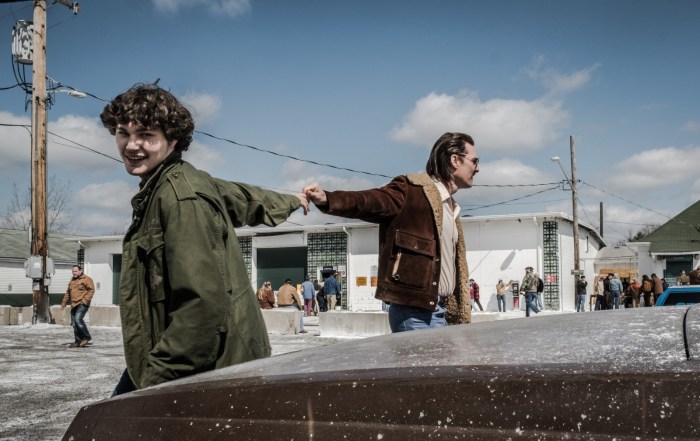
(Spoilers for a thirty-year-old true story, I guess) Obviously, things turn sour for the teenage kingpin, and so does the film. It’s a perfectly fine watch for 45 minutes or so, but unfortunately gets bogged down when it makes a turn for the serious. Now the film is never a comedy, but it’s an enjoyable watch as we see the character’s initial success. As he starts selling drugs for himself and the cops, Wershe Jr. earns the name White Boy Rick from his almost entirely black consumer base/new friend group. Merritt embodies this name change with his performance, slowly shifting the way he talks and even carries himself through the movie, a really impressive debut for a 17-year-old. But as it grows more grim, it almost feels like Demange loses touch with the film, delivering a lifeless, pretty boring final act.
For a film set in Detroit that opens at an NRA gun show, White Boy Rick doesn’t have a whole lot to say. Sure, it offhandedly addresses that white people caught with drugs will face a far shorter prison sentence, but it stops there. With so much else to discuss, it mostly just wants to talk about how badly the FBI screwed over this one kid. It is just sort of disappointing to sit through, watching Wershe Jr. absorb the speaking style and interests (and job, for that matter) of Detroit’s black community, but ending with passive-aggressive epilogue titles that are only angry at the FBI’s treatment of him. Reagan’s “Just Say No” campaign simmers in the background of the film, but the ending comes off as tone-deaf, ignoring the executive office’s campaign that disproportionately affected the lives of countless people of color, just to focus on a white man.
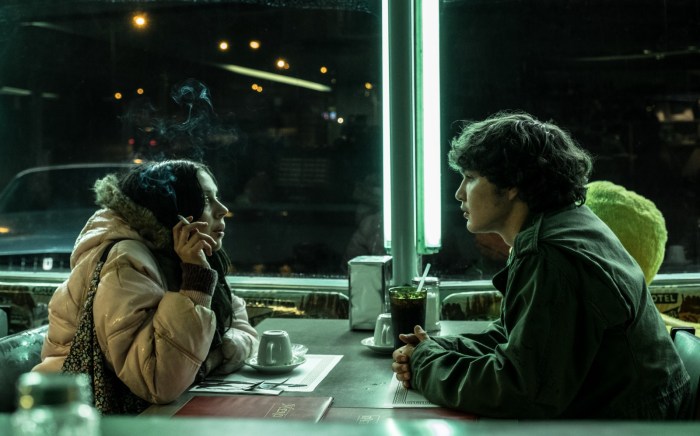
Without question, the brightest part of White Boy Rick is the performances from the absolutely stacked cast. Obviously, McConaughey steals every scene, acting as an imposing force upon the film. He plays it with a vaguely southern style, which doesn’t really match with a man who has spent his whole life in Michigan, but it works in the role. He’s switches, sometimes simultaneously, from a larger-than entrepreneur to a weak, self-conscious father who just wants his children to love and respect him. Even when McConaughey isn’t on screen, his presence is felt, as Merritt brilliantly mimics bits of his fictional father’s mannerisms and speaking style.
The supporting players of White Boy Rick are also great, with one of the year’s deepest rosters of great small roles. RJ Cyler (Me and Earl and the Dying Girl) and Jonathan Majors are also great, acting as Rick’s intro into Black society in Detroit. Cyler is particularly great, bringing a sense of life and fun to his scenes as Boo, Rick’s best friend. Jennifer Jason Leigh, Rory Cochrane, and Atlanta’s Brian Tyree Henry excel as the law enforcement officers that work with Rick. Henry is particularly enjoyable, humorously playing his DPD officer as one who is constantly annoyed with everyone. On the other hand, JJL does her best Kyra Sedgwick impression, acting as a cold foil to Henry’s antics. And finally, in their few scenes, Bruce Dern and Piper Laurie knock it out of the park as Wershe Sr.’s parents. Though they kind of feel like they walked out of a different movie, the two are absolutely hilarious, bickering and griping with everyone in sight, providing plenty of welcome laughs.

Despite the overwhelming amount of great performances, spotty direction and a highly flawed script sink White Boy Rick. It’s certainly worth seeing for the wealth of amazing actors, but there’s a reason it was released a month before the heart of Oscars season.
White Boy Rick opened in theaters September 14, 2018.
 Justin Don Jones